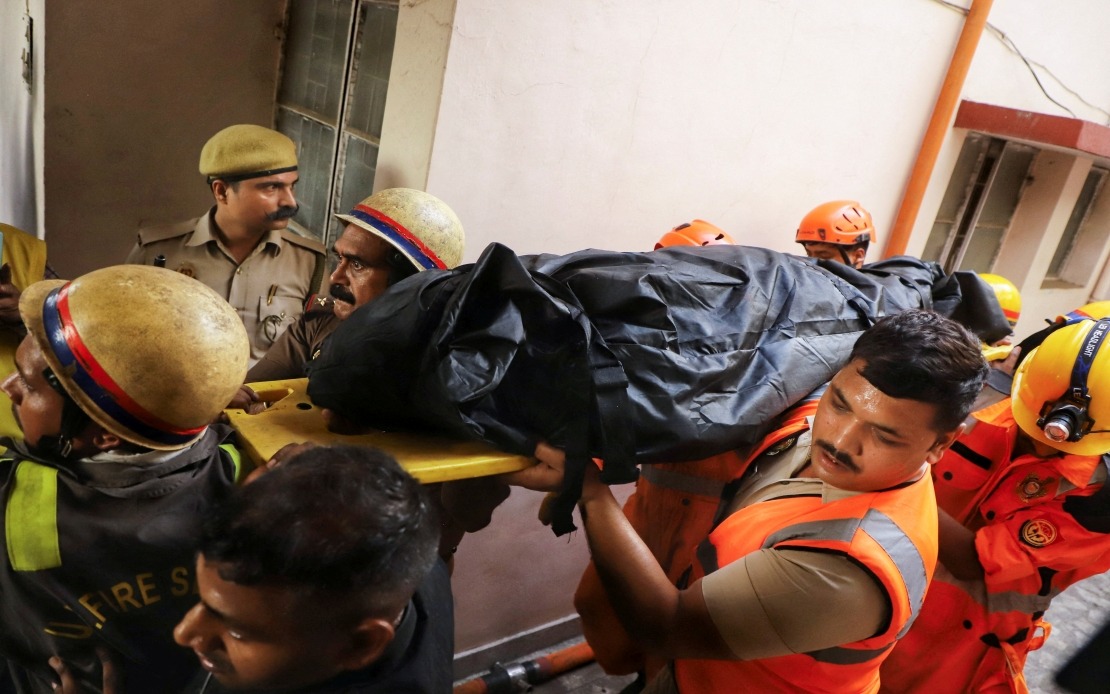
A catastrophic fire engulfed a three-storey commercial structure in the Aliganj district of Lucknow, Uttar Pradesh on Monday, claiming the lives of at least 15 individuals, the majority of whom were young students enrolled at an animation training facility housed within the building. The inferno consumed the mixed-use property that also contained retail shops, trapping occupants in rapidly deteriorating conditions as thick smoke filled the corridors and stairwells.
Eyewitness accounts and video footage circulated on social media platforms documented the horrifying scenes as desperate individuals jumped from windows and balconies in attempts to escape the spreading flames. Bystanders and nearby residents mobilized quickly, making urgent distress calls to local police and firefighting services while watching the tragedy unfold. The chaotic emergency response highlighted both the rapid spread of the fire and the building's apparent lack of adequate safety infrastructure for occupants during a crisis.
Emergency responders transported more than 20 casualties to King George's Medical University's trauma centre, one of the region's principal medical facilities for severe injuries. Upon arrival, medical personnel determined that five patients required immediate hospitalization and intensive treatment for injuries sustained during the evacuation and fire exposure. Tragically, the remaining 15 individuals were pronounced dead on arrival, their identities still being documented as authorities worked to notify families.
Uttar Pradesh Chief Minister Yogi Adityanath expressed his deep sorrow regarding the incident in a public statement delivered during a political rally in a separate city. His remarks acknowledged the profound grief affecting the bereaved families and underscored the emotional toll of such catastrophic accidents on communities. The official response, however, came only after the majority of casualties had already been recorded, raising questions about the state's emergency preparedness systems.
This Lucknow disaster represents the second major commercial fire tragedy to strike northern India in the span of merely two weeks, indicating a troubling pattern of building safety failures across the region. Earlier in June, Delhi experienced a devastating hotel fire that claimed at least 22 lives, with many victims identified as international medical tourists who had travelled to India seeking healthcare services. The Delhi fire similarly exposed critical gaps in fire safety compliance and emergency evacuation procedures at commercial establishments.
The concentration of casualties among students attending the animation training centre suggests that the facility may have been operating without adequate safety certifications or that occupants lacked familiarity with emergency procedures. Animation training institutions in India have become increasingly popular as the country's digital media industry expands, yet regulatory oversight of such educational facilities remains inconsistent across different states. The vulnerability of students in such spaces underscores the necessity for mandatory safety audits and staff training regardless of a building's primary commercial function.
The Lucknow incident raises critical questions about building code enforcement and inspection regimes in Uttar Pradesh, India's most populous state. Authorities will need to conduct thorough investigations into whether the commercial building possessed valid fire safety certificates, functional fire suppression systems, and unobstructed emergency exit routes. Preliminary examinations often reveal that older mixed-use buildings in Indian cities frequently lack modern fire detection equipment and proper compartmentalization designed to contain flames and smoke.
For Malaysian stakeholders and regional observers, these recurring tragedies in India serve as cautionary reminders about the importance of rigorous building safety standards and enforcement. Malaysia's own commercial and educational buildings operate under the Fire Services Act and other regulatory frameworks, yet periodic incidents within the country have demonstrated that compliance gaps persist. The Lucknow and Delhi fires illustrate how quickly modern construction can become a death trap when safety measures are inadequate or neglected.
The psychological and economic repercussions will extend far beyond the immediate death toll. Families have lost breadwinners and loved ones, the animation training institution faces potential closure and legal action, and confidence in the safety of commercial spaces across Lucknow and surrounding regions has been severely shaken. Insurance claims, compensation disputes, and criminal investigations will occupy authorities for months, yet such measures provide little solace to those grieving the preventable loss of life.
Moving forward, state and national authorities in India must implement expedited inspections of high-occupancy commercial buildings, particularly those housing educational or training facilities. The recurring nature of such disasters points to systemic failures rather than isolated incidents, suggesting that comprehensive legislative reform, resource allocation to fire departments, and mandatory owner accountability measures are urgently required to prevent further tragedies.

