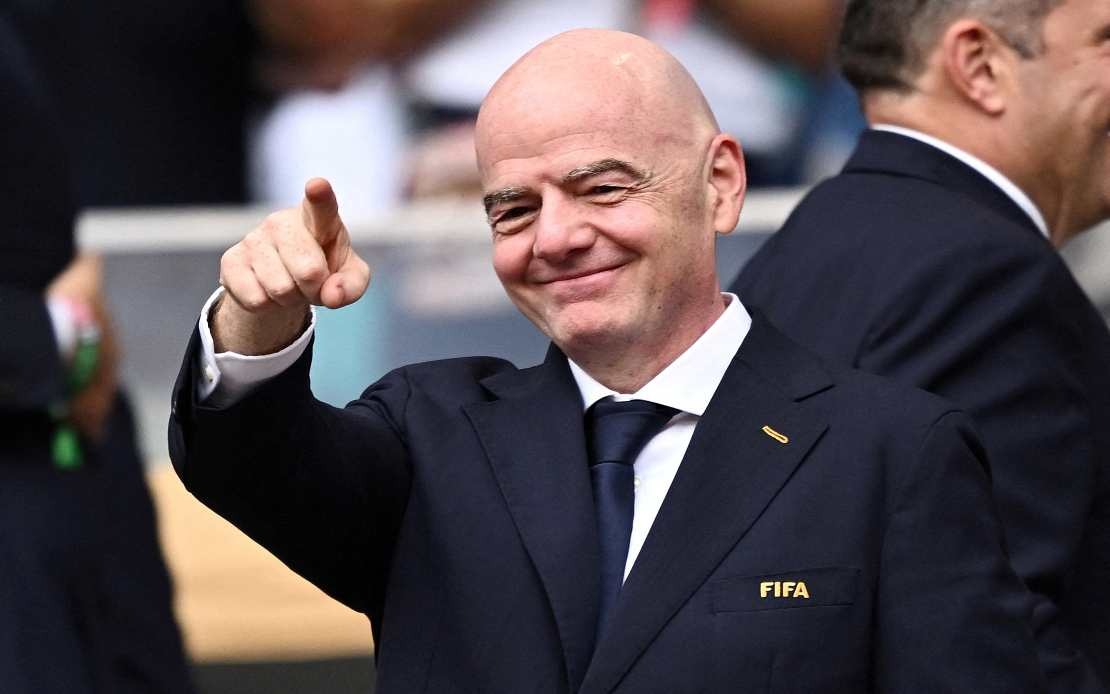
FIFA President Gianni Infantino's ambitious scheme to inject private capital into the organisation's flagship competitions has effectively collapsed after the Asian Football Confederation (AFC) joined UEFA and CONCACAF in publicly rejecting the proposal. The coordinated opposition from three of world football's most influential continental bodies represents a watershed moment in global football governance, with serious questions now hanging over Infantino's continued tenure at the helm of the international governing body.
The plan at the centre of the controversy involves the creation of FIFA Forward Enterprise (FFE), a new company designed to operate the FIFA World Cup alongside other major tournaments. Infantino's administration proposed selling a 20 per cent equity stake in this entity to private investors, with Joshua Kushner's investment firm Thrive Eternal identified as the lead investor group. Kushner's family connections—he is the brother of Jared Kushner, son-in-law to United States President Donald Trump—immediately drew scrutiny to the arrangement and raised questions about the appropriateness of such political proximity in international sports governance.
The mathematical reality of the opposition now makes the proposal extremely difficult to advance. FIFA regulations stipulate that any such structural change requires approval from a majority of the organisation's 211 member associations. The AFC comprises 47 member nations, CONCACAF represents 41 nations (of which 35 hold FIFA membership), and UEFA encompasses 55 members. Combined, these confederations now command the support of 137 voting associations—far exceeding the 106 votes required to block the initiative. This unified front effectively renders the privatisation plan unworkable without either substantial revisions that would satisfy all parties or a dramatic reversal of opposition from one of the major confederations.
What makes the AFC's position particularly significant for Southeast Asian football fans and administrators is the confederation's explicit statement regarding the governance failures that the episode has exposed. Rather than focusing narrowly on the FFE proposal itself, the AFC highlighted what it characterised as "fundamental weaknesses in FIFA's consultation and decision-making processes." This broader critique resonates across Asia, where many football associations have long felt marginalised in FIFA's strategic planning and left without adequate voice in major decisions affecting their competitions and development programmes.
The opaque manner in which the privatisation plan emerged underscores these governance concerns. None of the major confederations—and by extension, most of FIFA's member associations—were formally consulted about the FFE proposal before details leaked to media outlets on Tuesday. The AFC's statement emphasised this troubling communication breakdown, noting that associations discovered the plans through press reports rather than through proper institutional channels. For a body as vast and geographically dispersed as FIFA, such unilateral decision-making approaches risk delegitimising the organisation's leadership among its constituent members.
Europe's two major footballing bodies have taken particularly forceful stances. UEFA declared that its 55 member nations would boycott FIFA competitions until the privatisation plan is withdrawn entirely, representing a nuclear option in footballing politics. Such a boycott would be virtually unprecedented in the modern era and would fundamentally undermine FIFA's ability to stage major tournaments. CONCACAF, meanwhile, has signalled that member nations in North and Central America plus the Caribbean are actively losing confidence in Infantino's leadership. This erosion of support among the confederation's executive leadership creates additional pressure on the FIFA president beyond the immediate FFE controversy.
Infantino himself, a Swiss national who has led FIFA since 2016, now faces an uncertain future in his current position. While no formal challenge to his leadership has been publicly launched, the convergence of opposition from the three largest continental confederations suggests that meaningful reform in FIFA's governance structures may become a precondition for his continued tenure. The AFC's emphasis on systemic weaknesses rather than objections limited solely to FFE indicates that member associations expect substantive changes to how FIFA consults with and incorporates the views of its constituent bodies.
For Malaysia and other Southeast Asian nations, the implications extend beyond the immediate crisis at FIFA headquarters. The AFC's unified stance demonstrates that the confederation can mobilise collective action when governance failures are sufficiently egregious, setting a potentially important precedent for future disputes. Malaysian football officials will be watching closely to see whether this collective assertiveness translates into genuine structural reforms that give Asian voices greater weight in FIFA's deliberative processes. Historically, Asia has been underrepresented in FIFA's decision-making hierarchy relative to Europe, and this episode may signal a shift toward more equitable institutional arrangements.
The episode also raises questions about the future commercialisation of international football competitions. While Infantino's administration may have hoped that private investment would generate additional revenue for member associations and development programmes, the overwhelmingly negative response suggests that the global football community harbours deep scepticism about privatising governance structures for iconic tournaments. Southeast Asian nations, which rely heavily on FIFA's revenue redistribution mechanisms, have particular interest in ensuring that any commercial arrangements serve the interests of smaller and developing football associations rather than concentrating wealth and influence further.
Infantino's original vision apparently assumed that the administrative appeal of efficiency and the financial incentive of private investment would overcome concerns about governance and institutional legitimacy. The AFC's response demonstrated that such calculations underestimated the importance football associations place on transparent decision-making and meaningful consultation. The president's team may now face pressure to undertake significant reforms to FIFA's governance structure, potentially including expanded roles for continental confederations in strategic planning and decision approval processes.
Moving forward, the question facing FIFA is whether Infantino can effectively rebuild trust among his member associations or whether the governance crisis extends deeper into institutional dysfunction. The AFC, alongside UEFA and CONCACAF, has signalled that FFE represents merely the symptom of more fundamental problems requiring systematic attention. Unless the FIFA administration demonstrates genuine commitment to reforming its consultation mechanisms and decision-making structures, further crises appear inevitable. For Malaysian football and the broader Southeast Asian sporting community, the outcome of this struggle will substantially influence how much influence the region exercises over international football's future direction.

