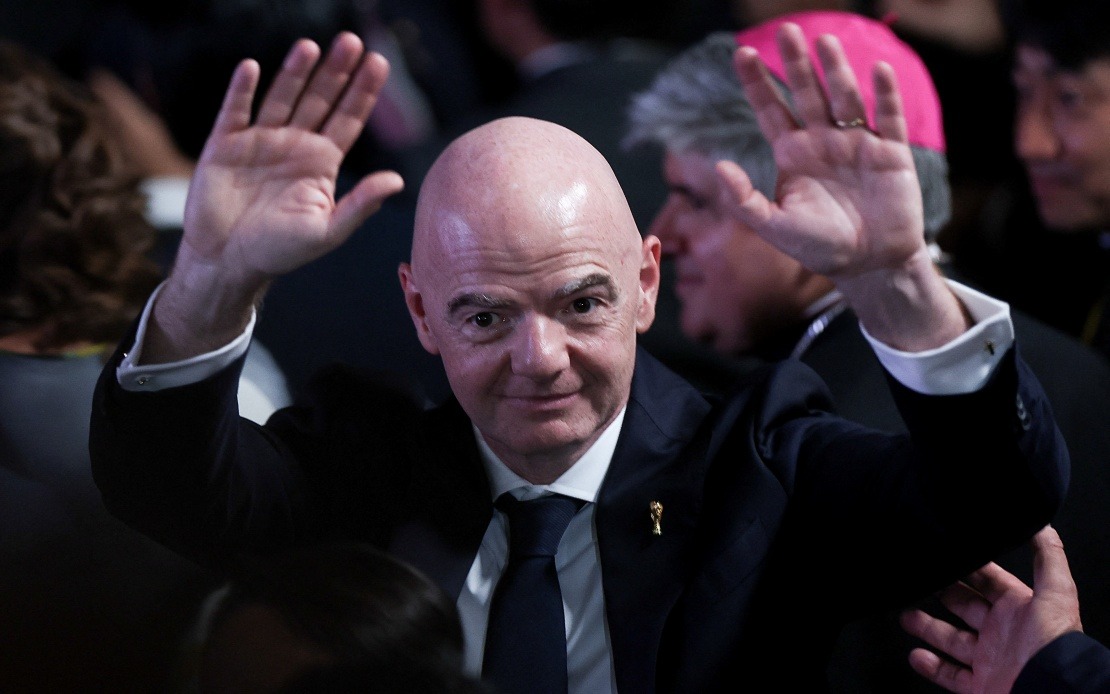
Football's global governing body has thrown its weight behind President Gianni Infantino with an emphatic statement, signalling that it will not countenance any attempt to circumvent its established electoral procedures as his re-election bid faces mounting scrutiny. In a strongly-worded response released from its Istanbul base on Saturday, FIFA made clear that any presidential election process must strictly adhere to the organisation's formal statutes and governance structures, rejecting what it characterised as coordinated efforts to undermine both the institution and its current leader.
The statement represents FIFA's most direct intervention yet into the escalating debate surrounding Infantino's fitness to continue in the role he has held since 2016. His pursuit of a fourth consecutive term has triggered visible fractures within the football community, with various stakeholders questioning his vision for the sport and his stewardship of its affairs. By issuing this terse response, FIFA's leadership is attempting to establish clear boundaries around what it considers legitimate discourse versus what it views as destabilising attacks on the organisation's authority.
Infantino's position, while still commanding significant institutional backing, has become noticeably more vulnerable in recent months. FIFA sought to reinforce his legitimacy by emphasising that member associations—the 211 national federations that form the organisation's foundation—had democratically endorsed his leadership. This democratic framing is crucial because it positions the presidency as an expression of collective will rather than autocratic imposition, though critics have questioned how genuinely competitive past election contests have been within FIFA's structure.
Crucially, FIFA cited backing from major continental confederations, specifically mentioning the South American Football Confederation (CONMEBOL) and the Confederation of African Football (CAF). This alignment matters considerably because these regions represent enormous voting blocs within FIFA's electoral system. CONMEBOL and CAF between them command roughly 100 of FIFA's 211 member votes, making their continued support strategically essential for Infantino's re-election prospects. Their public endorsement signals that discontentment with his leadership, while vocal, has not yet fractured the coalition that sustains him.
The statement took pointed aim at what FIFA describes as a pattern of unfounded allegations and distortions surrounding Infantino and the organisation itself. Rather than engaging substantively with specific criticisms, FIFA adopted a dismissive posture, accusing unnamed detractors of attempting through innuendo and misinformation what they could not achieve through legitimate democratic channels. This rhetorical strategy sidesteps the actual grievances while branding critics as operating outside the bounds of acceptable discourse—a technique that tends to inflame rather than resolve institutional tensions.
FIFA also vigorously defended Infantino's personal record, highlighting his three decades of involvement in European and world football administration and his efforts to expand the sport's reach and resources. The organisation argued that his tenure has democratised football by broadening access and creating new opportunities across continents. Whether this characterisation accurately reflects developments during his presidency—including controversial tournament expansions and complex commercial arrangements—remains a matter of significant dispute among football's various stakeholders.
The statement's assertion that FIFA welcomes legitimate scrutiny rings somewhat hollow given its simultaneous rejection of the criticism being levelled against its president. This tension reveals FIFA's core challenge: defending institutional leadership while maintaining credibility as an organisation genuinely open to accountability. Many observer believe that FIFA's defensive posture, rather than reassuring sceptics, merely deepens suspicions that the organisation operates according to different rules than those applying to other international bodies.
For Malaysian readers and Southeast Asian football communities, these internal FIFA tensions carry practical implications. Malaysia's Football Association, like all member federations, participates in the presidential electoral process and holds influence—however modest—over the composition of FIFA's governance structures. How these continental disputes resolve will shape FIFA's policy priorities regarding Asian football development, tournament allocations, and commercial distributions in the years ahead. A fractured FIFA leadership could complicate efforts to promote regional football interests on the global stage.
The underlying divisions within international football reflect broader anxieties about governance, transparency, and power distribution in global sports institutions. Infantino's critics point to concerns ranging from the handling of commercial relationships to the fairness of decision-making processes affecting national federations differently. FIFA's refusal to engage substantively with these critiques suggests the organisation views this as primarily a political challenge requiring institutional solidarity rather than genuine reform.
As Infantino approaches his re-election campaign, FIFA appears to be adopting a strategy of institutional entrenchment, leveraging the support of major confederations while dismissing dissenting voices as illegitimate. Whether this approach succeeds in securing another term or instead hardens opposition to his leadership remains uncertain. What seems clear is that fundamental questions about FIFA's governance and accountability mechanisms—longstanding concerns that predate Infantino's presidency—are far from resolved and will continue generating friction within international football's political structures.

