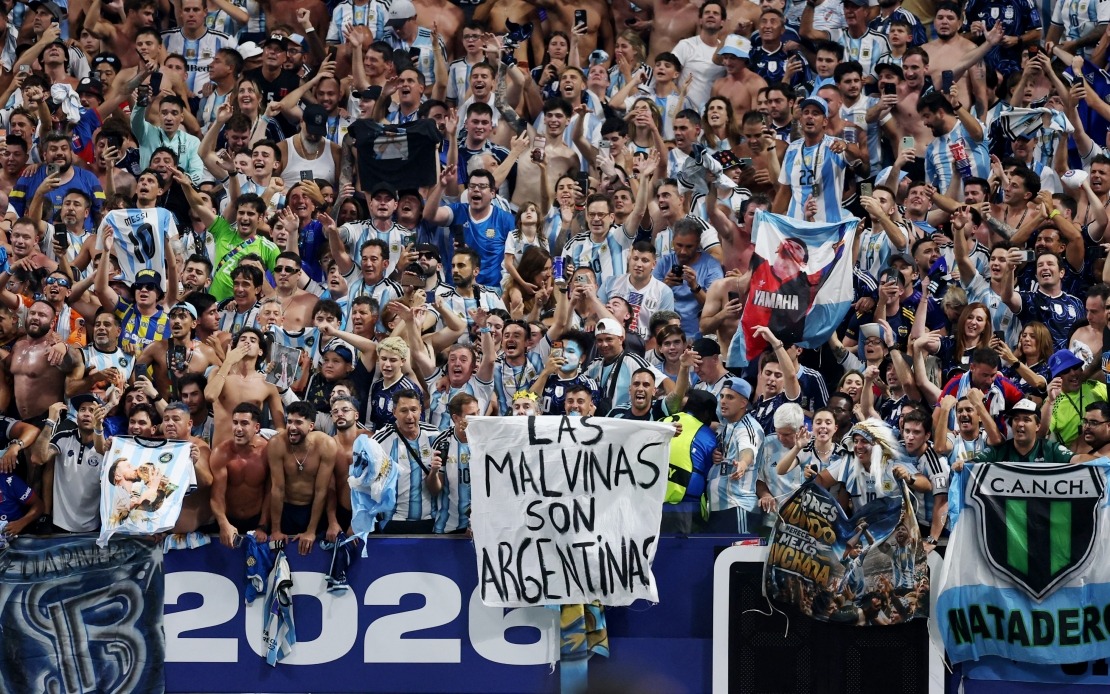
FIFA has opened a formal investigation into the Argentine Football Association stemming from several controversial incidents during the 2026 World Cup, with particular focus on a political message displayed by the national team's players. The world football governing body's move underscores the ongoing tension between sporting bodies and national teams seeking to use global platforms for political expression, an issue that has become increasingly contentious in international competition.
The primary allegation centres on a banner reading "Las Malvinas son Argentinas" (The Falklands are Argentine) that was unfurled by Argentina's players as they celebrated their semi-final triumph over England in Atlanta. The Falkland Islands, known in Spanish as Las Malvinas, remain administered by the United Kingdom but are claimed by Argentina, reflecting a territorial dispute that dates back decades and remains deeply embedded in Argentine national identity. The use of this banner at such a prominent moment—following victory in a major international tournament—raised questions about whether FIFA's regulations on political messaging had been violated.
In its formal statement, FIFA characterised the incident as involving "inappropriate messages" and indicated that it constituted a potential breach of regulations that explicitly prohibit the use of sporting events for demonstrations falling outside the scope of football itself. This provision, while ostensibly neutral, has proven controversial in practice, as it requires FIFA to determine what constitutes a political versus cultural or national expression—a distinction that is often ambiguous and subject to interpretation.
Beyond the banner incident, Argentina's national association faces scrutiny over multiple other alleged breaches. These include discriminatory chants emanating from sections of the Argentine support, unsporting gestures by players, delays in match kick-offs, and security failures that allowed unauthorised objects to be thrown onto the pitch by supporters. The breadth of these charges suggests that FIFA views Argentina's conduct during the tournament as systematically problematic rather than isolated to a single incident, raising questions about the team's overall management and discipline.
On an individual level, several Argentine players have been implicated in conduct violations. Leandro Paredes, Nahuel Molina, and Argentina official Roberto Ayala are facing potential assault charges related to incidents that occurred during the final match against Spain. Additionally, Molina and midfielder Thiago Almada, along with Spain's Gavi, are under investigation for alleged breaches of sporting conduct rules. The involvement of an official in assault allegations is particularly noteworthy, as it extends the investigation beyond player misconduct into the behaviour of those representing the association's leadership.
The timing and nature of these investigations carry significance for Argentine football and the broader South American footballing community. Argentina's success in recent major tournaments has elevated the global profile of the national team, but it has also intensified scrutiny of player conduct and the association's capacity to maintain discipline within the squad. The multiple concurrent investigations suggest systemic issues rather than individual lapses in judgment, which could have implications for Argentina's standing within FIFA and potential future sanctions.
For Malaysian and Southeast Asian observers, this situation illustrates the complex relationship between national identity, sporting competition, and international governance. While the Falklands dispute is geographically remote, the principles at stake—whether athletes and nations can use global sporting platforms to advance political or territorial claims—resonate across a region where territorial disputes and maritime claims remain sensitive issues. The handling of Argentina's case will likely set precedents for how FIFA approaches similar situations involving other nations.
FIFA's investigative process is designed to provide accused parties an opportunity to present their perspective before final determinations are made. The Argentine Football Association and the individual players named will be permitted to submit responses and evidence to FIFA's Disciplinary Committee, which will ultimately decide whether violations occurred and what sanctions, if any, are warranted. This procedural fairness is a crucial element of FIFA's disciplinary framework, though the organisation has faced criticism in the past for inconsistency in applying penalties across different nations and circumstances.
The potential consequences for Argentina could range from monetary fines to points deductions, match bans for specific players, or restrictions on the association's operational freedom. More significantly, the reputational impact on Argentine football could influence sponsorship arrangements, broadcasting rights negotiations, and the morale of the national team programme. Previous cases have shown that FIFA can impose substantial penalties when it determines that teams have systematically breached conduct regulations.
The investigation also raises broader questions about FIFA's role in policing political expression within sport. While the organisation has legitimate interests in maintaining competition integrity and protecting the sporting environment, critics argue that FIFA's regulations are sometimes applied selectively or with cultural bias. Argentina's case will likely reignite debates about where the appropriate boundaries lie between protecting sport from politicisation and respecting the lived realities and identities of participating nations and athletes.
Looking ahead, the resolution of these cases will influence how national teams approach the balance between expressing national sentiment and complying with FIFA's regulatory framework. For Argentina specifically, the outcomes will be closely monitored by the broader Latin American football community, where political expression and national pride remain intertwined with sporting endeavours. The final determinations are expected once the Disciplinary Committee has reviewed all submissions and evidence from the parties involved.

