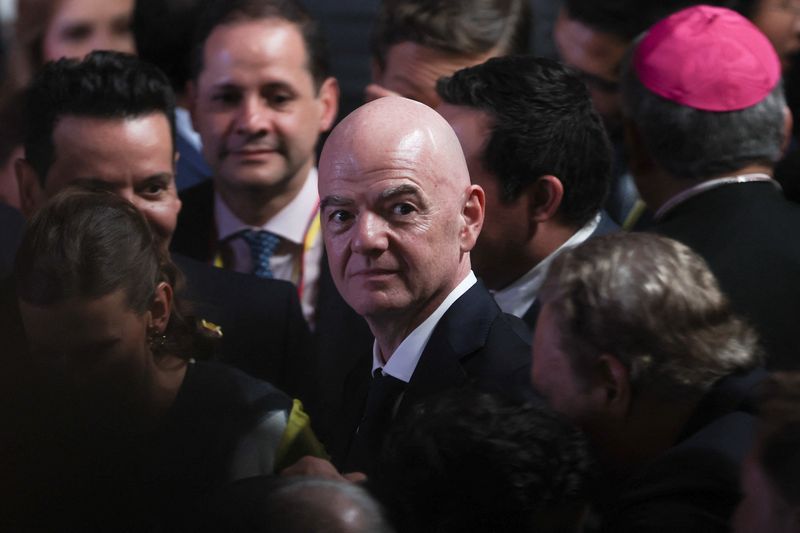
FIFA has moved forcefully to shore up President Gianni Infantino's embattled leadership, issuing a statement warning against what the organisation characterises as a "concerted and ongoing effort" to challenge his authority outside established democratic channels. The defensive posture reflects the intensity of opposition that has emerged following the spectacular collapse of Infantino's ambitious proposal to raise approximately $4.2 billion through the sale of commercial rights to the World Cup and other major tournaments—a scheme that triggered unexpected resistance from European football bodies, national associations, and prominent FIFA officials.
The controversy surrounding Infantino's proposal has exposed deep fault lines within world football's governing structure. The initiative, which would have fundamentally restructured FIFA's financial model, faced withering criticism that ultimately proved insurmountable. Rather than rallying support as Infantino's team had presumably anticipated, the proposal catalysed calls for his resignation and forced FIFA to convene an emergency leadership gathering in Morocco during the week of the statement. At that crisis meeting, FIFA's executive hierarchy publicly reaffirmed their confidence in the president, an unusual intervention that underscored the gravity of the institutional threat he faced.
FIFA's statement deliberately avoided naming specific critics or detailing exactly which allegations it considered misleading, instead adopting sweeping language that appeared designed to delegitimise any opposition effort as procedurally improper and substantively baseless. The governing body accused unnamed detractors of attempting to weaponise "allegation, insinuation or misinformation" against Infantino, suggesting that those without grassroots support among FIFA's 211 member associations were resorting to indirect pressure tactics. This rhetorical strategy positioned FIFA's institutional machinery as the sole legitimate forum for challenging presidential authority, effectively creating a defensive perimeter around the embattled executive.
The immediate backdrop to FIFA's intervention involved reporting by The Daily Telegraph concerning payments UEFA made to a former employee during Infantino's tenure as the European confederation's general secretary. Infantino has categorically denied any wrongdoing related to those transactions, and FIFA has similarly dismissed the allegations as entirely without foundation. The fact that international media scrutiny had reached this level of specificity suggested that Infantino's opponents possessed substantive documentary evidence or credible testimony, rather than merely floating abstract concerns about his suitability for office.
Infantino's political position, while weakened by the failed proposal and mounting criticism from Europe, retains considerable structural strength in other regions. The Confederation of African Football threw its collective weight behind the president on Thursday, offering unanimous backing that demonstrated his grip on the African bloc—a constituency that carries significant voting power within FIFA's member association structure. Similarly, South America's CONMEBOL confederation explicitly rejected any removal process that circumvented a direct vote of all FIFA members, a position that effectively protected Infantino from any backroom coup attempts among his regional supporters.
Mexico's football federation added further ballast to Infantino's position by publicly endorsing his leadership, despite the fact that its continental confederation CONCACAF had separately called for a comprehensive reckoning with his presidency. This fracture between regional confederations and individual national associations reflected the complicated politics of FIFA membership, where countries with diverse commercial interests and governance philosophies do not always align with their geographic groupings. The FMF's stance also emphasised that any challenge to Infantino's authority would need to proceed through formal FIFA mechanisms rather than through pressure mounted by confederations acting unilaterally.
UEFA's withdrawal of confidence marked the most significant blow to Infantino's standing. European football carries outsized influence within global sports governance due to the continent's wealth, infrastructure, and historical importance to the sport, making UEFA's hostile posture a genuine strategic vulnerability. Norwegian Football Federation President Lise Klaveness articulated the European critique most sharply, arguing that Infantino had forfeited the institutional trust necessary to govern FIFA effectively. Her intervention suggested that Nordic countries, historically protective of governance standards and transparency, had determined that Infantino's continued presidency posed unacceptable risks to FIFA's credibility.
Despite the rhetorical forcefulness of FIFA's defence, the underlying vulnerability of Infantino's position became apparent in the scale of opposition arrayed against him and the institutional drama required to contain it. That a crisis meeting in Morocco proved necessary, that FIFA felt compelled to apologise for "mistakes" in handling the commercial proposal, and that the organisation's leadership had to formally reaffirm support for their president all suggested a level of institutional instability not typically visible within FIFA's hierarchical structure. The fact that no clear alternative candidate had emerged suggested that opposition to Infantino remained more diffuse and reactive than strategically coordinated around a replacement figure.
Infantino's trajectory toward a fourth term at the FIFA Congress scheduled for March in Morocco now appears significantly more complicated than his political machine had presumably anticipated. While African and South American support provides him with a substantial foundational advantage, the European opposition represents not merely a regional squabble but rather a challenge to FIFA's legitimacy within its most commercially significant and institutionally sophisticated market. The question of whether Infantino can rebuild sufficient trust among wavering member associations, particularly in Europe, will likely determine whether his tenure survives beyond March or whether the accumulated weight of institutional disapproval ultimately forces a succession process that FIFA's governance framework technically permits but has historically avoided activating.

