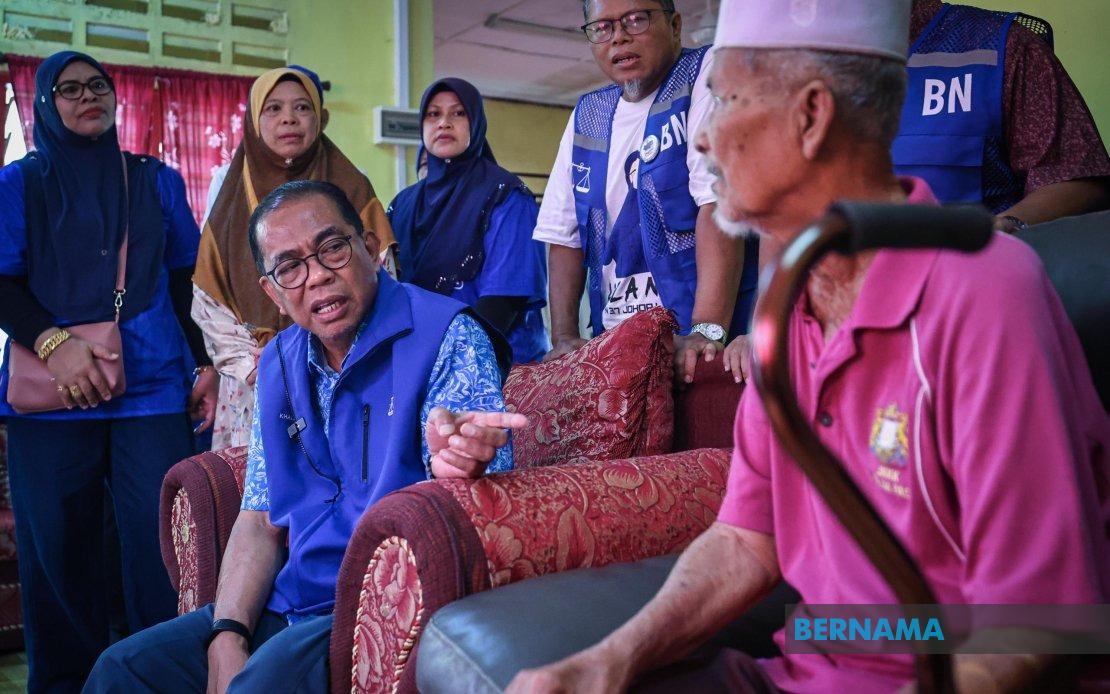
With voting just days away in the 16th Johor state election, Defence Minister and UMNO vice-president Datuk Seri Mohamed Khaled Nordin has moved to reassure the electorate that constitutional safeguards ensure harmonious relations between federal and state authorities regardless of which political coalition holds power at either level. Speaking at a community engagement event in Kota Tinggi on July 9, Mohamed Khaled stressed that the Federal Constitution establishes a clear framework delineating powers and responsibilities that transcends partisan political alignments.
The constitutional protections Mohamed Khaled referenced represent a fundamental principle of Malaysia's federal system. The Federal Constitution explicitly divides authority between the federal government in Kuala Lumpur and the state governments, with each sphere granted exclusive jurisdiction over defined matters. This separation of powers, enshrined in the founding document, theoretically insulates state administrations from direct federal interference and vice versa, creating institutional guardrails that persist regardless of election outcomes. Mohamed Khaled's emphasis on this framework suggests concern among governing coalitions that voters may harbour worries about political friction should state-level control shift away from federal leadership.
Crucially, Mohamed Khaled extended his assurances beyond mere constitutional theory, invoking statements from UMNO president Datuk Seri Ahmad Zahid Hamidi affirming that both levels of government bear mutual obligations. The Defence Minister characterised their relationship as one demanding reciprocal respect and cooperation grounded in constitutional obligation rather than political expediency. He articulated that whichever coalition captures federal power must receive the cooperation of state governments, whilst the federal government must similarly extend respect and collaboration to state authorities, regardless of their political complexion. This symmetrical framing attempts to neutralise concerns that a change in state administration could provoke punitive responses from federal authorities.
For Johor's electorate, now numbering 2,727,926 registered voters across 56 state constituencies, Mohamed Khaled's message targets a specific anxiety: the possibility that voting against the federal coalition at state level might invite retaliation or reduced development support. This concern reflects genuine historical tensions in Malaysia's politics, where federal-state relations have occasionally deteriorated when different coalitions controlled each tier. By anchoring his reassurance to constitutional text rather than political goodwill, Mohamed Khaled sought to provide voters with a framework for confidence independent of personality or momentary political calculations.
The timing of these remarks coincides with a competitive electoral environment. The 16th Johor state election features 172 candidates pursuing the 56 available seats, with Barisan Nasional contesting every position. In the 2022 Johor election, held just two years prior, BN secured 40 of those 56 seats, translating to a comfortable majority. However, the relatively tight timeline since the previous contest and evolving political dynamics at the national level may have generated uncertainty about voter sentiment, prompting the Defence Minister's explicit constitutional reassurance.
Barisan Nasional's optimism about Saturday's outcome, as expressed by Mohamed Khaled, rests partly on the coalition's track record in Johor. The state has historically been a BN stronghold, though Malaysian electoral patterns have become increasingly unpredictable since 2018. Mohamed Khaled framed voter support as anchored to confidence in BN's developmental achievements and delivery record, suggesting the coalition intends to campaign on incumbent performance and developmental continuity rather than addressing potentially weaker aspects of its broader national standing.
The constitutional framework Mohamed Khaled described exists within Malaysia's broader federal architecture, which grants states substantial autonomy over matters including land, local government, Islamic affairs, and social welfare. This devolution of power creates genuine space for differing policy approaches between federal and state administrations. However, the federal government retains control of critical revenue sources and national infrastructure, creating inherent dependencies that shape federal-state dynamics. Understanding these structural realities helps contextualise why assurances about peaceful coexistence carry genuine importance for state-level electoral campaigns.
For Southeast Asian observers tracking Malaysia's democratic development, Mohamed Khaled's constitutional emphasis reflects broader regional trends toward institutionalising power-sharing arrangements. Across the region, countries like Indonesia have increasingly devolved authority to subnational governments, creating situations where different political parties govern at different tiers. Malaysia's experience navigating such arrangements, particularly during periods of coalition fragmentation at the federal level, offers instructive parallels. The Defence Minister's framing suggests Malaysian political actors increasingly recognise that constitutional guarantees of federal-state cooperation represent essential stabilising mechanisms in an era of volatile coalition politics.
The electoral environment Mohamed Khaled addressed also reflects broader shifts in Johor's political composition. The state's rapid urbanisation and economic diversification have created more diverse voter bases in major towns whilst maintaining traditional strongholds in rural constituencies. Barisan Nasional's strategy of maintaining unity across all 56 seats indicates confidence in its ability to retain both urban and rural support, though the coalition faces competition from increasingly organised opposition blocs. Mohamed Khaled's emphasis on constitutional protections may particularly resonate with voters in constituencies where federal-state relations directly impact local development priorities.
Looking beyond Saturday's voting, the broader implications of Mohamed Khaled's constitutional argument extend to Malaysian political culture. By grounding federal-state cooperation in constitutional obligation rather than political affinity, the Defence Minister articulated a vision where institutional design supersedes party politics. This approach, if reflected in actual governance practice, could strengthen institutional resilience and reduce the volatility that sometimes characterises Malaysian federalism. However, the gap between constitutional theory and political practice in Malaysia's experience suggests that voter confidence ultimately depends on whether governing actors demonstrate genuine commitment to constitutionally-mandated cooperation across party lines.
As Johor voters prepare to cast ballots in Malaysia's second major state election since the 2022 general election, the questions Mohamed Khaled addressed—about whether voting against federal coalitions risks economic or political punishment—reflect legitimate concerns about federal-state governance. His constitutional reassurances seek to separate legitimate state autonomy from partisan retaliation, framing Saturday's election as a choice about state-level stewardship rather than a referendum on federal authority. Whether the subsequent performance of any resulting government validates these assurances will significantly influence how Malaysian voters approach future elections at both tiers of government.

