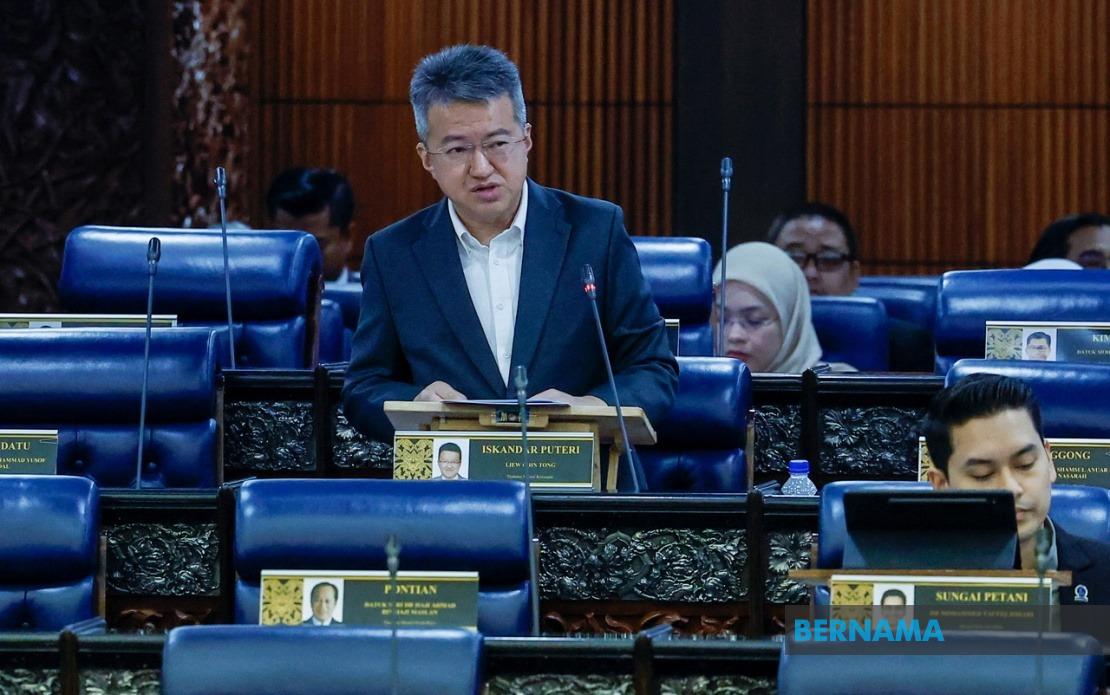
The federal government has provided fresh assurances that Sabah's development and operating budget allocations will remain intact despite the RM1.5 billion boost to the state's interim special grant. Deputy Finance Minister Liew Chin Tong made the clarification during Parliament on July 14, responding to concerns raised about whether the additional funds would come at the expense of other development priorities for the state.
The special grant increase, originally announced by Prime Minister Datuk Seri Anwar Ibrahim in May, represents a significant injection of federal support for Sabah. However, the announcement prompted questions about its impact on the state's broader development framework. Liew's statement directly addresses these concerns by confirming that the federal government views the special grant as a distinct funding mechanism separate from the state's regular development and operating budgets under the annual federal allocation.
Sabah's development allocation for this year stands at RM6.9 billion, up from RM6.7 billion in the previous year. This expanded budget encompasses a diverse portfolio of infrastructure and social projects intended to address long-standing gaps in the state's development. Major initiatives include the Pan Borneo Highway, which continues to reshape connectivity across the region, alongside critical investments in rural roads that connect remote communities to urban centres and services.
Beyond transportation infrastructure, the allocation addresses fundamental service delivery. Rural electrification and water supply programmes remain priorities, with the government committing substantial resources to extend these essential services to underserved areas. Simultaneously, the federal government is investing in health facility improvements, including the construction and upgrading of hospitals and clinics, alongside educational infrastructure through the renovation of deteriorated schools. Police station upgrades also form part of this comprehensive development push.
Electricity supply presents a particularly nuanced aspect of federal-state cooperation in Sabah. Although regulatory authority over the sector transferred to the state government in 2024, the federal government has committed to maintaining electricity subsidies—a critical support mechanism for household and business affordability. The subsidy allocation for 2026 is projected to reach RM880 million, demonstrating sustained federal commitment to keeping energy costs manageable for Sabah residents even as the state assumes greater operational responsibility.
The rural water supply programme exemplifies the trajectory of increasing investment in basic services. Funding for this sector has expanded significantly from RM103.5 million in 2025 to RM143 million in the current year. This nearly 40 per cent increase reflects federal recognition that rural water infrastructure remains a critical development gap in the state, particularly in areas where private sector investment is limited by geographical and commercial constraints.
Cost-of-living support through targeted cash assistance schemes also constitutes an important dimension of federal assistance to Sabah. The Sumbangan Tunai Rahmah and Sumbangan Asas Rahmah programmes together deliver an estimated RM1.2 billion in direct household support across the state. These schemes provide relief to vulnerable populations and help stabilise household finances amid inflationary pressures affecting the broader region.
The constitutional framework governing special grants to Sabah adds legal complexity to these arrangements. Article 112C of the Federal Constitution enshrines the principle of special grants, while Article 112D prescribes the procedural mechanisms for implementing such grants. Liew emphasised that both the federal and Sabah state governments must adhere to these constitutional procedures, mirroring the processes followed in 2022, 2023, and 2025. This procedural consistency ensures transparency and maintains alignment with constitutional requirements.
Notably, the federal government has filed an appeal against certain aspects of the Kota Kinabalu High Court's ruling on special grants, indicating ongoing legal contestation over interpretation and implementation. Despite this litigation, Liew stressed that the government respects the constitutional principle underpinning special grants to Sabah. This balanced approach suggests the government seeks to clarify and refine the mechanism rather than undermine the fundamental entitlement.
Looking ahead, the federal government has indicated commitment to negotiating a new mechanism with the Sabah state government for determining future special grant amounts. This prospective discussion reflects recognition that the current ad hoc approach to determining grant levels may benefit from a more systematic framework. Such negotiations would operate within the constitutional parameters of Articles 112C and 112D, ensuring any new mechanism maintains legal integrity.
For Malaysian readers, particularly those in Sabah, these developments carry significance beyond immediate budget figures. The assurance regarding development allocation continuity addresses fears that increased special grants might represent a reallocation rather than genuine additional support. The diversified portfolio of funded projects—from highways to rural electrification to healthcare—indicates federal recognition that Sabah's development requires multifaceted investment across physical infrastructure, social services, and household support.
The ongoing constitutional dialogue between Kuala Lumpur and Kota Kinabalu also reflects broader questions about fiscal federalism within Malaysia's constitutional structure. Sabah's special status under the Malaysian agreement has long required careful negotiation and interpretation, and current developments suggest both governments acknowledge the need for clearer, more systematic approaches to implementing these special provisions. The combination of assured development funding, expanded targeted support schemes, and commitment to constitutional-level reform indicates an effort to position Sabah's fiscal relationship with the federal government on a more predictable and sustainable foundation.

