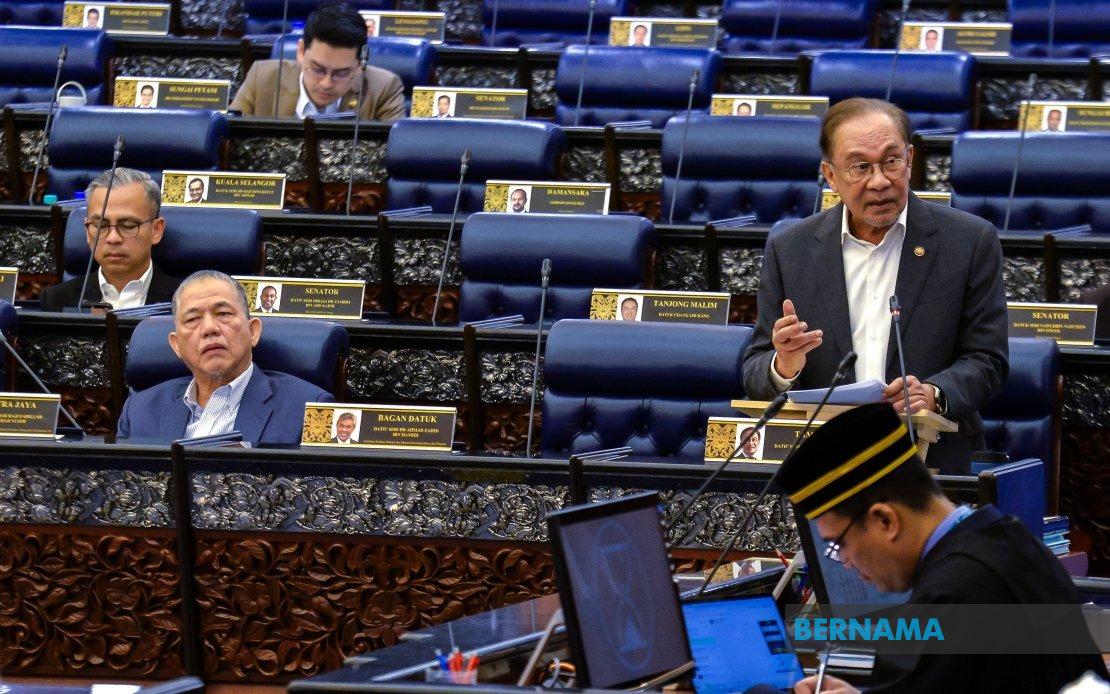
Prime Minister Datuk Seri Anwar Ibrahim has moved to clarify the methodology behind federal budget distribution to states, insisting that the allocation formula prioritises addressing developmental gaps and improving living standards across Malaysia rather than operating as a simple return mechanism based on tax collection. Speaking during parliamentary question time in Kuala Lumpur, Anwar underscored that almost every state receives substantially more funding from the federal government than the tax revenue it generates, with only Selangor and Penang recording higher tax contributions relative to their allocations. This distinction carries significant weight in Malaysian federalism, as it demonstrates the redistributive nature of the national budget system and the central government's commitment to ensuring equitable development across economically varied regions.
The Prime Minister's comments came in response to parliamentary concerns raised by Datuk Seri Doris Sophia Brodi of GPS-Sri Aman, who questioned whether federal allocations to state governments adequately reflected revenue collection and whether the MADANI administration had implemented meaningful improvements to the distribution mechanism. Anwar's response directly addressed accusations that certain states faced systemic disadvantage or marginalisation in resource allocation, rejecting such claims by pointing to the deliberate, needs-based framework guiding funding decisions. This parliamentary exchange highlights persistent tensions between wealthier and less developed states regarding fiscal federalism, a recurring theme in Malaysian politics where less industrialised regions argue for greater resource flows to address persistent development deficits.
According to Anwar, federal allocations are determined through a comprehensive assessment of urgent development priorities within each state, rather than as a proportional response to tax revenues generated. The criteria informing these decisions encompass a diverse range of infrastructure and social needs, including flood mitigation initiatives that have become increasingly critical given Malaysia's vulnerability to seasonal flooding, large-scale infrastructure projects such as the Pan Borneo highway upgrading programme, and essential drainage system improvements. Beyond transportation infrastructure, the allocations address foundational social priorities including poverty reduction initiatives, educational facility development, and other critical public infrastructure projects designed to enhance living conditions and economic opportunity across all regions.
The MADANI Government's approach reflects a philosophical shift from previous administrations in how federal resources are distributed geographically. Anwar specifically highlighted that his government has directed the highest allocations to states including Kedah, Terengganu, and Kelantan when compared to funding levels provided by previous administrations. This comparison carries political significance, as it allows Anwar to demonstrate tangible commitments to less developed states while simultaneously differentiating current government priorities from those of predecessor governments. For these states, which typically generate lower tax revenues due to their economic structures, increased federal support represents crucial investment in capacity building and infrastructure necessary for future growth.
The Selangor and Penang exception in this allocation framework merits particular attention, as these two states represent Malaysia's economic powerhouses and account for a disproportionate share of national tax revenue generation. The fact that these states receive allocations lower than their tax contributions reflects an implicit acknowledgment within Malaysia's federal system that wealthy states, through their developed private sectors and strong economic activity, can supplement federal allocations with their own state revenues and attract private investment. This creates a sustainable equilibrium where core federal revenues support national priorities and less developed states, while prosperous states retain sufficient resources for their own development without requiring federal top-ups proportional to their tax generation.
The distribution methodology Anwar outlined represents an application of vertical fiscal transfer principles, where the national government redistributes resources to achieve national policy objectives and reduce regional disparities. This approach acknowledges that development needs do not correlate precisely with economic output—a state generating lower tax revenue may face acute infrastructure deficits, demographic challenges, or geographic constraints that require proportionally larger public investment to address. By explicitly tying allocations to identifiable needs rather than tax contributions, the federal government positions itself as a instrument of national integration and social cohesion rather than merely a clearing house that returns revenues to their sources.
For Malaysian readers, particularly those in less developed states, this allocation philosophy carries direct implications for their communities' infrastructure development and service delivery. The emphasis on flood mitigation addresses a pressing concern in states like Terengganu and Kelantan, which experience significant annual flooding that disrupts economic activity and endangers lives. Water drainage system improvements similarly target genuine public health and urban development challenges that disproportionately affect lower-income populations. Educational facility development and poverty eradication programmes represent investments in human capital and economic opportunity that can reshape regional trajectories over time, potentially attracting business investment and reducing rural-urban migration pressures.
The federal allocation debate also intersects with broader questions about Malaysia's political economy and centre-state relations. When opposition parliamentarians question allocation fairness, they often reflect constituent concerns about whether their regions receive adequate federal support, particularly in states where ruling coalitions may differ from the federal government's composition. Anwar's parliamentary response thus serves multiple purposes—addressing technical fiscal questions while simultaneously making a political case for his administration's commitment to equitable development across all states regardless of political affiliation. This approach aims to position the MADANI Government as transcending partisan considerations in favour of national unity and shared prosperity.
From a Southeast Asian perspective, Malaysia's allocation methodology reflects trends visible across federated systems in the region, where central governments balance development imperatives against fiscal realities and political pressures. Singapore's city-state structure renders this particular challenge moot, but Indonesia's distribution of resources among its numerous provinces and Thailand's regional development initiatives face analogous tensions between efficiency and equity. Malaysia's explicit articulation of a needs-based rather than revenue-based formula offers a framework for addressing regional disparities that other governments continue to grapple with, making the policy debate domestically relevant while also holding potential lessons for regional policymakers.
The government's emphasis on transparent, need-driven allocation criteria also addresses broader governance concerns about fairness and accountability in public resource distribution. By specifying that allocations respond to measurable development requirements rather than political considerations, Anwar attempts to depoliticise what remains an inherently contentious process. However, the implementation of this framework requires ongoing monitoring and adjustments, as development needs evolve and new priorities emerge. The continued parliamentary scrutiny evident in questions like Brodi's suggests that stakeholders remain vigilant regarding allocation outcomes, suggesting that the federal government's methodological commitments will require consistent reinforcement through actual budgetary decisions and visible project delivery across all states.

