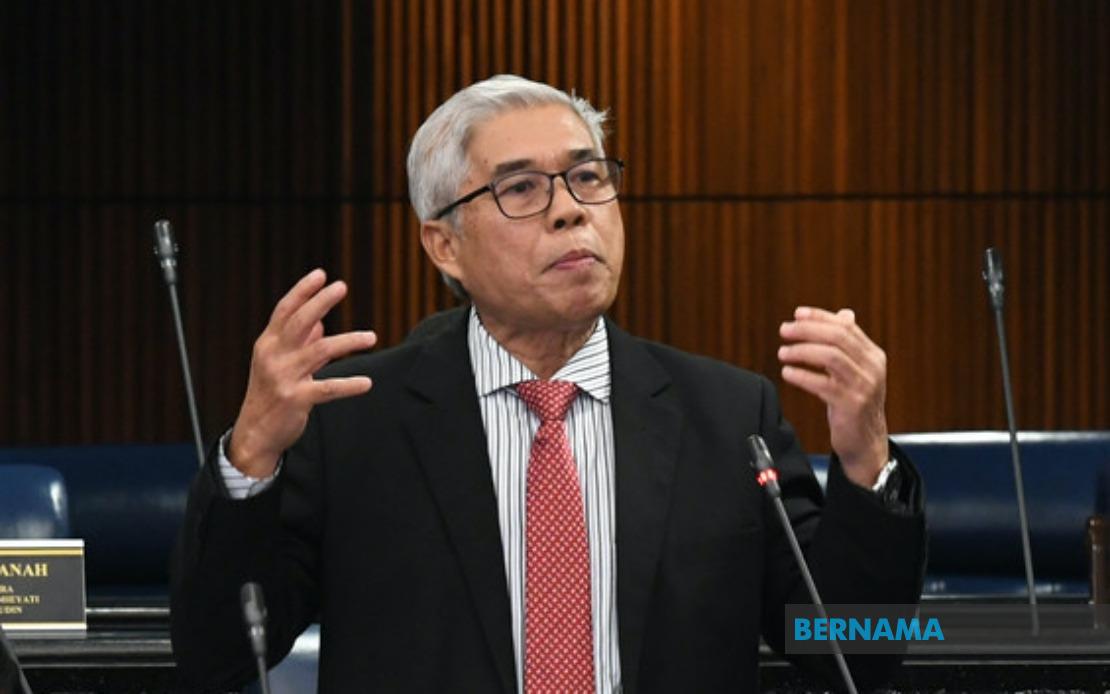
The MADANI Government makes financial decisions regarding state allocations on the basis of constitutional law and written statutes, according to Pasir Gudang MP Hassan Abdul Karim, who is also a practising lawyer. His remarks come as questions about funding fairness loom ahead of Johor's state election scheduled for July 11.
Abdul Karim outlined the legal framework underpinning federal-state fiscal relationships, drawing attention to Article 109(1) of the Federal Constitution, which mandates that the Federal Government provide each state with an annual per capita allocation designed in accordance with the Tenth Schedule, Part I. This constitutional provision establishes the foundational mechanism through which the centre transfers resources to the periphery. The specificity of this arrangement reflects Malaysia's federal system, which requires both clarity and consistency in how national revenues are distributed among constituent states.
He further referenced Article 110(1), which grants states entitlements to revenues stemming from designated taxes, levies, and other income sources enumerated in Part III of the Tenth Schedule. Together, these two articles create a dual mechanism: the first ensures a minimum guaranteed transfer per capita, while the second allows states to retain or receive specific revenue streams based on economic activity within their borders. This dual approach theoretically balances equitable distribution with incentives linked to local economic performance.
For state governments that believe their allocations are inadequate, the constitutional framework provides a formal grievance procedure. The National Finance Council, established under Article 108(4), serves as the designated forum where such disputes can be articulated and discussed. The Federal Government is obligated to consult this council before finalising allocations and grants to states. Abdul Karim emphasised that any administration taking office in Johor following the July 11 election would have access to this institutionalised mechanism to pursue its fiscal concerns through legitimate channels.
His comments address long-standing tensions between the federal centre and Johor over revenue distribution. During a recent engagement with constituents, Tunku Mahkota Ismail, the Regent of Johor, raised the financial disparity issue publicly. The Regent noted that Johor remits more than RM40 billion annually to the Federal Government, yet receives only approximately RM2 billion to RM3 billion in return. This stark differential, he argued, constrains the state's capacity to fund development initiatives and welfare programmes for its population of nearly five million residents.
The Regent's intervention highlights how resource allocation has become a politically charged issue in Malaysia's federal architecture. Johor, as an economically significant state with substantial manufacturing, port, and tourism sectors, generates considerable tax revenue. However, the centralised nature of Malaysia's taxation system means these revenues flow primarily to federal coffers before selective portions are redistributed. The gap between contribution and return raises questions about whether current constitutional formulas adequately reflect regional economic productivity or demographic needs.
Abdul Karim's invocation of constitutional provisions serves multiple purposes. First, it situates the issue within the rule of law, emphasising that federal policy is not arbitrary but derived from written, legally binding documents. Second, it reassures state-level actors that mechanisms exist for formal redress should they deem allocations inadequate. Third, it implicitly acknowledges that dissatisfaction exists—otherwise, there would be no need to explain the constitutional procedures.
The timing of these clarifications is significant given the imminent state election. Incoming administrations often inherit grievances from predecessors and inherit commitments that require funding. An understanding of how allocations work and how disputes can be escalated becomes crucial for state-level political actors preparing to govern. The National Finance Council thus emerges not merely as a technical body but as a potential arena for political negotiation between Kuala Lumpur and Johor.
Malaysia's constitutional approach to state funding reflects its compromise between federalism and centralisation. Unlike some federal systems where sub-units retain primary taxation authority, Malaysia concentrates revenue collection at the centre and distributes returns based on formulae. This architecture theoretically ensures poorer states are not left behind, but it also creates dependency and friction when richer states perceive themselves as net contributors subsidising others.
The broader regional context matters too. States across Southeast Asia often grapple with centre-periphery fiscal imbalances. Malaysia's explicit constitutional mechanisms for dispute resolution distinguish it from some neighbours, though disagreements persist about whether these mechanisms produce outcomes perceived as fair by all parties. Johor's prominence in Malaysia's economy means its concerns carry weight beyond the state itself, influencing broader conversations about regional equity.
Going forward, how the National Finance Council addresses Johor's fiscal grievances may set precedents influencing federal-state relations. Should a new Johor government formally petition the council, the response could either reassure economically significant states that their concerns are taken seriously or reinforce perceptions that formulaic allocations are immutable regardless of regional circumstances.
Abdul Karim's statements ultimately reaffirm that constitutional law structures these decisions, yet his need to explain the framework suggests that existing arrangements, while legally sound, may not satisfy all stakeholders regarding their fairness or adequacy. The path forward likely involves not just invoking constitutional provisions but engaging genuinely with substantive concerns about whether current formulas serve Malaysia's federal project equitably.

