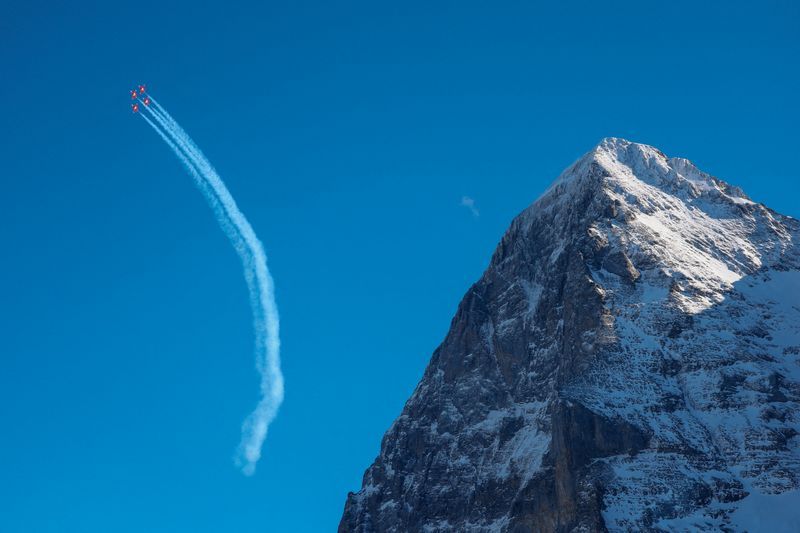
British mountaineer Fay Manners has achieved a milestone on one of Europe's most formidable peaks, becoming the first British woman to pioneer a new route on the Eiger North Face. Working alongside Swiss climbing partner Roger Schaeli over 13 days in summer 2024, Manners established the "Solar Eclipse" route, a technical climb spanning 2,952 feet across 33 pitches on the iconic wall in the Swiss Alps. This accomplishment represents more than a personal triumph—it marks a symbolic breakthrough in a sport where women remain significantly underrepresented in the history books that guide aspiring climbers.
The Eiger North Face itself holds legendary status in mountaineering culture. The 5,900-foot rock and ice wall attracts elite climbers from around the globe, yet it remains notorious for its deadly weather, rockfall hazard, and psychological intensity. When a German-Austrian team first conquered the face in 1938, it was hailed as a major triumph for alpine climbing. Decades of attempts, some fatal, had preceded that breakthrough, cementing the wall's reputation as a true test of climbing prowess. For contemporary mountaineers like Manners, the Eiger remains a pilgrimage site where technical skill, courage, and innovation converge.
Manners' connection to the Eiger began four years earlier when she successfully climbed the established Heckmair Route. Rather than simply ticking off another peak, that experience sparked a deeper engagement with the wall. She began researching its geology, its weather patterns, its climbable features with an intensity that gradually transformed into ambition. Unlike repeating a known route where climbers benefit from guidebook information, established protection points, and peer advice, opening a new line demands entering genuine uncertainty. Climbers must read unfamiliar terrain, improvise protection as they go, and confront the very real possibility of turnaround if the line proves unclimbable.
This distinction between repeating and creating routes sits at the heart of Manners' broader argument about representation in mountaineering. When women open the guidebook—the reference that coordinates communities of climbers across generations—they encounter predominantly male names anchoring the routes. That cumulative absence sends a psychological message: this is what climbers do, and climbers have historically been men. For younger women considering mountain sports as a career or passion, the absence of female route-setters can reinforce an internalized ceiling on what feels achievable. By establishing "Solar Eclipse," Manners has added a female name to that permanent record, creating a precedent for others to follow.
The history of women on the Eiger reveals both progress and persistent inequality. In 1964, Daisy Voog became the first woman to successfully climb the North Face, having previously been rejected from a mountaineering club solely because of her gender. Five years later, Japanese climber Michiko Imai joined a six-person team that established the "Japanese Summer Direttissima" route, yet she remains a solitary woman's name among that achievement. These historical moments matter precisely because they remain exceptional. Manners envisions a future where all-female teams routinely climb new routes, where gender becomes incidental rather than noteworthy.
Manners, now 39, reflects on how early socialization shapes women's relationship to physical ambition and professional possibility. She describes the subtle messages that accumulate over a childhood—being told she cannot carry as much weight, that her body has different limitations, that her ceiling differs fundamentally from boys' ceilings. These assumptions become internalized so quietly that their presence goes unnoticed until adulthood. By then, many women have already redirected their aspirations toward domains deemed more conventionally accessible. Manners questions what women might achieve if that constant, genteel discouragement never occurred.
Her own path to professional climbing illustrates this dynamic. Growing up in England, she possessed clear sporting talent and ambition, yet family and peers repeatedly told her that women could not build careers from sport. The financial reality seemed immutable; the barrier felt structural. She pursued data science instead, following the socially endorsed route toward economic security. After relocating to Chamonix, France, while working as a data consultant, she maintained climbing as a personal pursuit. Only when outdoor brand The North Face approached her about sponsorship did professional climbing begin to feel real. Even then, the shift happened almost accidentally—she secured a sponsorship, split her time between consulting and climbing, and eventually transitioned fully. "I really only realised that it was possible when it was happening," she reflects, still astonished that the path opened.
This trajectory matters for Southeast Asian mountaineers and aspiring climbers, particularly women considering alpine sports in the region. Malaysia, Singapore, and other Southeast Asian nations have produced accomplished climbers, yet the infrastructure supporting professional mountain sports remains limited compared to Europe. Women considering climbing careers face not only the gender stereotypes Manners describes but also regional economic constraints and fewer commercial opportunities. Her example demonstrates that visibility and sponsorship can shift what feels feasible. When international brands recognize female athletes, regional women gain permission to imagine different futures.
Manners' achievement on the Eiger also reflects evolving commercial interest in women's mountaineering. The North Face's sponsorship decision reflects a broader shift within outdoor industry marketing, which increasingly recognizes women as consumers and athletes. This commercial attention has tangible effects: it creates pathways for women to professionalize, supplies resources for expedition planning, and generates media coverage that raises visibility. For Malaysia, where outdoor recreation remains growing but female participation in elite mountaineering remains modest, such commercial interest could catalyze expansion.
The technical demands of establishing "Solar Eclipse" underscore why the achievement merits recognition. Manners and Schaeli could not consult existing information about the line's difficulty, protection requirements, or feasibility. They spent 13 days committing to a path through unclimbed terrain, placing protection as they ascended, managing risks without established precedent. The physical and psychological demands of route-finding exceed those of repeating established routes, yet the climbing world's reward structures have historically tilted toward summits and established classics rather than the creative process of opening new lines.
Looking forward, Manners articulates a clear vision: she wants to return to "Solar Eclipse" and witness all-female teams climbing it, adding their names and experiences to the route's history. That ambition reflects understanding that one woman opening a route matters less than creating conditions where route-opening becomes normalized for women. Each female-led ascent, each woman's name added to guidebooks, each story of a girl watching a woman climber and thinking "I could do that"—these compound into cultural change. For Southeast Asian mountaineering communities watching international developments, Manners' milestone signals expanding possibility. The mountains remain demanding and indifferent to gender, but the social structures surrounding them need not remain.

