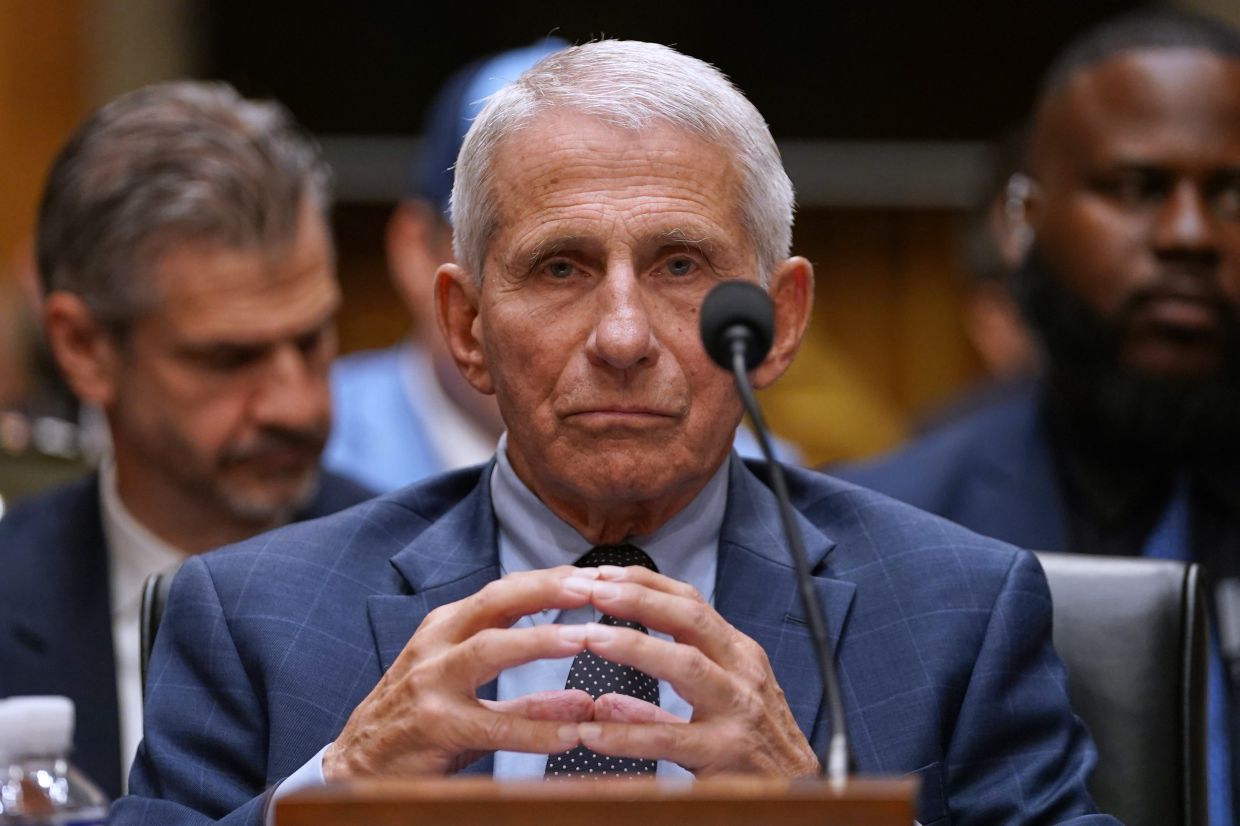
Former US health official Anthony Fauci declined to answer nearly every question posed by senators at a contentious congressional hearing on Wednesday, citing his constitutional right against self-incrimination. The hearing before the Senate Homeland Security and Governmental Affairs Committee marks an extraordinary moment in the ongoing, fiercely politicised debate over the origins of the COVID-19 pandemic and the adequacy of American oversight of coronavirus research conducted in Wuhan with US government funding.
Fauci, who directed the National Institute of Allergy and Infectious Diseases and became the public face of America's pandemic response, was subpoenaed to testify after months of Republican-led scrutiny. The appearance exposed deep partisan fault lines in Washington, with Republicans pressing the 85-year-old former official over his role in funding research at the Wuhan Institute of Virology and his previous statements to Congress, whilst Democrats characterised the hearing as a politically motivated witch hunt.
Committee chair Rand Paul, a Kentucky Republican who has made countering Fauci's credibility a central focus of his political agenda, opened the hearing with aggressive questioning about US funding for coronavirus research in China. Paul and fellow Republicans have long championed the lab-leak hypothesis—the theory that the pandemic originated from an accidental release at a research facility rather than through natural transmission from animals to humans. In response to Paul's opening salvo, Fauci accused the senator of harbouring an "obsession" with seeing him prosecuted, arguing that answering questions could expose him to politically motivated legal consequences.
The funding dispute centres on grants awarded by the National Institutes of Health to EcoHealth Alliance, a non-profit research organisation based in the United States. EcoHealth subsequently channelled portions of this funding to support investigations into bat coronaviruses at the Wuhan institute. Republicans have characterised this work as dangerous "gain-of-function" research—experiments designed to enhance specific pathogenic properties—which they contend posed an unacceptable biosafety risk. Fauci and the NIH have consistently disputed this characterisation, maintaining that the research funded through their agency neither produced the virus responsible for the global pandemic nor constituted prohibited gain-of-function work.
When Paul directly asked Fauci to explain the rationale for funding the research in China, the former health official responded by invoking the Fifth Amendment, a constitutional protection against self-incrimination. "On the advice of counsel, I respectfully decline to answer based upon my rights under the Fifth Amendment of the Constitution," he stated repeatedly throughout the three-hour session. This tactic drew visible frustration from Republican senators, with Ohio Republican Bernie Moreno expressing particular exasperation as Fauci declined answer after answer, telling the former official that he hoped he would eventually "answer for your crimes."
The backdrop for Fauci's extraordinary silence includes a broad pre-emptive presidential pardon granted by former President Joe Biden shortly before departing office in January 2025. The pardon covers potential federal offences committed between January 1, 2014, and January 20, 2025, arising from Fauci's government service. Notably, the pardon does not extend to alleged false statements made during subsequent testimony given after Biden left office—a significant limitation that may explain Fauci's legal strategy of invoking the Fifth Amendment. Despite the pardon and years of scrutiny, Fauci has not been charged with any crime related to the pandemic.
Democratic senators swiftly moved to defend Fauci, characterising the hearing as an extension of long-standing Republican efforts to delegitimise the former official through partisan attacks. Gary Peters, the ranking Democratic member and senator from Michigan, argued that the hearing represented "a culmination of months of biased and selected efforts by the majority" designed to "legitimise a predetermined conclusion that was reached years ago." This sharp partisan divide underscores how thoroughly the question of pandemic origins has become entangled with American domestic politics, complicating efforts to reach any bipartisan consensus on what actually occurred.
International scientific opinion has largely coalesced around the natural transmission theory, with a February 2024 survey by the Global Catastrophic Risk Institute finding that most virologists support the hypothesis that the virus jumped from animals to humans before spreading through person-to-person contact. In January 2025, however, the CIA issued a new assessment suggesting the lab-leak hypothesis deserved serious consideration, though with only "low confidence" in that conclusion. This modest shift in intelligence community assessments has provided ammunition to those questioning Fauci's early public statements dismissing laboratory-related origins.
China, through its Washington embassy, used the hearing as an opportunity to reinforce its own position on the matter. The embassy statement emphasised that determining the pandemic's origins should remain fundamentally a scientific question, not a political one, and cited the World Health Organization-China joint study concluding that a laboratory leak was "extremely unlikely." The Chinese government reiterated its opposition to what it described as "political manipulation" of the origins question, a clear rebuke to American lawmakers pursuing investigations it views as ideologically motivated attacks on Beijing.
For Southeast Asian observers, this hearing carries particular significance given the region's vulnerability to future pandemics and its stake in how international scientific cooperation on infectious disease research is governed. The deterioration of US-China relations evident in this dispute has implications for regional biosecurity architecture, as countries across Southeast Asia navigate competing pressures from Washington and Beijing regarding research partnerships and oversight mechanisms. The politicisation of pandemic origins in the United States risks undermining the scientific consensus-building essential for preparing the region for emerging infectious disease threats.
Fauci's Fifth Amendment invocations represent a remarkable moment: a distinguished career public health official, despite holding high office during a nation-defining crisis, now declining to speak publicly about his decisions. This stands in stark contrast to his previous visibility during the pandemic, when he became a controversial figure precisely because of his willingness to engage publicly with scientific questions. Paul concluded the hearing by pledging further congressional action to "hold Fauci accountable," signalling that this controversy remains far from resolved despite the presidential pardon and Fauci's departure from government.
The episode illustrates a troubling precedent whereby scientific and public health policy disputes become ensnarled in criminal allegations and constitutional protections against self-incrimination. Even with protective pardons in place, senior health officials may face such political jeopardy that they cannot testify freely about their decision-making during crises. This dynamic could deter future public servants from taking decisive action during health emergencies, knowing that their choices might later be weaponised for partisan purposes. The hearing thus raises uncomfortable questions about American governance that extend well beyond Fauci's personal circumstances.

