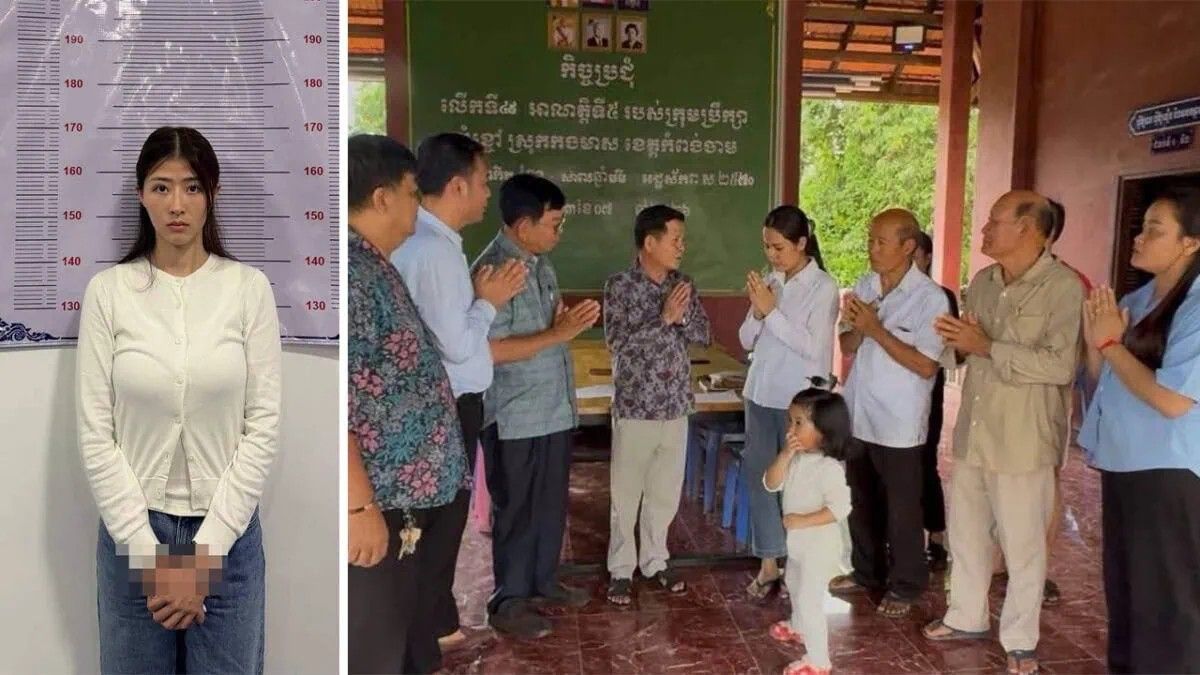
An out-of-court settlement has resolved the civil dispute in a fatal hit-and-run case that claimed the life of a Cambodian transport ministry official in Phnom Penh last month. The victim's family agreed to withdraw their civil complaint after receiving S$60,000 in compensation from the accused driver's family, bringing an end to the monetary dispute while leaving the criminal prosecution to proceed independently through the courts.
Kuoch Limhan, an official with the Ministry of Public Works and Transport's construction laboratory, was struck by a motorcycle-riding motorist on the night of July 28 in the capital's Sen Sok district. According to witness accounts, the tragic incident unfolded when Limhan was returning home carrying milk for his young daughter. The collision left him dead at the scene, with video footage subsequently revealing the accused driver and an associate fleeing the location in a tuk tuk while the victim's body remained on the rain-soaked street below.
The settlement agreement, formally executed on August 6, was brokered through a structured negotiation process involving both families and their legal representatives. Oknha Tong Hok Seng, the father of the accused driver Sam Meychou, authorised the S$60,000 payment to the victim's widow as the principal measure of the civil resolution. Seung Kimhor, acting as the family's representative in filing the original civil claim, became a signatory to the agreement alongside the defendant's family. The transaction was formally witnessed by Kong Sekleng, the commune chief, and lawyer Phon Thearin, ensuring the arrangement carried appropriate local authority and legal credibility.
The agreement itself emphasises the parties' mutual commitment to settling the matter amicably through direct negotiation rather than protracted litigation. Both sides explicitly renounced any further claims or demands relating to the incident, with the formal acknowledgment that the civil dispute had been resolved through mutual understanding and genuine goodwill. The settlement specifically referenced the withdrawal of the victim's family's complaint in criminal case No. 4396, originally filed with the Phnom Penh Municipal Court on July 31, 2026, thereby extinguishing the civil component of the legal proceedings.
However, the compensation arrangement creates a crucial distinction between civil and criminal accountability. The settlement explicitly preserves the state's independent prosecution of the criminal charges against Meychou, meaning the driver's legal jeopardy remains unchanged by the family's decision to accept financial redress. This separation reflects Cambodia's legal framework, where compensating a victim's family does not automatically nullify the state's obligation to pursue criminal justice against someone accused of serious traffic violations resulting in death.
Meychou faces charges stemming from the alleged circumstances of the collision itself. According to the investigating authorities' account, she had crossed the centreline of the road while overtaking another vehicle when she struck Limhan's motorcycle, resulting in his immediate death. The seriousness of the allegations was compounded by evidence that she fled the scene rather than remaining to render assistance or await police arrival. Her arrest came on July 30, approximately 36 hours after the collision, when she voluntarily presented herself to authorities.
On July 31, the Phnom Penh Municipal Court formally charged Meychou with causing a fatal traffic accident and absconding from the scene of a collision. Following the court's examination of the evidence and interrogation of the accused driver, the investigating judge determined that continued detention pending trial was warranted. This decision placed Meychou in pre-trial custody, a status that continues independently of the civil settlement reached with the victim's family.
The resolution of the civil component through structured compensation reflects a common practice across Southeast Asian legal systems, where families of deceased accident victims often negotiate financial settlements with responsible parties' insurers or families outside the criminal justice process. For Malaysian observers, such arrangements underscore the importance of understanding how civil remedies and criminal prosecution operate as separate legal tracks, each serving distinct purposes within the justice system. The victim's family's acceptance of compensation addresses their immediate financial losses and hardship, while the state's criminal case pursues questions of accountability and public safety.
The case also highlights broader issues surrounding traffic safety and enforcement in Cambodia's capital, where motorcycle accidents continue to claim lives despite ongoing efforts to improve road safety standards. The fact that the accused driver initially fled the scene rather than remaining to assist illustrates challenges that traffic authorities across the region face in promoting accountability and responsible behaviour among motorists. The consequences for Meychou in the ongoing criminal proceedings will likely carry significant weight in demonstrating the consequences of both reckless driving and failure to render assistance.
For the victim's family, the settlement provides immediate financial relief during a period of grief and economic disruption caused by the sudden loss of an income-earning household member. Kuoch Limhan's widow and young daughter now have some material assistance to navigate the months and years ahead, though no monetary compensation can truly address the irreplaceable loss of a family member. The arrangement allows the family to pursue their lives without the additional burden of prolonged civil litigation, while maintaining their moral and legal standing as the victim in the ongoing criminal case should they choose to participate in those proceedings.
The distinction between civil settlement and criminal prosecution remains a critical feature of modern legal systems across Southeast Asia. This case demonstrates how victims' families can achieve financial redress through negotiation whilst simultaneously allowing the state to maintain its prosecutorial mandate. As Cambodia's courts proceed with the criminal case against Meychou, the broader question of road safety accountability in Phnom Penh will receive continued judicial attention, potentially influencing how similar cases are handled and what penalties await those convicted of fatal traffic offences.

