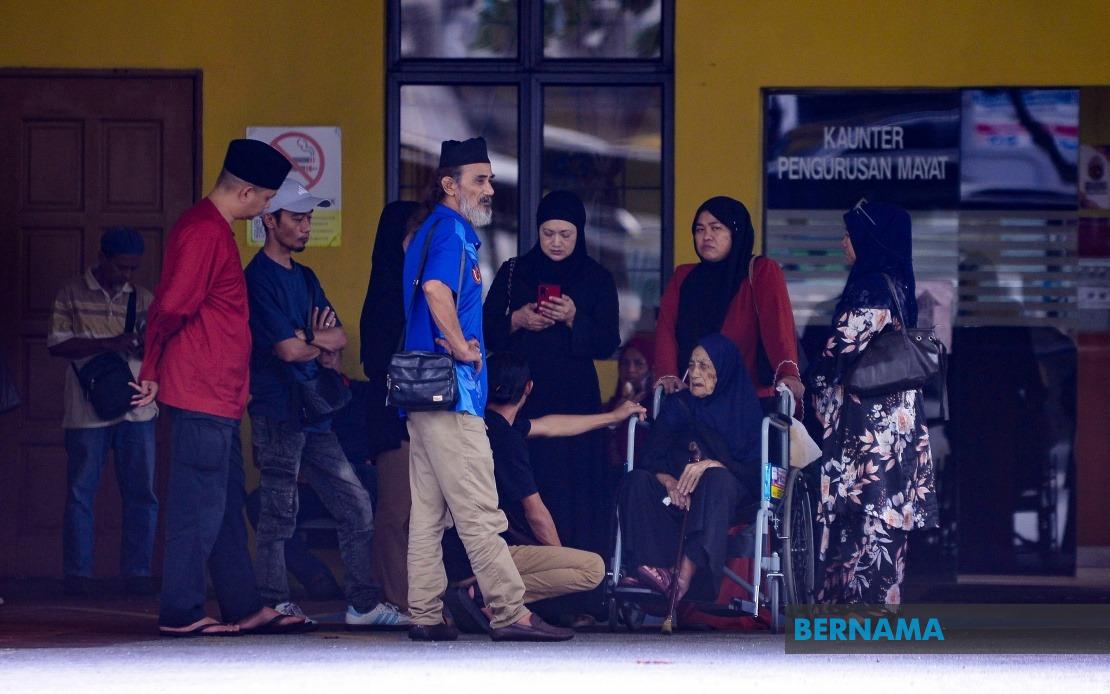
A family struck by tragedy in a predawn collision at Kuala Lumpur's Maju Junction is demanding answers. Mohd Nadzri Razali, speaking from his home in Kampar, has appealed for a thorough and impartial investigation into a crash that claimed the lives of three relatives and left his sister hospitalized. The incident, which unfolded around 1 am when an Immigration Department Isuzu Black Maria lorry collided with a Proton Saga at the busy intersection, has raised urgent questions about vehicle operations and traffic safety protocols during law enforcement operations.
The collision appears to have occurred under circumstances that warrant careful scrutiny. According to accounts gathered at the scene, the Immigration Department lorry was traveling from the Kuala Lumpur Immigration Office to Chow Kit to conduct an operation targeting undocumented migrants. As it approached the Maju Junction intersection, the vehicle allegedly proceeded while the traffic light governing its lane displayed red, though its beacon lights and siren were activated. Simultaneously, a Proton Saga driver lawfully crossing the intersection on a green light was unable to react swiftly enough to avoid the larger vehicle, resulting in a violent impact.
The consequences of the collision extended far beyond the initial point of contact. The force of impact sent the Immigration lorry skidding out of control across the intersection, where it struck four pedestrians and an Inokom Matrix vehicle. Among those hit were members of a single family who had been in the wrong place at the worst possible moment. Shaik Mohd Firdaus Shaikh Yahya, 53, and his daughters Siti Nor Sazlin, 25, and Siti Darwisyah Auni, 12, were pronounced dead at the scene. His wife, Norhayati Razali, 55, sustained severe injuries and was immediately transported to Kuala Lumpur Hospital, where she has been receiving intensive care treatment.
Mohd Nadzri's demand for transparency carries particular weight given the family's compounding grief. He emphasized his hope that authorities will conduct a comprehensive examination of the circumstances, particularly the allegation that the Immigration lorry disregarded the red traffic signal. His request for justice is not merely procedural—it reflects a family's need to understand whether systemic failures or protocol violations contributed to the tragedy. The involvement of a government agency vehicle operating under operational urgency raises questions about how balance is maintained between law enforcement objectives and public safety on city streets.
The surviving victim's condition adds another layer of concern for the family's immediate future. Norhayati has regained consciousness following her injuries, according to reports Mohd Nadzri received from medical staff. The family is considering whether to pursue her continued treatment at Kuala Lumpur Hospital or transfer her to facilities closer to their Kampar base, such as Hospital Ipoh or Teluk Intan. Her recovery trajectory and long-term prognosis remain uncertain, meaning the family faces an extended period of medical uncertainty and financial strain alongside their bereavement.
The emotional toll of this incident is compounded by its timing. Mohd Nadzri revealed that the family had only recently experienced another loss, having lost a different family member on May 30. Within months of that grief, they must now prepare for the funeral of three relatives. The family has decided to lay all three victims to rest together in a single grave at the Muslim Cemetery in Kampung Air Hitam Labu, Kampar, a decision that speaks to their desire for unity even in death. Mohd Nadzri, who lives nearby in Taman Aman Fasa 2, Mambang Di Awam, had regularly seen his sister's family, with their last meeting occurring approximately two weeks before the crash when they gathered to visit family graves in Teluk Bakong.
The legal framework governing this incident has already been invoked. Authorities have initiated investigation procedures under Section 41(1) of the Road Transport Act 1987, the statutory provision addressing vehicle-related fatalities. This legal avenue provides a formal mechanism for establishing accountability and determining whether any parties violated traffic regulations or operational procedures. However, the specific circumstances—a government agency vehicle, an active enforcement operation, traffic signal compliance, and beacon light usage—create a complex investigative landscape that demands meticulous attention to detail.
For Malaysian road safety advocates and the general public, this incident raises broader concerns about how governmental and law enforcement agencies navigate busy urban intersections during operations. The activation of beacon lights and sirens, while signaling to other road users that an emergency vehicle is operating, does not universally grant absolute right of way, and drivers of such vehicles retain legal obligations regarding traffic signals. Understanding whether protocols were properly followed and whether training adequately addresses intersection navigation during urgent operations will be crucial to preventing similar incidents.
The family's plea for transparency reflects a fundamental principle of public accountability—that when governmental operations result in civilian casualties, thorough and impartial investigations are not merely procedural niceties but moral imperatives. The deaths of Shaik Mohd Firdaus Shaikh Yahya and his two young daughters, along with the severe trauma inflicted on Norhayati and the emotional devastation experienced by their extended family, represent a human cost that demands answers. As the investigation proceeds under the Road Transport Act, the family's insistence on justice serves as a reminder that every vehicle on Malaysian roads, regardless of its operational purpose or governmental affiliation, operates within a framework of public trust and regulatory obligation.

