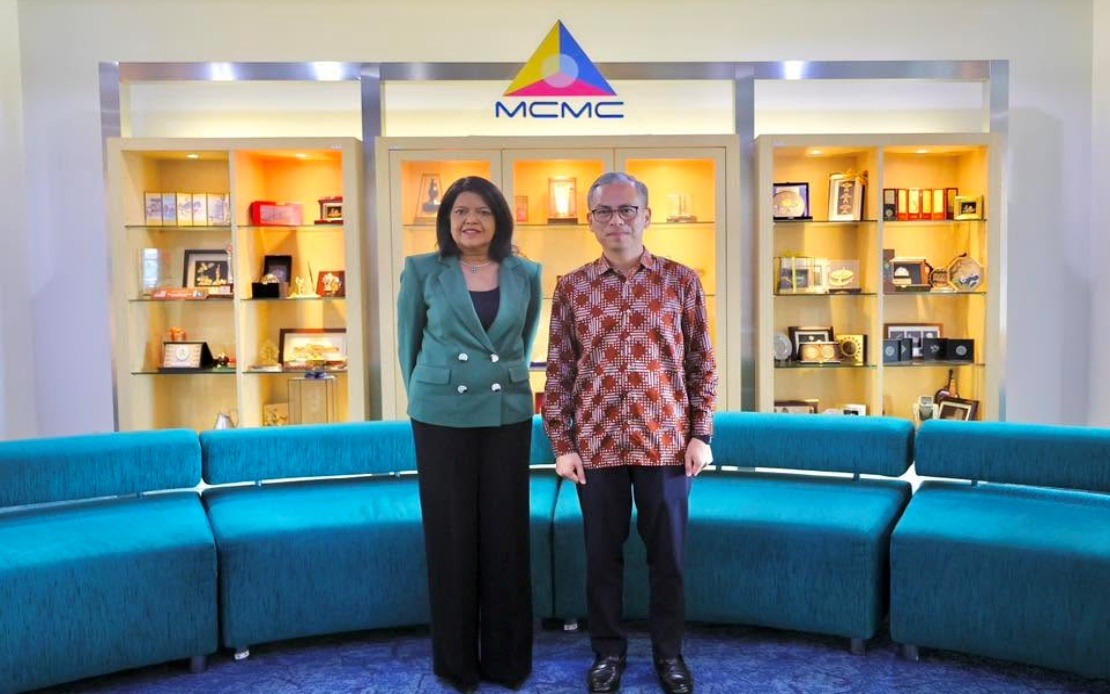
The appointment of Tan Sri Nallini Pathmanathan as chairman of the Malaysian Media Council represents a significant development in the country's media governance landscape. Communications Minister Datuk Fahmi Fadzil publicly recognised the milestone on Friday, extending his congratulations to the former Federal Court judge through a Facebook statement that underscored the importance of the role in shaping Malaysia's media environment.
Nallini's selection came after the MMC board unanimously voted to endorse her appointment during a meeting held on May 26. The decision carries particular weight given her extensive judicial background, which brings institutional credibility to an organisation tasked with regulating one of the nation's most influential sectors. Her transition from the bench to media regulation reflects a deliberate choice to place experienced leadership at the helm of an institution still establishing its operational frameworks.
The Malaysian Media Council itself represents a relatively new institutional framework within Malaysia's media ecosystem. Established under the Malaysian Media Council Act 2025, the MMC functions as a self-regulatory body operated by and for the media industry itself, distinguishing it from government-controlled regulatory mechanisms. This model reflects a broader global trend toward industry-led oversight that balances commercial interests with public accountability.
Fahmi's statement highlighted three interconnected objectives that will likely define Nallini's tenure. The minister expressed confidence that she would champion responsible media freedom, a formulation that acknowledges both the essential right to press liberty and the corresponding duty to exercise it with integrity. This phrasing reflects ongoing tensions within Malaysian media discourse between expanding editorial independence and maintaining standards that protect public interest.
The second priority mentioned—strengthening journalistic ethics—addresses a persistent concern among media observers and government bodies alike. Malaysia's journalism sector encompasses organisations operating at vastly different levels of professional maturity and resource availability, from major national outlets to smaller regional publications. An ethics-focused approach by the MMC could help establish baseline standards across this diverse landscape, potentially improving overall industry credibility and reader trust.
Fahmi's third stated hope concerns advancing the collective voice of the media industry while ensuring its long-term sustainability. This formulation suggests recognition that Malaysian media outlets face mounting economic pressures from digital disruption, advertising revenue decline, and changing consumer habits. The MMC, under Nallini's leadership, may need to advocate for structural solutions that protect viable journalism while adapting to contemporary information distribution patterns.
Nallini's judicial background carries particular implications for how the council might approach contentious decisions. As a former Federal Court judge, she brings familiarity with constitutional law, media law precedents, and the principles governing freedom of expression within Malaysia's legal framework. This expertise could prove valuable when the MMC must navigate disputes between editorial judgment and competing claims of harm or misinformation, territories where law and journalism intersect in complex ways.
The establishment of the MMC under new legislation in 2025 positions the council at an inflection point for Malaysian media regulation. Where previous frameworks relied heavily on government legislation and oversight, the self-regulatory model places greater responsibility on industry actors themselves to maintain standards and address complaints. This shift carries implications for how Malaysian publications navigate sensitive political coverage, business reporting, and social commentary—areas where government sensitivities traditionally intersect with editorial autonomy.
The characterisation of the MMC as an independent, credible, and public-interest-driven body, as stated in the council's own announcement, reveals aspirations that will require careful nurturing. Credibility demands that the organisation be perceived as neither captured by industry commercial interests nor beholden to political pressure. Building this perception necessitates transparent decision-making, inclusive complaint mechanisms, and consistent application of journalistic principles across outlets of varying political leanings and economic power.
For Malaysian readers and media consumers, Nallini's appointment signals potential shifts in how the industry regulates itself and responds to public concerns. Unlike government regulators who operate within state hierarchies and political considerations, a self-regulatory council chaired by someone with judicial experience might apply more consistent legal reasoning to disputes. However, the effectiveness of any self-regulatory body ultimately depends on industry participation and willingness to implement its determinations.
The timing of this leadership transition occurs as Malaysian media confronts multiple disruptions simultaneously: technological transformation in content distribution, economic pressures threatening newsroom sustainability, evolving audience expectations about transparency and accountability, and ongoing debates about the balance between press freedom and responsible reportage. Nallini's appointment suggests the industry recognises it requires experienced, credible leadership to navigate these challenges while maintaining public trust.
The broader Southeast Asian context matters here as well. Several regional media markets have experimented with self-regulatory councils as alternatives to state-controlled mechanisms, with mixed results depending on industry cooperation and enforcement mechanisms. Malaysia's new framework will likely be observed by neighbouring countries considering similar institutional innovations, making Nallini's stewardship potentially influential beyond Malaysia's borders.