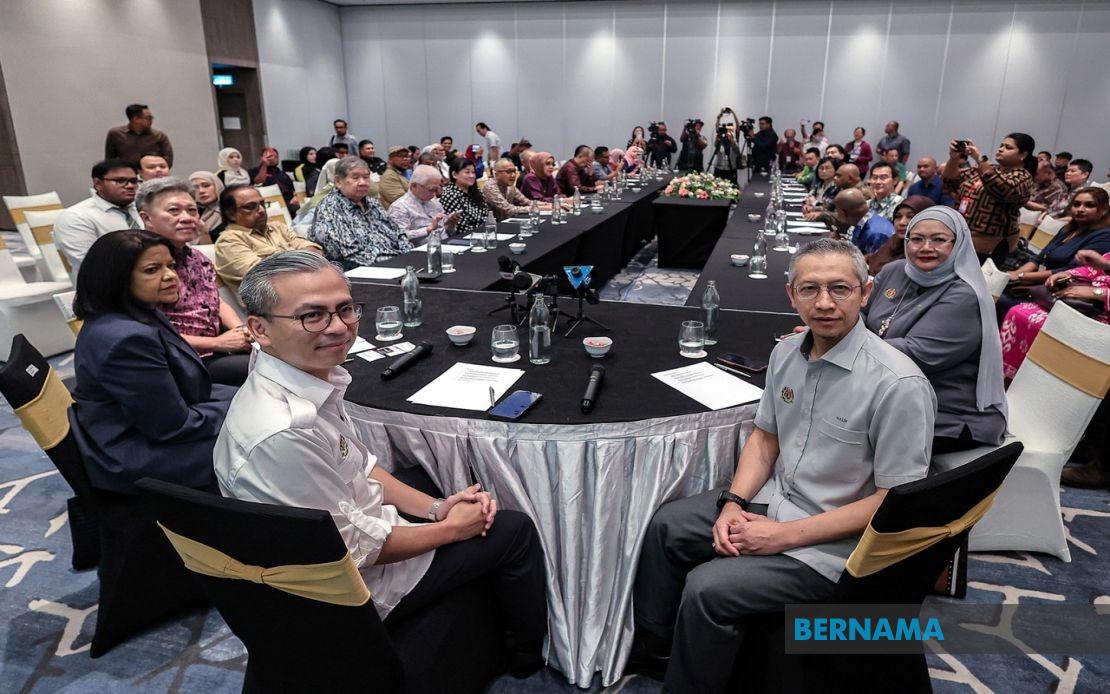
Communications Minister Datuk Fahmi Fadzil has announced plans to institutionalise dialogue between the government and Malaysia's media industry through annual retreat sessions held alongside the National Journalists' Day (HAWANA) celebrations. Speaking at a press conference in Butterworth on June 20 following a nearly two-hour dialogue with media representatives during HAWANA 2026, Fahmi outlined a structured framework designed to create regular forums where journalists and government officials can exchange perspectives on pressing industry concerns and policy directions.
The proposed retreat model represents a significant step towards formalising engagement channels that have historically been ad hoc or informal. By anchoring these sessions to HAWANA's annual calendar, the ministry aims to establish predictability and continuity in government-media relations. Fahmi indicated that the Malaysian Media Council will be tasked with coordinating the logistical and substantive elements of these retreats, positioning the MMC as a critical intermediary institution between the state and the fourth estate. This delegation reflects broader recognition that media governance requires collaborative frameworks rather than top-down directives.
The retreats are conceived as dual-purpose platforms. Beyond providing government officials an opportunity to explain policy rationales and gather real-time reactions from journalists, these sessions will function as feedback mechanisms through which the industry can formally submit proposals to relevant ministries. Such proposals may encompass structural changes to media regulation, amendments to existing legislation, or broader strategic recommendations concerning the health and sustainability of Malaysia's journalism sector. By institutionalising this feedback loop, the government signals willingness to treat the media industry as a stakeholder worthy of structured consultation rather than merely an audience for policy announcements.
A particular focus emerges around the economic pressures currently straining Malaysia's mainstream media organisations. Fahmi identified the structural challenge posed by content distribution on social media platforms, where journalistic work often circulates without generating revenue for traditional news producers. This phenomenon, which has accelerated globally but carries specific implications for Malaysia's media landscape, threatens the financial viability of newsrooms and editorial operations. The minister acknowledged that while social platforms serve as distribution channels, the absence of revenue-sharing mechanisms or licensing arrangements leaves content creators uncompensated, effectively subsidising platform profitability through journalist labour.
To address this dimension, Fahmi committed the government to supporting negotiations between the Malaysian Media Council and major social media operators. Such engagement would aim to establish frameworks—whether through licensing fees, revenue-sharing arrangements, or other mechanisms—that compensate news organisations for content appearing on digital platforms. This approach mirrors similar initiatives undertaken by governments and media associations in Europe and Australia, where regulatory pressure has compelled platforms to negotiate compensation packages with news publishers. The government's willingness to facilitate rather than dictate these discussions suggests a pragmatic understanding that market-based solutions, when structured through negotiation, may prove more sustainable than regulatory mandates alone.
The dialogue itself drew significant institutional representation. Communications Ministry Secretary-General Datuk Abdul Halim Hamzah and Deputy Secretary-General Datuk Bahria Mohd Tamil participated alongside Fahmi, ensuring that senior bureaucratic voices engaged directly with media concerns. Malaysian National News Agency Bernama, through its chairman Datuk Seri Wong Chun Wai and chief executive officer Datin Paduka Nur-ul Afida Kamaludin, represented the state media apparatus, while Malaysian Media Council chairman Tan Sri Nallini Pathmanathan brought civil-society and industry perspectives. This composition reflected acknowledgment that media sustainability requires coordination across government, state institutions, and private sector news organisations.
For Malaysian readers and media watchers, this initiative signals potential evolution in how the government approaches media relations. Rather than viewing journalists primarily as subjects of regulation or targets of policy implementation, the structured retreat model frames them as policy advisors and industry stakeholders. This reframing carries implications for press freedom and editorial independence, depending on implementation. Transparent, bounded discussions focused on economic and regulatory matters could strengthen industry advocacy capacity. Conversely, informal pressure or quid pro quo expectations could emerge if retreat discussions become conflated with editorial considerations or advertising access.
The timing of this announcement—during HAWANA 2026—carries symbolic weight within Malaysia's media community. HAWANA celebrations commemorate Malaysian journalism's historical struggles and professional traditions, making the occasion appropriate for substantive discussions about the sector's future. By anchoring institutional dialogue to these celebrations, the ministry connects government engagement with journalistic identity and professional pride, potentially enhancing perceived legitimacy and buy-in from practitioners.
Broader regional context matters as well. Southeast Asian governments increasingly grapple with media sustainability challenges exacerbated by digital disruption and advertising migration to technology platforms. Malaysia's approach—combining regulatory framework discussions with facilitated platform negotiations—may offer lessons for regional peers struggling with similar issues. Thailand, Indonesia, and the Philippines face comparable pressures on traditional newsrooms, making Malaysian institutional innovations potentially instructive for other media communities across Southeast Asia.
Looking forward, the success of these retreats will depend substantially on implementation details. Clarity regarding which proposals are genuinely open to government reconsideration versus those presented for consultation only will shape credibility. Similarly, the extent to which retreat discussions inform actual policy changes versus remaining symbolic dialogue will determine whether journalists perceive meaningful engagement or mere performance. Establishing clear mechanisms for tracking proposals and communicating government responses—or reasoned rejection—would strengthen the initiative's institutional value.
The retreat proposal also hints at the ministry's recognition that media policy increasingly operates across multiple jurisdictions and involves non-state actors. By committing to facilitating negotiations with social media platforms, the government acknowledges that traditional regulatory tools prove insufficient when economic sustainability depends on global technology companies' business decisions. This reflects mature understanding that contemporary media challenges require hybrid governance approaches combining regulation, negotiation, and industry coordination.

