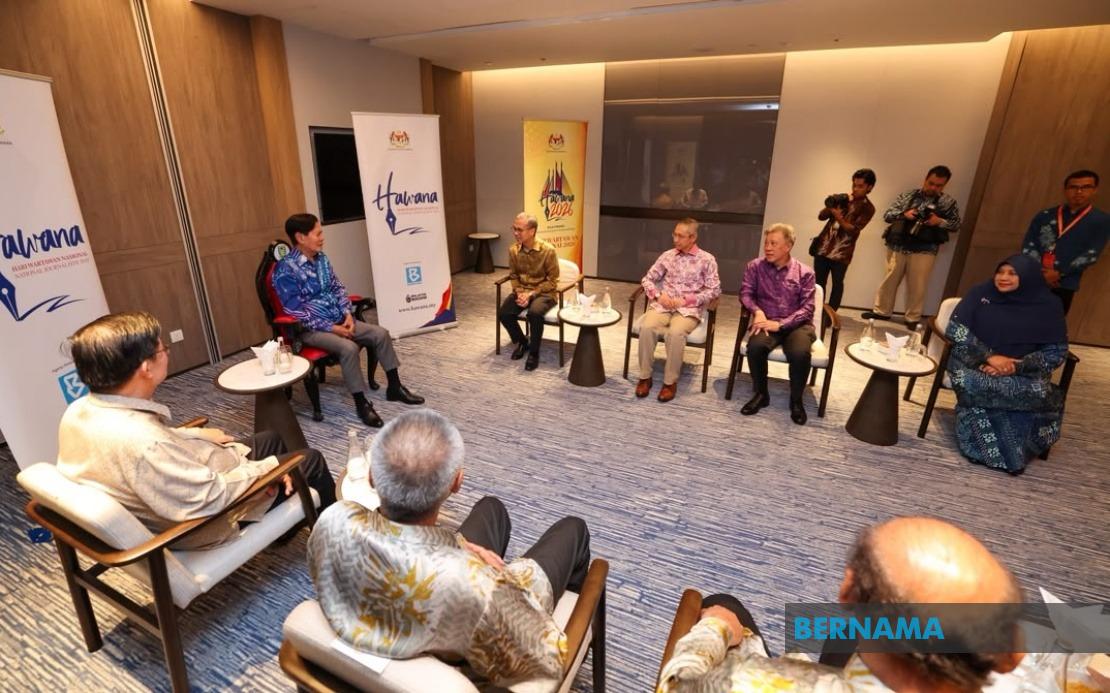
Communications Minister Datuk Fahmi Fadzil has issued a direct appeal to media outlets across Southeast Asia to deepen their collaborative efforts in tackling the expanding problem of misinformation, arguing that coordinated action remains essential for maintaining regional stability and public trust. Speaking at a state government dinner in Butterworth during the National Journalists' Day (HAWANA) 2026 celebration, Fahmi underscored the necessity of forging stronger connections among journalists and newsrooms throughout the ASEAN region, positioning such partnerships as fundamental to advancing shared prosperity across the bloc.
The minister's intervention comes against a backdrop of intensifying concerns about false narratives and unreliable reporting spreading across social media and traditional outlets in Southeast Asia. Fahmi articulated a vision in which media professionals engage in systematic knowledge-sharing and exchange of reporting standards, enabling them to establish common benchmarks for accuracy and journalistic integrity. This approach recognises that misinformation operates without borders and that isolated national responses prove insufficient to address challenges that transcend territorial boundaries.
Fahmi characterised the role of media in contemporary society as foundational to healthy democratic functioning. He described journalism as an essential conduit connecting citizens to factual accounts of events, while simultaneously serving as a crucial intermediary between government policymakers and those responsible for implementation at ground level. In an environment where information travels at unprecedented speed and competing narratives vie constantly for public attention, the minister argued that truthfulness, ethical practice and accountability must remain central to journalistic work.
The emphasis on regional collaboration reflects Malaysia's broader diplomatic positioning within ASEAN, where consensus-building and multilateral approaches characterise engagement on shared challenges. By framing misinformation combat as a collective responsibility rather than a national problem, Fahmi's remarks align with Southeast Asian preferences for collaborative solutions to transnational issues. This strategy also acknowledges that media credibility and public confidence in information systems benefit all nations in the region, making cooperation mutually advantageous.
The HAWANA 2026 celebration itself serves multiple strategic purposes beyond honouring journalists. As Fahmi explained, the commemoration functions as a platform for reaffirming the media's status as a strategic contributor to national development across member states. Recognition of journalism's institutional importance becomes especially significant in an era when media organisations face financial pressures and public scepticism, circumstances that potentially compromise the profession's capacity to perform its traditional watchdog and informational functions effectively.
Penang's hosting of this year's HAWANA observance carries particular significance given the state's emergence as a regional communications and digital innovation hub. The presence of Penang Chief Minister Chow Kon Yeow alongside federal Communications Ministry officials and representatives from ASEAN Communications Ministers' forums underscores the multilayered commitment to addressing information challenges. This gathering assembled key stakeholders including Bernama chairman Datuk Seri Wong Chun Wai, senior newsroom executives from major Malaysian outlets, and international delegates, creating an opportunity for substantive discussion about practical mechanisms for regional media cooperation.
The initiative reflects growing recognition throughout Southeast Asia that misinformation operations frequently exploit weak coordination among national media authorities. Cross-border disinformation campaigns targeting ASEAN nations often succeed precisely because they encounter fragmented responses and inconsistent fact-checking across the region. By establishing stronger institutional linkages and professional networks, media organisations can more rapidly identify false narratives, coordinate debunking efforts and build resilience against manipulation. Such coordination becomes particularly important during sensitive periods like elections or diplomatic crises when false information poses greatest risk to social stability.
Fahmi's framing of journalism as indispensable infrastructure for connecting policymakers with implementers addresses a distinctly Southeast Asian governance challenge. In many ASEAN countries, communication gaps between central government agencies and local administrators create information vacuums that misinformation readily fills. Professional journalism operating according to shared regional standards can help bridge these gaps, ensuring that accurate information reaches decision-makers at all levels and that public understanding of policy rationales remains grounded in fact rather than speculation or deliberately planted falsehoods.
The minister also acknowledged Penang State Government's active support for media development initiatives, framing such engagement as reflecting genuine official respect for journalism's societal contribution. This recognition matters because media organisations across Southeast Asia frequently operate in environments characterised by state suspicion or regulatory hostility. Demonstrating that governments view professional journalism as beneficial partner rather than obstacle helps legitimise the profession among journalists themselves and strengthens institutional capacity to resist pressure toward self-censorship or compromise of standards.
Looking forward, the challenge for ASEAN media collaboration involves translating ministerial rhetoric into concrete institutional arrangements. This might include establishing regional fact-checking networks, creating forums for journalists to share emerging misinformation tactics, developing common standards for source verification, and coordinating responses to disinformation campaigns affecting multiple countries simultaneously. Malaysia's communications ministry, as host of these discussions, appears positioned to catalyse such practical mechanisms that would give substance to the collaborative vision Fahmi articulated.
The broader context involves recognising that misinformation threatens not merely individual nations but the entire ASEAN project of peaceful coexistence and economic integration. When false narratives inflame intercommunal tensions or distort understanding of regional issues, they undermine the foundations of trust necessary for multilateral cooperation. By positioning media collaboration as essential infrastructure for regional stability, Fahmi's remarks attempt to elevate journalism from a sectoral concern to a matters of strategic importance commanding attention from senior policymakers across Southeast Asia.

