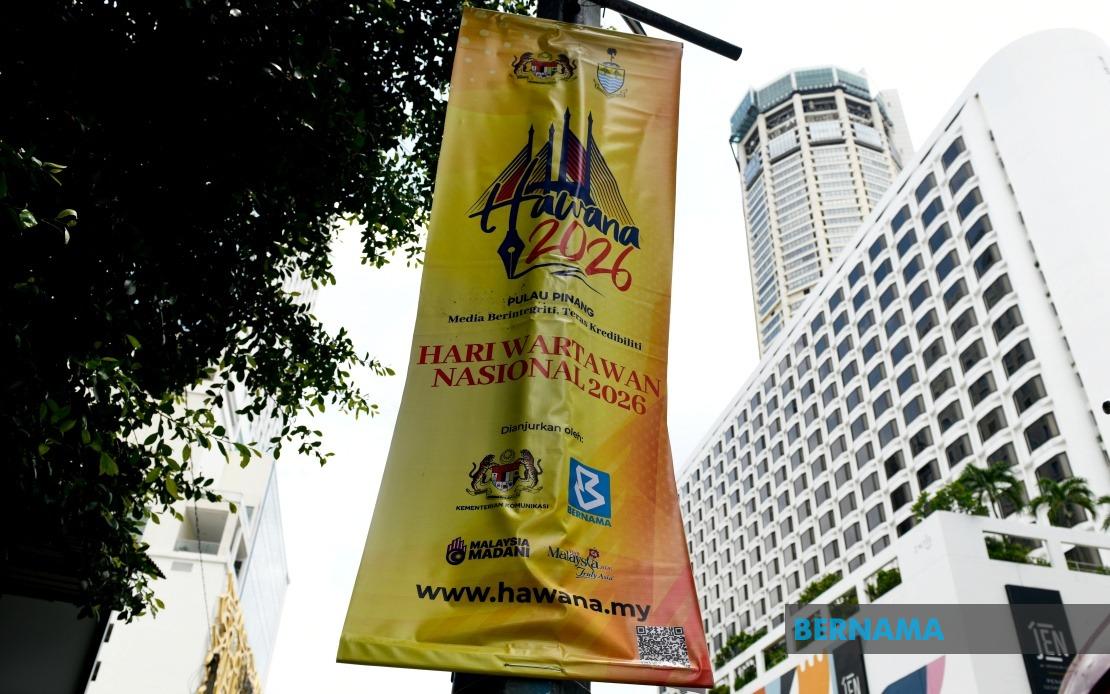
Communications Minister Datuk Fahmi Fadzil has embarked on a two-day working visit to Penang centred on celebrating the conclusion of National Journalists' Day (HAWANA) 2026, an annual occasion that recognises the profession's contributions to Malaysia's media landscape. Beginning in George Town, the ministerial itinerary reflects the government's continued engagement with media institutions and practitioners across the country, signalling the importance placed on maintaining dialogue between policymakers and the fourth estate.
The visit commenced with Fahmi's participation in the Malaysia Media Retreat Programme 2.0 at Seberang Jaya, a gathering designed to convene senior editors, media executives, and representatives from both domestic and international news organisations. This retreat format serves as more than a ceremonial occasion; it represents a deliberate platform for fostering collaboration among institutions that shape national discourse. By hosting such events, the Communications Ministry seeks to reinforce the principle that media organisations operate within a broader ecosystem of national development rather than in isolation from government priorities.
The subsequent state dinner with Penang Yang Dipertua Negeri Tun Ramli Ngah Talib underscores the ceremonial nature of acknowledgement afforded to media professionals. These formal occasions, while traditional in character, function as public recognition of journalism's role in democratic society. For practitioners often working under demanding conditions and tight deadlines, such formal appreciation from senior leadership can strengthen institutional morale and reinforce the perceived legitimacy of their profession.
Parallel to the formal diplomatic component of Fahmi's visit runs a broader cultural and creative dimension. The RIUH Pi HAWANA Carnival, held at PICCA Convention Centre in Butterworth, transforms the celebration of journalism into a community-inclusive festival. By integrating creative industries, entrepreneurship, and local artistry into the same event space, organisers have positioned media professionals not as a separate professional class but as participants within a larger creative ecosystem. This approach reflects evolving contemporary understanding that journalism intersects increasingly with digital content creation, design, and multimedia storytelling.
The carnival itself has drawn extensive participation from Malaysia's cultural landscape. With more than 24 local creative brands, 20 food and beverage vendors, and 16 stage performances featuring artists including Sakura Band, Kaka Azraff, and Chelsea Ng, the three-day event transforms what might otherwise be an industry-focused conference into a public celebration accessible to broader society. Offering free admission removes financial barriers to participation, democratising access to conversations about media and communication in ways that benefit public understanding of journalism's function.
The following morning's schedule reveals the ministry's intention to embed media discussions within everyday community spaces. The Jiwa@Sembang Santai programme, hosted at Seberang Jaya Public Market Food Court, deliberately positions communication about media issues within an informal, accessible setting where ordinary Malaysians gather. This unconventional venue for ministerial engagement suggests recognition that conversations about journalism's credibility and integrity require reaching beyond traditional professional networks into spaces where the general public congregates.
Central to Fahmi's visit is the direct engagement opportunity provided by the Media Dialogue with the Communications Minister, scheduled for the following morning in Butterworth. Such forums permit practitioners to raise concerns, discuss regulatory frameworks, and contribute perspectives on industry challenges directly to the portfolio minister responsible for communications policy. For Malaysia's media sector, such opportunities for structured dialogue with government leadership remain valuable channels for advocacy and information exchange.
The HAWANA 2026 Grand Finale, themed "Media Integrity Strengthens Credibility", represents the culminating statement of the celebration and the thematic centre of Fahmi's visit. Scheduled for 3 pm at PICCA Convention Centre, the event's officiation by Prime Minister Datuk Seri Anwar Ibrahim signals the highest level of government attention to questions of journalistic standards and media responsibility. The anticipated attendance of approximately 1,000 media practitioners from Malaysia and internationally creates a gathering of substantial professional significance, fostering conversations about contemporary journalism's trajectory in a region undergoing rapid digital transformation.
The selection of media integrity as the conference's unifying theme carries particular resonance in Southeast Asia's current context. Across the region, journalism faces pressures ranging from economic viability challenges in the digital age to questions about distinguishing credible reporting from misinformation and disinformation. By elevating integrity as HAWANA's focal point, the Communications Ministry frames the conversation as fundamentally concerned with professional standards and public trust rather than treating journalism primarily as an economic sector or regulatory domain. This emphasis appeals to practitioners' professional identity and creates space for discussing best practices, ethical frameworks, and institutional strengthening.
For Malaysian readers and the broader Southeast Asian media landscape, Fahmi's two-day visit exemplifies government acknowledgement that media institutions warrant sustained engagement and strategic attention. Rather than treating journalism as a peripheral concern managed at bureaucratic levels, the Communications Ministry's approach—evidenced through ministerial participation in carnival festivities, retreat programmes, and formal dialogues—positions media development as integral to national priorities. This framing, whether viewed as collaborative engagement or as strategic relationship-management, reflects recognition that media sectors significantly influence public discourse, institutional credibility, and national development narratives.
Beyond the immediate celebration of professional achievement, HAWANA 2026's programming addresses substantive challenges facing contemporary journalism. Workshops on traditional print techniques, dialogue sessions featuring senior figures, and keynote discussions about media integrity provide practitioners with both practical skill development and conceptual frameworks for navigating industry transformation. In Malaysia's competitive media environment, where digital platforms increasingly challenge traditional news organisations' business models, such professional development opportunities help practitioners adapt while maintaining editorial standards.
The scale of participation expected at the grand finale—approximately 1,000 media professionals—indicates the gathering's significance within Malaysia's media calendar. For international participants attending from outside the country, the event provides exposure to Malaysia's media institutions, regulatory frameworks, and professional standards. Such international engagement can facilitate knowledge exchange, introduce Malaysian practices to global counterparts, and position Malaysia's media sector within regional and international professional networks. These connections strengthen the country's soft power through demonstrating institutional sophistication and commitment to professional journalism standards.
As communications minister, Fahmi's presence throughout the two-day schedule emphasises the government portfolio's commitment to constructive engagement with media practitioners. The itinerary balances formal ministerial ceremony with informal community engagement, addresses both professional development and public awareness, and positions the Communications Ministry as facilitator rather than merely regulator. Whether such engagement satisfies diverse perspectives on media freedom and independence varies based on stakeholder perspectives, but the visible government commitment to dialogue and recognition of journalism's professional standards represents a significant element of the state's relationship with Malaysia's fourth estate.

