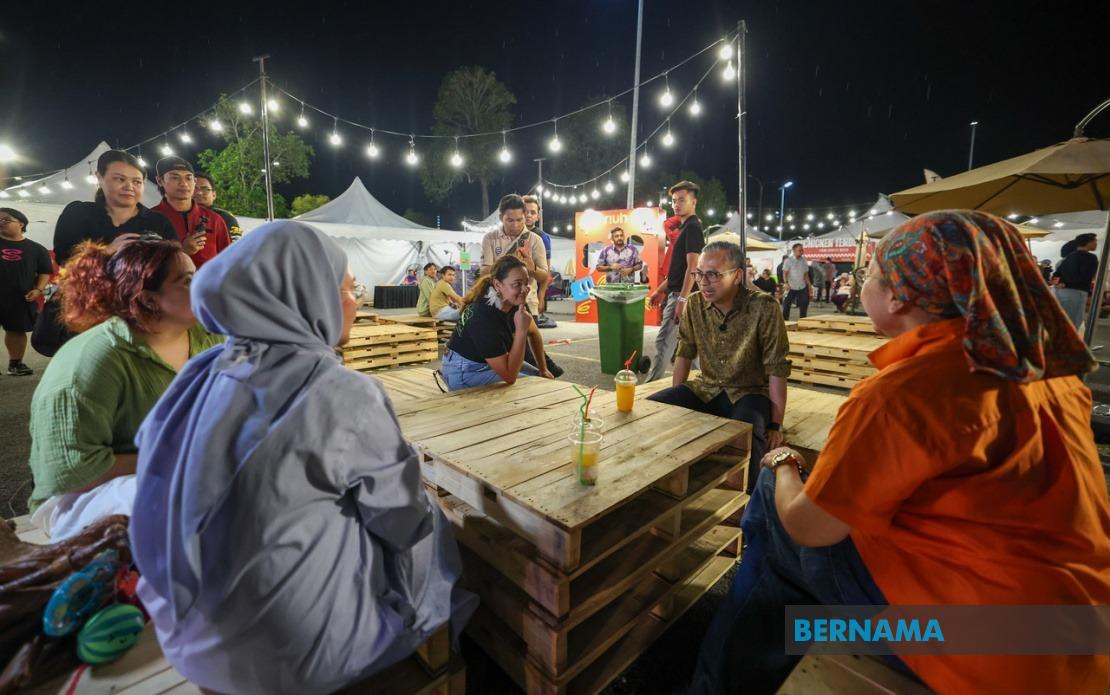
Communications Minister Datuk Fahmi Fadzil has expressed strong approval of the RIUH Pi HAWANA carnival currently running at the PICCA Convention Centre @ Butterworth Arena, positioning the event as a significant platform for nurturing Malaysia's creative economy. Speaking at the carnival on the evening of June 19, Fahmi highlighted how the programme successfully bridges generational divides within the entertainment industry, giving both established performers and emerging talents direct access to audiences seeking authentic Malaysian cultural experiences.
The carnival, organised in conjunction with National Journalists' Day (HAWANA) 2026, demonstrates the government's commitment to integrating cultural celebrations with commercial opportunities for the creative sector. By designating the event as part of the official HAWANA commemoration, the Communications Ministry has effectively created a dual-purpose platform that honours journalistic contributions while simultaneously providing valuable market exposure for entrepreneurs and artists. This strategic alignment reflects a growing understanding among Malaysian policymakers that creative industries require consistent institutional support and visibility to thrive in an increasingly competitive regional landscape.
Fahmi's satisfaction with the programme's execution points to careful coordination between multiple stakeholders. The event features a carefully curated mix of entertainment and commerce, with 18 live performances drawing from a diverse roster including established acts like Exists and Bunkface alongside rising names such as Sakura Band, Fugo, Budak Nakal Hujung Simpang, and Chelsia Ng. This deliberate programming strategy ensures that attendees encounter both recognisable headliners and fresh talent, creating valuable networking and performance opportunities that younger artists typically struggle to access outside major commercial festivals.
Beyond entertainment, the carnival's commercial dimension addresses critical gaps in Malaysia's creative ecosystem. More than 24 local creative brands have secured exhibition space alongside 20 food and beverage vendors, transforming the event into a functioning marketplace where small and medium enterprises can directly engage consumers. For Penang-based entrepreneurs particularly, this represents a rare opportunity to reach a concentrated audience interested in locally produced goods, reducing reliance on costly online marketing and allowing creators to receive immediate customer feedback on their products and services.
The inclusion of interactive workshops adds educational value that extends beyond passive consumption. By enabling visitors to participate in creative activities, the carnival addresses the information asymmetry that often prevents potential consumers from understanding the skill, effort, and artistic merit embedded in locally produced goods. This experiential approach transforms browsing into learning, fostering appreciation for the craft economy and potentially converting visitors into repeat customers and brand advocates.
Fahmi's explicit call for expanded public participation, particularly directed at Penang residents, reflects broader strategic thinking about regional development through cultural industries. Southeast Asian governments have increasingly recognised that creative sectors generate employment, attract tourism, and enhance soft power without requiring heavy industrial infrastructure. By encouraging attendance at RIUH Pi HAWANA, Fahmi signals that supporting such events constitutes legitimate developmental policy rather than mere entertainment subsidy.
The minister's hope that RIUH Pi HAWANA becomes a permanent fixture alongside future HAWANA celebrations suggests institutional commitment to sustainability. One-off events, regardless of quality, leave artists and entrepreneurs without reliable platforms for recurring market engagement. By integrating the carnival into an annual government observance, organisers create predictability that allows small businesses to plan inventory, production schedules, and marketing campaigns around confirmed participation opportunities. This regularity transforms occasional exposure into systematic market access.
MyCreative Ventures' role as organiser deserves attention for what it reveals about the emerging institutional structure supporting Malaysian creative industries. The involvement of specialised production companies suggests that entertainment and cultural commerce increasingly attract professional management rather than remaining the domain of amateur enthusiasts or large conglomerate subsidiaries. This professionalization, while not universally celebrated, often correlates with improved event quality, stronger vendor support systems, and more effective marketing reaching target audiences.
The carnival's location in Butterworth carries geographic significance for Penang's creative sector development. Northern Penang, often eclipsed by Georgetown's tourism prominence, represents underutilised potential for cultural and commercial events. By hosting RIUH Pi HAWANA at a major convention venue in Butterworth, the ministry signals recognition that creative industries distribution should extend beyond the island's traditional heritage zones into emerging commercial centres. This geographic diversification potentially encourages artists and entrepreneurs from less prominent Penang areas to participate, enriching the talent pool beyond usual Kuala Lumpur-centric networks.
Fahmi's specific mention of Exists alongside general satisfaction suggests the event successfully attracted commercially viable acts rather than settling for niche performers unlikely to draw crowds. Exists' inclusion represents the type of crossover appeal between established mainstream success and cultural credibility that makes events sustainable and attractive to future sponsors and participants. The presence of such acts legitimises the carnival as a serious entertainment destination rather than a minor government-organised token gesture.
The timing within HAWANA's calendar year matters for understanding the Communications Ministry's strategic vision. Rather than treating journalists' commemoration as a separate occasion for industry recognition, integrating it with creative industries celebration positions communication workers as part of Malaysia's broader creative ecosystem. Journalists, artists, and entrepreneurs all work within information and narrative creation; jointly celebrating them reinforces their interconnected roles in shaping cultural production and public discourse.
Looking forward, Fahmi's remarks establish expectations for scaling RIUH Pi HAWANA within and beyond Penang. Successful first editions often invite questions about expansion—whether through additional dates, additional locations, or increased vendor and performer participation. The minister's framing suggests openness to such development, conditional on sustained public interest and continued smooth execution. For Malaysian creative entrepreneurs struggling with market access, this represents a significant policy signal that government sees their growth as a legitimate development priority.
The carnival ultimately represents a convergence of interests: journalists gain recognition, artists gain performance platforms, entrepreneurs gain market access, audiences gain entertainment and cultural products, and the Communications Ministry advances policy objectives around creative industry development and public engagement. Whether RIUH Pi HAWANA sustains this balance while scaling will determine whether it becomes a model for other government agencies seeking to merge institutional objectives with genuine economic opportunity for Malaysia's creative sector.

