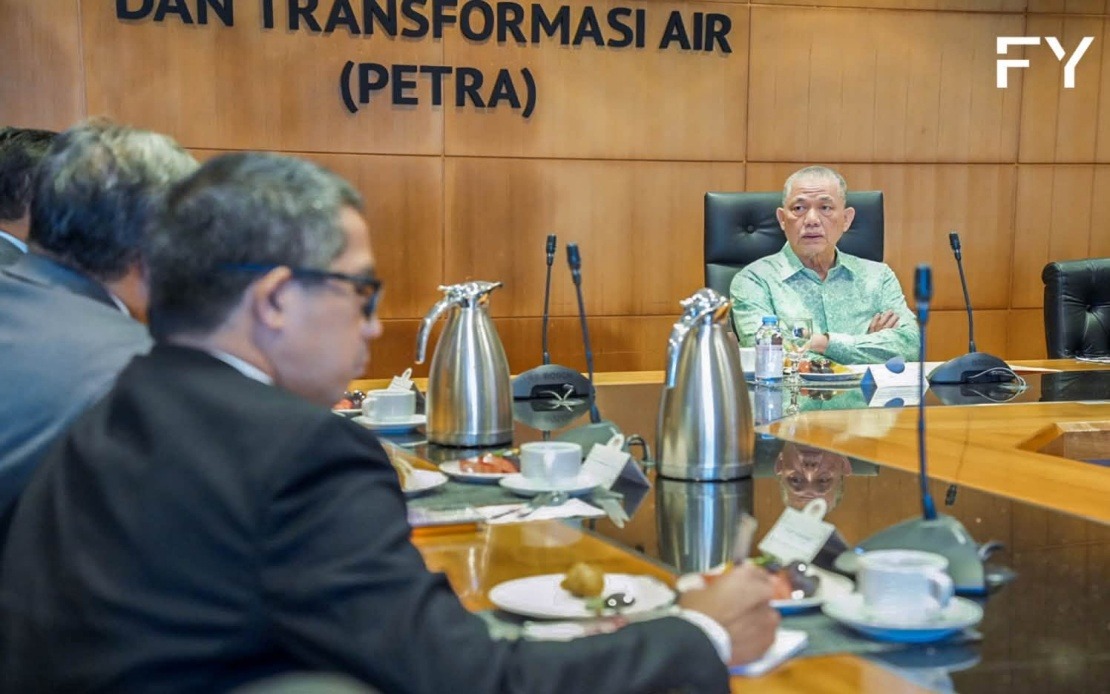
Deputy Prime Minister Datuk Seri Fadillah Yusof has issued a directive to Malaysian diplomatic missions across the globe to take on a more aggressive posture in identifying and developing strategic cooperation opportunities within their respective host countries. During a meeting with six newly appointed ambassadors at his Putrajaya office, Fadillah articulated a vision for Malaysian overseas representation that extends beyond traditional diplomatic functions to encompass active economic engagement and investment promotion.
The freshly assigned envoys present at the gathering included representatives headed to significant regional and international markets. Datuk Muzafar Shah Mustafa takes up the role of Ambassador to Indonesia, a crucial neighbouring nation and ASEAN partner with deep economic ties to Malaysia. Jamal Sharifuddin Johan has been appointed to Vietnam, another Southeast Asian economy with expanding bilateral relations. Muhammad Radzi Jamaludin will represent Malaysia in Mexico, extending the nation's diplomatic reach into the Americas. Datuk Shahabudeen Adam Shah assumes the ambassadorial position in Italy, reinforcing Malaysia's European presence, whilst Edi Irwan Mahmud heads to Morocco in North Africa. Aznifah Isnariah Abdul Ghani completes the cohort as Ambassador to Azerbaijan, establishing stronger connections in the Caucasus region.
Fadillah, who also holds the portfolio of Energy Transition and Water Transformation Minister, emphasised that the missions must elevate their efforts in marketing Malaysian products internationally and creating a compelling narrative around the nation's investment potential. This dual mandate reflects the government's recognition that economic statecraft has become as important as traditional diplomacy in advancing national interests. The envoys are being tasked with acting as catalysts for Malaysian commercial interests, working to position the country as an attractive destination for foreign capital and technology transfer.
A significant dimension of Fadillah's message concerns economic diplomacy as an instrument for national development. The Deputy Prime Minister stressed the importance of strengthening Malaysia's trade relationships with strategic partners, implicitly recognizing that the global economic landscape requires sustained engagement beyond ceremonial or political interactions. This approach aligns with Malaysia's broader policy orientation towards deepening economic integration with key markets while maintaining diplomatic equilibrium.
Notably, Fadillah used the occasion to brief the ambassadors on the initiatives and strategic direction of the Ministry of Energy Transition and Water Transformation. The ministry's implementation of the National Energy Transition Roadmap represents one of Malaysia's most significant policy undertakings, aimed at transitioning the economy towards renewable energy sources while maintaining energy security. Malaysia's aspiration to position itself as a leading green energy hub within ASEAN carries substantial implications for the region, as it would establish Malaysia as a centre of expertise in renewable technology, battery manufacturing, and sustainable infrastructure development.
The articulation of Malaysia's green energy ambitions through diplomatic channels signals the government's intent to leverage its environmental transition narrative as a soft power tool and commercial opportunity. As global investors increasingly allocate capital towards sustainable ventures, Malaysia's repositioning as a green energy leader could attract substantial foreign direct investment in the renewable energy sector. The ambassadors, particularly those stationed in developed economies and emerging markets with significant renewable energy investments, will play a crucial role in communicating Malaysia's credentials and attracting partnerships and funding.
Fadillah's direction also implicitly acknowledges the evolving nature of diplomatic representation in the contemporary era. Rather than confining ambassadors to political and ceremonial functions, the Deputy Prime Minister is positioning them as economic advocates and commercial facilitators. This requires ambassadors to possess sophisticated understanding of their host countries' investment landscapes, regulatory environments, and commercial opportunities—skills that transcend conventional diplomatic training.
The timing of this directive reflects Malaysia's broader strategic recalibration in an increasingly multipolar world. With traditional trading partners diversifying their economic interests and new poles of economic power emerging, Malaysia must ensure that its diplomatic infrastructure actively contributes to the nation's economic objectives. The appointment of ambassadors to diverse geographical regions—spanning Southeast Asia, Europe, Africa, and the Caucasus—suggests Malaysia's recognition that its economic interests are geographically dispersed and require tailored engagement strategies.
Fadillah's emphasis on ambassadors delivering "meaningful outcomes and greater benefits to the people and the nation" articulates a performance-oriented expectation that extends beyond symbolic representation. This framework implies that ambassadors will be evaluated partly on their success in facilitating investments, facilitating trade deals, and advancing Malaysia's economic interests. Such metrics-driven diplomacy represents a significant shift from traditional assessment frameworks focused primarily on diplomatic protocol and relationship maintenance.
The ambassadors' assignment to strategically important countries underscores Malaysia's calculation regarding priority markets. Indonesia remains Malaysia's largest ASEAN economic partner, whilst Vietnam represents one of Asia's fastest-growing economies. Mexico offers access to North American supply chains and markets, whilst Italy provides a gateway to European economic networks and green technology expertise. Morocco's position in North Africa and proximity to European markets makes it strategically valuable for Malaysian companies seeking African expansion. Azerbaijan's role in energy corridors connecting Europe and Asia aligns with Malaysia's energy transition agenda.
Fadillah's mandate to the ambassadors reflects a sophisticated understanding that Malaysia's economic advancement requires coordinated effort across government structures, including diplomatic service. By directly engaging newly appointed envoys and articulating clear economic objectives, the Deputy Prime Minister is establishing accountability frameworks that tie diplomatic performance to national economic targets. This approach potentially elevates the strategic importance of the Foreign Service whilst demanding greater commercial acumen from diplomatic personnel.

