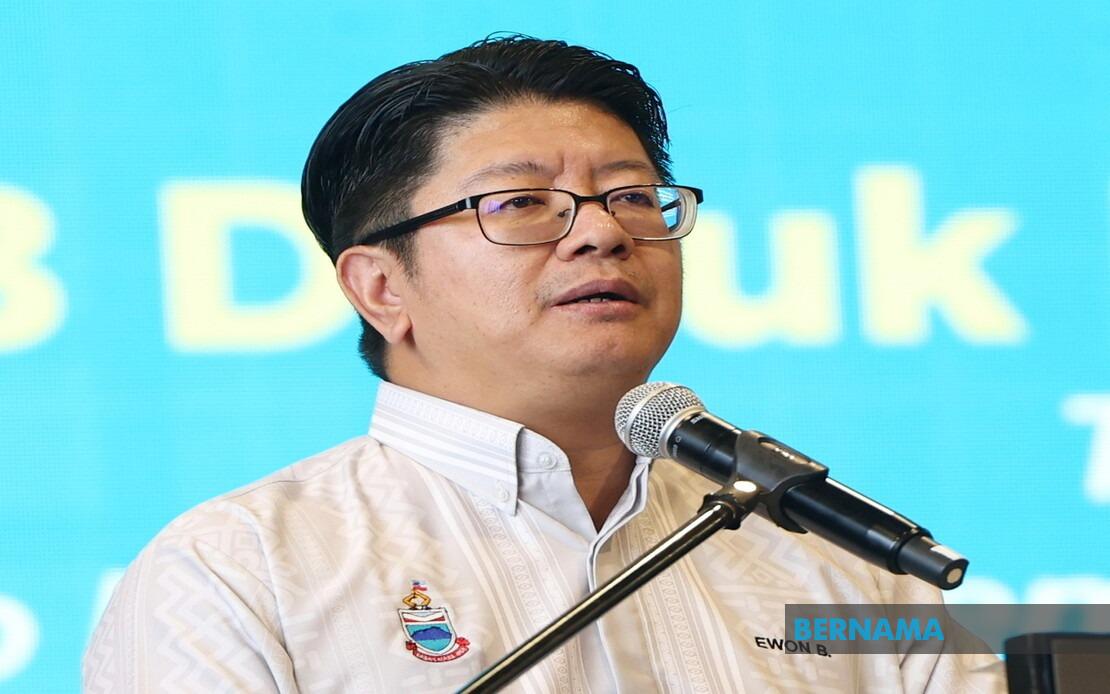
The United Progressive Kinabalu Organisation concluded its 17th triennial delegates conference in Penampang with no surprises in the upper echelons of party hierarchy. Datuk Ewon Benedick and Datuk Donald Peter Mojuntin faced no opposition in their bids to lead the party through the 2026-2029 term, cementing a period of stable leadership that extends well into the next election cycle. Their unchallenged victories signal either strong consensus within UPKO's grassroots or a carefully managed internal process that minimises factional contests at the apex level—a pattern familiar across many Malaysian political organisations.
The leadership team that emerges from the August 10 election reflects broader efforts toward continuity. Alongside the president and deputy president, five vice-presidents—Jairaiaz Joseph, Datuk Wong Thien Fook, Datuk Pangiran Lalung, Datuk Basari Sarikun, and Datuk Dr Laurentius Nayan Ambu—similarly retained their posts without facing challengers. This wholesale absence of contest at the senior level stands in marked contrast to leadership races in other regional and national parties, where contested positions often generate months of visible jockeying and membership campaigns. For UPKO, the consolidated transition suggests either mature acceptance of incumbent performance or a leadership structure that maintains tight control over succession pathways.
Ewon used his closing remarks to emphasise democratic legitimacy and party cohesion, themes that take on particular weight given the uncontested nature of the election. He articulated a philosophy that contests should energise rather than fracture, explicitly framing all party members as part of a unified family rather than competing factions. This rhetorical positioning matters in Sabah's political landscape, where ethnic and regional divisions can intersect with party competition, and where maintaining coalition discipline within Gabungan Rakyat Sabah (GRS) requires both internal stability and clear messaging to alliance partners.
The newly elected leadership faces an immediate mandate to translate party resolutions into government action. Ewon outlined that UPKO's representatives—both in Parliament and the Sabah legislative assembly—must articulate the party's positions during legislative debates, serving as conduits between grassroots opinion and the machinery of government. This functional prescription becomes more demanding in a coalition context, where UPKO operates as a minority partner within GRS alongside larger formations like Sabah United Party. The party must balance internal advocacy with coalition loyalty, a tension that strengthens the case for predictable, continuity-focused leadership.
Critically, Ewon explicitly acknowledged Datuk Seri Hajiji Noor, the Sabah Chief Minister and GRS chairman, positioning the party's elected leadership as implementers of broader government direction rather than autonomous operators. This deference to the Chief Minister reflects political realities: UPKO holds ministerial positions within the Sabah cabinet and relies on GRS coalition standing to secure resources and influence. The party leadership therefore functions within constraints defined by coalition arithmetic and ministerial portfolio management, making continuity in personalities potentially valuable for maintaining ministerial seats and access.
Changes did occur at secondary levels, suggesting the election process retained some genuine competitive elements despite the unopposed top-tier results. The UPKO Youth wing selected Carlye Lajimin as chief and Newbaxter Tibin as deputy, representing a generational shift in youth leadership. Mohina Sidom successfully defended her position as UPKO Women chief, while Lomiti Jahan entered the leadership structure as deputy chief. Emmanuel Atin took the newly constituted UPKO Young Generation chief position, with Alison Chan as his deputy. These appointments indicate efforts to refresh intermediate leadership ranks while preserving senior continuity, a strategy that may satisfy demands for renewal without disrupting established power structures.
The election of these secondary leaders carries significance for party sustainability and demographic reach. Youth and women's wings serve as recruitment mechanisms and provide platforms for emerging talent within the party apparatus. By introducing new faces like Lajimin, Tibin, and Jahan into visible positions while allowing established figures like Sidom to consolidate their authority, UPKO attempts to signal both stability and openness to fresh voices. For Malaysian political parties operating in competitive environments, such balance proves essential for member retention and volunteer mobilisation.
Sabah's political terrain increasingly emphasises coalition stability rather than inter-party competition, a shift driven by the region's complex ethnic composition and the fragmentation of the vote across numerous formations. UPKO's positioning within this landscape depends on both internal coherence and external reliability as a coalition partner. An election producing unopposed victories at the top suggests the party either faces little internal dissent over leadership direction or maintains mechanisms for preventing contested races from reaching public forums. Either interpretation implies that UPKO leadership, to the extent it controls party machinery, has succeeded in consolidating position.
The implications for Malaysian federalism extend beyond UPKO's internal matters. State-level parties in resource-dependent regions like Sabah often function as crucial bridges between federal formations and local constituencies. UPKO's stability affects not only its own capacity to mobilise Sabah voters but also GRS's effectiveness as a coalition vehicle. Federal parties competing in Sabah must negotiate with formations like UPKO, making these state-level leadership transitions inherently relevant to national political calculations.
Looking forward, the UPKO leadership elected for 2026-2029 enters a period when Sabah state politics will likely be shaped by preparation for the next state election cycle. The party's ability to deliver tangible benefits to constituents and maintain coalition discipline will determine whether this unopposed ascension translates into sustained electoral support or reflects merely a temporary consolidation. For observers of Malaysian politics, UPKO's trajectory offers a case study in how state-level parties navigate coalition participation, maintain internal stability, and position themselves for long-term relevance in an increasingly complex party system.

