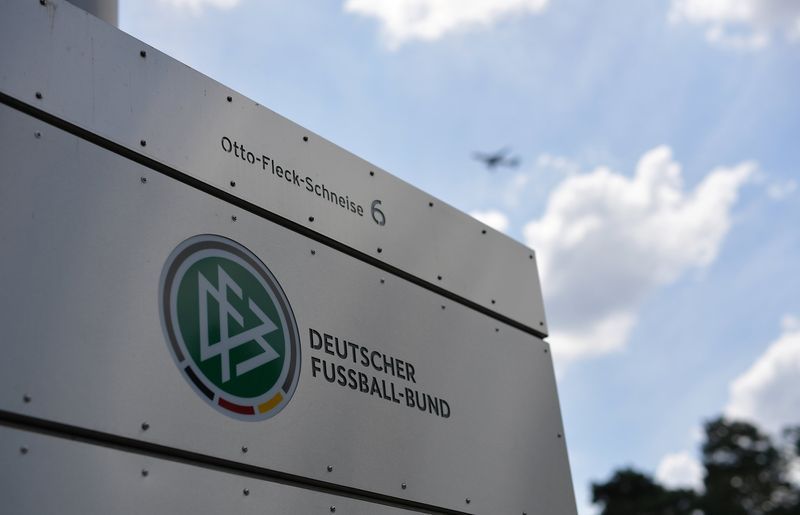
In a significant victory for sports governance, Europe's highest court on Thursday endorsed the regulatory framework established by the German Football Association for managing football agents, rejecting arguments that these rules violated fundamental EU competition principles. The Court of Justice of the European Union (CJEU), seated in Luxembourg, determined that such regulations can legitimately restrict commercial conduct provided they serve authentic public-interest purposes and are genuinely necessary to achieve those objectives.
The ruling arose from a challenge brought by ROGON, a sports management company based internationally alongside an Austrian firm and an independent football agent, all questioning the validity of DFB requirements surrounding agent licensing, formal registration procedures, compensation structures, and the operational relationships between agents and both clubs and players. The complainants contended that these restrictions amounted to unlawful cartel conduct under the bloc's stringent antitrust framework, prompting a German court to seek clarification from Luxembourg's judicial authority.
The CJEU's judgment articulates a nuanced doctrine enabling sports federations to impose regulatory constraints without triggering automatic violation of EU cartel prohibitions. The court reasoned that regulations may qualify for what is termed an "exception" to standard competition rules when they genuinely pursue one or more objectives that are lawful, genuinely directed toward public benefit, and not inherently anti-competitive in their fundamental nature. This distinction matters considerably for sports bodies across Europe seeking to maintain organisational standards.
Crucially, the Luxembourg judges acknowledged that sports federations sometimes require regulatory instruments that produce material consequences for the broader institutional ecosystems they oversee and control. This recognition addresses a longstanding tension in European sports law: the apparent incompatibility between maintaining competitive integrity and sporting standards on one hand, and respecting the competitive framework of EU commerce on the other. By confirming that such ecosystem-level regulations can be necessary and proportionate, the court provided important legal cover for governance structures that extend beyond individual transactions.
This judgment represents the latest chapter in an expanding narrative of European judicial scrutiny applied to sports governing bodies. Over successive years, stakeholders dissatisfied with regulatory constraints have increasingly deployed EU competition law as a strategic tool to challenge rules they consider overly restrictive. These legal confrontations have produced several transformative precedents that reshape how international football operates across the continent.
Most notably, last year the CJEU delivered a judgment that fundamentally challenged FIFA's established player transfer system, concluding that certain provisions within that framework violated European legal standards. That decision carries profound implications for professional football's economic structure, potentially constraining transfer fees and rebalancing the distribution of financial power between clubs and individual players—a shift that could reshape recruitment patterns and player bargaining leverage throughout the sport.
In another striking illustration from April this year, the court surprisingly validated arrangements agreed between Portuguese football clubs during the COVID-19 pandemic that restricted their mutual recruitment of each other's players. That decision suggested the court recognises contextual factors and temporary circumstances that might justify otherwise suspect commercial agreements, signalling judicial willingness to consider the peculiar pressures facing sports organisations during crises.
For Malaysian and Southeast Asian football observers, this European legal development carries indirect but meaningful implications. The regulatory structures the CJEU examines increasingly establish benchmarks that international football federations, including bodies with authority in the Asian region, feel compelled to acknowledge or adopt. European precedents regarding agent conduct, player transfer mechanisms, and federation governance have a tendency to radiate outward, influencing global sporting standards and potentially affecting how agents operating from Southeast Asian bases interact with European clubs.
Moreover, the CJEU's framework distinguishing between permissible and impermissible restrictions offers a template that sports regulators elsewhere might adopt when defending their own rules against legal challenge. If a regulation demonstrably serves genuine public interests—such as financial sustainability, sporting integrity, or protection of young athletes—rather than merely insulating incumbent clubs from competitive pressure, European courts appear increasingly willing to permit it. This jurisprudential pattern suggests that well-designed governance rules survive scrutiny better than those appearing protectionist.
The DFB's regulatory success before the CJEU also reflects broader institutional confidence in European federations' capacity to balance governance imperatives with competition law obligations. The German association's rules evidently convinced Luxembourg's judges that agent regulation serves legitimate purposes beyond merely restricting market access—perhaps by preventing exploitation, ensuring professional standards, protecting minors, or maintaining transparent relationships between multiple stakeholders within football's ecosystem.
Looking forward, this judgment provides a template for other sports organisations facing similar legal pressures. The court has essentially signalled that federations need not abandon governance structures to comply with EU law; rather, they must demonstrate that their regulations pursue authentic, demonstrable public benefits and employ proportionate means to achieve those ends. This calibrated approach may reduce legal uncertainty that has characterised recent years of aggressive competition-law challenges against sports authorities.
The case C-428/23 ROGON and Others will likely prove consequential for how European football structures evolve in coming years, while subtly influencing regulatory thinking among international sports bodies managing increasingly complex ecosystems of professional athletes, commercial agents, and institutional stakeholders across multiple jurisdictions.

