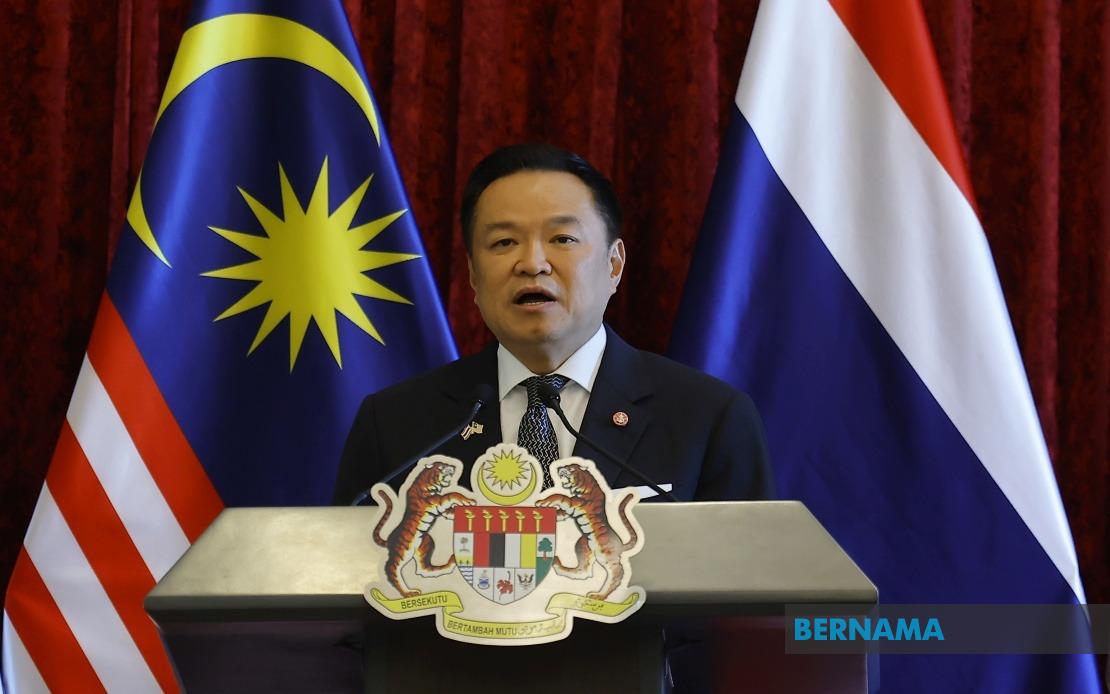
Thai Prime Minister Anutin Charnvirakul has placed resolving the protracted conflict in Thailand's southern border provinces squarely at the centre of his government's agenda, signalling that peace-building remains non-negotiable for the region's future. Speaking at a joint press conference in Putrajaya with Malaysian Prime Minister Datuk Seri Anwar Ibrahim on Thursday, Anutin underscored that his administration views addressing violence and the complex challenges afflicting these territories as among its most pressing undertakings.
The Thai premier articulated a holistic vision linking security and development, observing that tranquillity creates the foundation upon which economic growth and social progress can flourish. Conversely, he argued, investing in development initiatives strengthens the bonds of peace and makes conflict less likely to resurface. This framing reflects a broader understanding that military solutions alone cannot resolve the deep-rooted grievances and insurgent activities that have destabilised the Pattani, Yala, and Narathiwat provinces for nearly two decades.
Central to Thailand's strategy is maintaining robust bilateral engagement with Malaysia, which has positioned itself as a crucial intermediary in the peace process. Anutin made explicit his government's intention to sustain close and ongoing cooperation across security matters and development initiatives in the contested border zones. This commitment extends beyond rhetorical statements; both nations have institutionalised mechanisms to coordinate responses to cross-border insurgent movements and to facilitate dialogue between conflicting parties.
Anutin took the opportunity to publicly acknowledge Malaysia's pivotal role as the facilitator of the Southern Thailand Peace Dialogue process. This recognition carries symbolic weight, as it validates Malaysia's neutrality and diplomatic credentials in a region where trust between parties has historically been fragile. Malaysia's willingness to serve as an honest broker reflects both its geographical proximity to the conflict and its interest in regional stability affecting its own northern border security.
Malaysia's involvement in the peace architecture extends deeper than ceremonial mediation. The Malaysian team, headed by Datuk Mohd Rabin Basir—a veteran diplomat who previously served as director-general of the National Security Council—was formally appointed to the facilitation role on July 1, 2024. This selection of an experienced security and intelligence professional signals Malaysia's serious intent to engage substantively with the technical and political dimensions of the conflict. Basir's background equips him to understand both the security concerns of the Thai state and the grievances of insurgent groups.
The Thai government has appointed Thanat Suwannanont, director of its National Intelligence Agency (NIA), as its chief negotiator. This choice mirrors Malaysia's approach by placing a security establishment figure at the table, suggesting both nations view the conflict through a lens combining military security considerations with political settlement possibilities. The presence of intelligence chiefs in negotiating roles often indicates that governments are prepared to discuss sensitive information regarding militant networks, financing, and operational capabilities.
A significant element of the dialogue process involves engagement with the Barisan Revolusi Nasional (BRN), the primary insurgent organisation operating in southern Thailand. The BRN has fought since the early 2000s to advance Malay-Muslim autonomy in provinces they consider historically distinct from central Thailand. Bringing this organisation into structured talks represents a delicate balancing act; the Thai government must maintain credibility with security forces whilst simultaneously demonstrating willingness to address underlying political grievances through negotiation.
During the Putrajaya meeting, Anwar provided assurances that Malaysia categorically refuses to tolerate violence and will persistently collaborate with Thailand to identify and prosecute those responsible for attacks. This public commitment serves multiple purposes: it reassures Thailand that Malaysia is not providing safe haven to insurgents and will not look the other way regarding cross-border militant activity, whilst simultaneously signalling to Malaysia's own Malay-Muslim population that their government prioritises rule of law over ethnic or religious solidarity.
The dialogue process carries implications extending beyond the bilateral Thai-Malaysian relationship. The southern Thailand insurgency has affected regional security architecture, influencing maritime patrol cooperation, intelligence sharing practices, and the movement of goods and persons across international borders. Violence in the region periodically spills into Malaysia's Kelantan and Terengganu states, affecting ordinary Malaysians and complicating law enforcement operations. A durable peace settlement in southern Thailand would therefore generate positive externalities for Malaysia's own border management and development aspirations.
For Malaysia, hosting and facilitating these negotiations enhances its standing as a responsible regional power capable of contributing to conflict resolution. The appointment of credentialed officials to the facilitation team demonstrates that Kuala Lumpur views this mission as strategically important rather than a peripheral diplomatic gesture. Success in the southern Thailand context could establish precedents for Malaysian mediation in other regional disputes, elevating the country's profile in Southeast Asian security affairs.
The emphasis on linking peace to development also reflects lessons learned from decades of counter-insurgency in the region. Military operations alone have failed to suppress the insurgency, suggesting that addressing root causes—economic marginalisation, perceived discrimination, and political exclusion of Malay-Muslim communities—is essential to achieving sustainable outcomes. Development projects in the border provinces must therefore be pursued in tandem with political negotiations, ensuring that communities see tangible improvements in living standards resulting from peace initiatives.
Moving forward, the test of sincerity lies in translating these public commitments into concrete progress at the negotiating table. The appointment of skilled negotiators and the establishment of clear facilitation mechanisms are necessary but insufficient conditions for success. Both sides must demonstrate flexibility on contentious issues including the degree of autonomy southern provinces might enjoy, the status of Islamic law in local administration, and mechanisms for addressing historical grievances of affected communities.

