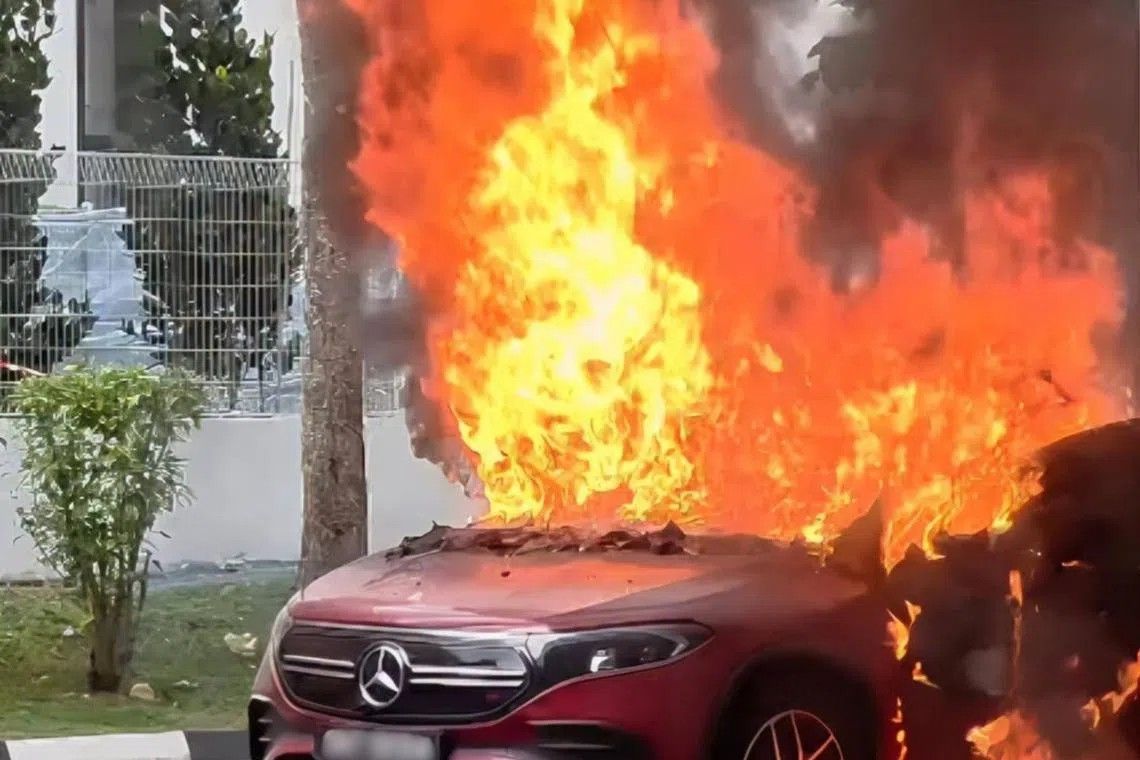
An electric vehicle burst into flames near the entrance of a multi-storey carpark complex in Woodlands on the morning of July 21, marking another incident in the growing discourse around EV battery safety in urban residential areas across Southeast Asia. The Singapore Civil Defence Force responded to the emergency call at Block 548 Woodlands Drive 44, arriving at approximately 10.10am to find a car engulfed in flames emanating from its interior compartment. No one was injured in the incident, though the episode has reignited concerns about the thermal risks posed by lithium-ion battery systems in densely populated housing estates where thousands of vehicles are parked daily.
Accounting of the incident details reveals a sequence of events that unfolded with troubling speed. The vehicle's driver was attempting to depart the carpark when she detected an unmistakable acrid odour coming from the vehicle's interior. Recognising this as an abnormal sign, she promptly brought the car to a halt and discovered wisps of smoke beginning to pour from various points within the cabin. She later recounted to Shin Min Daily News that flames appeared to originate from the narrow gap positioned between the driver and front passenger seating areas—precisely where the vehicle's high-capacity battery pack sits beneath the floor. This architectural positioning, standard across nearly all modern EVs, places the battery directly beneath occupants during normal driving conditions.
The swift escalation of the situation presented genuine danger to those nearby. Security personnel stationed at the carpark hurried to the scene upon being alerted by the driver, attempting to suppress the emerging flames using portable fire extinguishers available to them. Their efforts, however, proved insufficient against the intensity of the battery fire, which generates temperatures significantly higher than conventional fuel-based vehicle fires and releases combustible gases that standard extinguishing equipment cannot adequately contain. As the fire continued its rapid spread throughout the vehicle's interior, consuming upholstery and structural components with alarming speed, concern grew that the car might catastrophically rupture or explode. The driver and security team wisely decided to maintain distance from the vehicle and immediately contacted the SCDF for professional intervention.
Photographic documentation of the aftermath starkly illustrates the devastation wrought by the battery fire. The vehicle's interior had been reduced to charred blackened remains, with virtually no intact components visible within the cabin space. The dashboard assembly, which normally provides the structural and functional interface between vehicle systems and occupants, appeared severely warped and deformed from the intense heat. The metal frames that typically support and anchor the vehicle's seating positions lay exposed and twisted, testament to temperatures that far exceeded those produced by conventional petrol or diesel fires. This level of thermal intensity raises critical questions about the adequacy of safety barriers and insulation systems protecting occupants and nearby structures in enclosed carpark environments.
Responseding to the emergency, SCDF personnel deployed a single water jet to extinguish the fully engulfed vehicle, successfully suppressing the flames before the situation deteriorated further. The rapid and decisive nature of this intervention prevented potential structural damage to the adjacent carpark facility and protected other vehicles parked in close proximity. The vehicle was subsequently towed away from the location at approximately 12.15pm, some two hours after the initial emergency response. The incident has now entered the investigative phase, with SCDF officials announcing that they are examining the precise circumstances and mechanical failures that precipitated the fire, though preliminary findings remain undisclosed pending completion of forensic analysis.
This occurrence in Woodlands carries particular significance for Malaysia and other Southeast Asian nations currently experiencing rapid expansion of electric vehicle adoption. As governments across the region implement increasingly aggressive targets for EV market penetration and phase out internal combustion engines, thermal incidents involving battery systems are becoming more frequent in urban centres. The physical proximity of residential blocks to carpark facilities in Malaysian housing estates mirrors the Singaporean situation, meaning similar risks exist in developments across Kuala Lumpur, Klang Valley, Penang, and other major population centres. Residents in densely populated areas with limited carpark spacing face comparable exposure to potential hazards.
The investigation launched by SCDF into the underlying cause of this battery failure will likely examine whether manufacturing defects, design vulnerabilities, physical damage to the battery pack, exposure to excessive heat, or internal chemical degradation triggered the thermal runaway event. Battery thermal runaway—a chain reaction within lithium-ion cells that generates extreme heat and gaseous emissions—represents the most dangerous failure mode for EVs and remains incompletely understood even by engineers specialising in battery systems. Understanding precisely what mechanism activated in this instance could yield invaluable lessons for vehicle manufacturers, parking facility operators, and urban planners throughout the region.
The incident also highlights questions about preparedness within HDB estates and Malaysian housing developments. Security personnel at the carpark demonstrated commendable responsiveness and good judgment in recognising the severity of the situation and calling professional help rather than escalating their intervention beyond their training and equipment capabilities. However, the episode underscores whether residential carpark operators possess adequate training, appropriate fire suppression equipment, and comprehensive emergency protocols specifically designed for EV battery fires. Standard fire extinguishers prove ineffective against battery thermal events; specialised equipment and procedures are increasingly necessary as EV populations grow.
Regulatory frameworks across Southeast Asia have not fully adapted to the safety requirements posed by mass EV deployment in residential settings. Singapore's incident will likely prompt discussions about mandatory fire detection systems in enclosed carparks, revised parking configurations that provide greater separation between vehicles, upgraded sprinkler systems capable of managing battery fires, and enhanced emergency response training. Malaysian regulators and housing authorities should similarly examine whether current building codes and carpark safety standards adequately account for EV battery hazards that did not exist when most urban carpark infrastructure was designed and constructed.
The absence of injuries in this instance represents fortunate timing rather than evidence of adequate safety measures. The driver's alertness to the burning smell, her immediate decision to exit the carpark rather than continuing to drive, and the presence of nearby security personnel all contributed to preventing potential casualties. However, relying on individual awareness and chance circumstance represents an inadequate long-term safety strategy as EV penetration reaches 10, 20, or 30 per cent of the vehicle fleet. Proactive infrastructure upgrades and preventive maintenance protocols must precede the widespread adoption anticipated over the coming decade.

