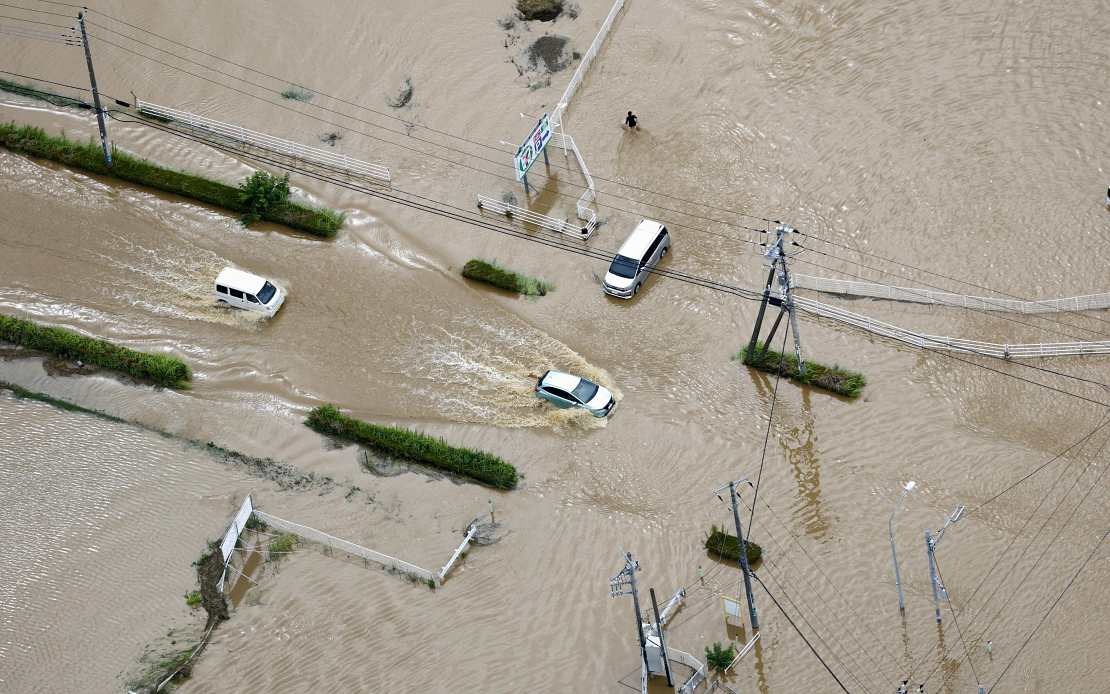
A catastrophic weather event has left eight people dead across Japan's Chiba Prefecture after torrential rainfall descended on the eastern region in the early hours of Friday, devastating multiple municipalities and displacing tens of thousands of residents. The fatalities were reported across the cities of Chiba, Kashiwa, Ichikawa, Sakura and Yachiyo, while four additional individuals sustained minor injuries, according to statements from the Chiba Prefectural Government.
The scale of the precipitation that battered the region was extraordinary by any meteorological standard. The Japan Meteorological Agency recorded 348 millimetres of rain falling on Chiba City within a 12-hour window ending at 1.40 am local time on Friday morning. To contextualise this deluge: the city typically receives roughly the same volume of rainfall across the entirety of August, meaning the region experienced three months' worth of precipitation in a single half-day period. Such concentrated downpours present extreme hazards, overwhelming drainage systems and saturating ground that has had no time to absorb moisture.
The severity of the weather event triggered Japan's most serious alert mechanisms early on. The Japan Meteorological Agency issued a Level 5 emergency warning—its highest classification—for both heavy rain and landslide risks across portions of Chiba Prefecture. This maximum alert level is reserved for situations posing imminent threats to life and demanding immediate protective action. However, as conditions began to stabilise on Friday morning, weather authorities gradually downgraded all active warnings to Level 4 or lower, suggesting the most acute danger had passed, though officials remained cautious about the possibility of renewed heavy precipitation.
The human cost of the disaster extended well beyond the confirmed fatalities. Local authorities maintained evacuation orders affecting approximately 102,600 people across Chiba Prefecture as of 11 am on Friday, reflecting the scale of displacement and ongoing safety concerns. Residents in vulnerable areas near rivers, flood-prone zones, and hillsides susceptible to mudslides were ordered to leave their homes and relocate to evacuation centres, a massive logistical undertaking that strains both infrastructure and social services.
Transportation networks suffered severe disruption, leaving thousands stranded and amplifying the crisis's reach beyond those directly threatened by floodwaters. Narita Airport, one of Japan's primary international gateways located within Chiba Prefecture, found approximately 7,000 passengers marooned overnight as both train and bus services ground to a halt under the onslaught of rain. The paralysis of mass transit meant that many people could neither reach their destinations nor return home, compounding anxiety during an already fraught situation. Airport operators eventually managed to restore some operational capacity, though schedules remained significantly impacted.
For Malaysia and Southeast Asia, Japan's experience carries important lessons about climate resilience and disaster preparedness. The region is increasingly vulnerable to intense precipitation events driven by climate variability, and the rapid urbanisation across Southeast Asian cities mirrors challenges Japan faces. When rainfall overwhelms existing infrastructure within a compressed timeframe, evacuation mechanisms, early warning systems, and disaster response capabilities become critical survival factors. Japan's tiered alert system and relatively swift response, whilst unable to prevent all casualties, likely prevented far greater loss of life.
The incident also underscores how infrastructure designed for historical rainfall patterns may prove inadequate as weather patterns intensify. Chiba Prefecture's drainage systems and flood defences were engineered based on historical data, yet the agency recorded precipitation rates that shattered previous records. This gap between infrastructure design capacity and emerging climate realities represents a challenge confronting cities throughout Asia, including major Malaysian urban centres that experience monsoonal systems and occasional extreme weather events.
Japanese meteorologists emphasised that further heavy rainfall remained possible, urging residents to remain alert despite the downgrade in official warning levels. Such caution reflects the unpredictable nature of extreme weather systems and the difficulty in issuing definitive all-clear signals. The coordination between the Japan Meteorological Agency, the Fire and Disaster Management Agency, prefectural governments, and local authorities demonstrated how multi-layered disaster response systems attempt to protect populations, though the eight deaths remind that no system provides complete protection against nature's most violent expressions.
The recovery phase now commences across affected communities, with attention turning to restoring services, assisting displaced persons, and investigating how to improve resilience for future events. Rebuilding flooded homes, repairing damaged infrastructure, and supporting traumatised survivors will occupy resources and attention for months ahead. For regional policymakers in Southeast Asia watching developments unfold, the episode reinforces the importance of investing in early warning systems, maintaining robust evacuation capabilities, and regularly updating infrastructure standards to reflect changing climate conditions rather than relying solely on historical precedent.

