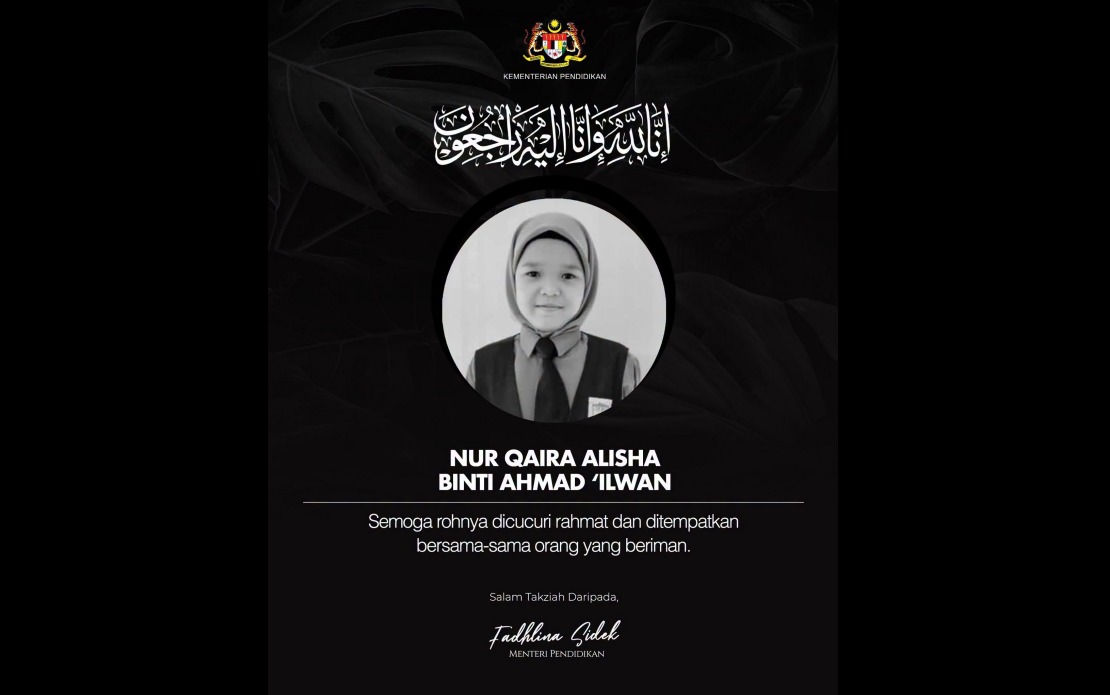
Education Minister Datuk Seri Fadhlina Sidek has instructed the Education Ministry's Integrity Unit to pursue further investigation into circumstances surrounding the death of Year Four pupil Nur Qaira Alisha Ahmad Ilwan, following a formal complaint lodged by her family. The minister emphasised that any actions taken must adhere to established procedures whilst ensuring fairness and impartiality for all involved parties. The directive comes after the Kedah State Education Department completed its initial inquiry into the matter, which examined allegations raised by Nur Qaira's parents regarding events at their daughter's school.
In a public statement released through social media, Fadhlina acknowledged the gravity of the situation and reaffirmed the Education Ministry's commitment to safeguarding student welfare and security. She stressed that the immediate priority is to provide the grieving family with adequate space and compassionate support during their period of loss. The minister also extended formal condolences to Nur Qaira's parents and extended family, offering prayers that they find solace and resilience as they navigate their bereavement.
Nur Qaira's tragic circumstances centre on her pre-existing cardiac condition, which had afflicted her since early infancy at just three months old. Due to the severity of her heart disease, medical professionals had previously recommended that she be excused from participation in competitive school sports and physically demanding activities. The school had received and retained a formal medical letter documenting her health status and the necessary restrictions on her physical exertion.
However, according to accounts provided by the family to media outlets, the situation took a concerning turn during sports house selection activities on April 15. A teacher allegedly directed Nur Qaira to take part in a running event despite the school's documented awareness of her medical condition and the explicit exemption in place. This represents a potential breach of duty of care, as educational staff are obliged to honour medical documentation and prioritise student safety above participation in optional or competitive activities.
The consequences of this alleged directive manifested dramatically within days. By April 24, Nur Qaira's condition had deteriorated significantly, prompting her admission to Sultanah Bahiyah Hospital. Medical assessments revealed severe complications including acute vomiting and pronounced swelling around her eyes, presenting as classic symptoms of systemic strain on her cardiovascular system. Subsequent diagnostic investigations confirmed heart failure brought on by decompensated dilated cardiomyopathy, a serious condition in which the heart loses its ability to pump blood effectively due to weakened muscle tissue.
For Malaysian parents and the broader education sector, this incident raises profound questions about institutional accountability and the implementation of medical safeguarding protocols within schools. Educational institutions across the country must maintain rigorous systems for documenting, communicating, and enforcing medical restrictions and exemptions for students with chronic health conditions. The case illustrates the potential consequences when such systems fail or are not properly observed by staff members.
The involvement of the Education Ministry's Integrity Unit signals a comprehensive review at the federal level, extending beyond the state education department's initial assessment. This escalation suggests recognition that the matter involves potential breaches of professional conduct and institutional protocols that warrant scrutiny through formal investigative channels. The Integrity Unit's mandate encompasses examining governance failures and ensuring accountability within the ministry's operations and affiliated institutions.
For schools throughout Malaysia and Southeast Asia, this case serves as a sobering reminder of the critical importance of treating medical documentation with absolute seriousness. Teachers and administrators must understand that medical exemptions exist to protect vulnerable students and that ignoring such letters—even in pursuit of school participation and sports events—can have life-threatening consequences. Professional negligence in healthcare compliance represents one of the most serious failures an educational institution can commit.
The investigation's outcome will likely carry implications beyond the immediate circumstances of this family's loss. Findings may prompt policy reviews regarding how schools handle medical exemptions, the training provided to educators on duty of care, and accountability mechanisms when such protocols are breached. Stakeholders including parent groups, medical professionals, and education policy bodies will be watching closely for recommendations that could strengthen protections for medically vulnerable students.
Fadhlina's commitment to ensure the investigation follows established rules whilst maintaining principles of justice represents an attempt to balance rigorous accountability with fairness to all parties involved, including school staff who may face potential disciplinary consequences. However, for Nur Qaira's family, this formal process represents a long path toward answers about how their daughter's medical needs came to be disregarded, and whether systemic failures contributed to her death.

