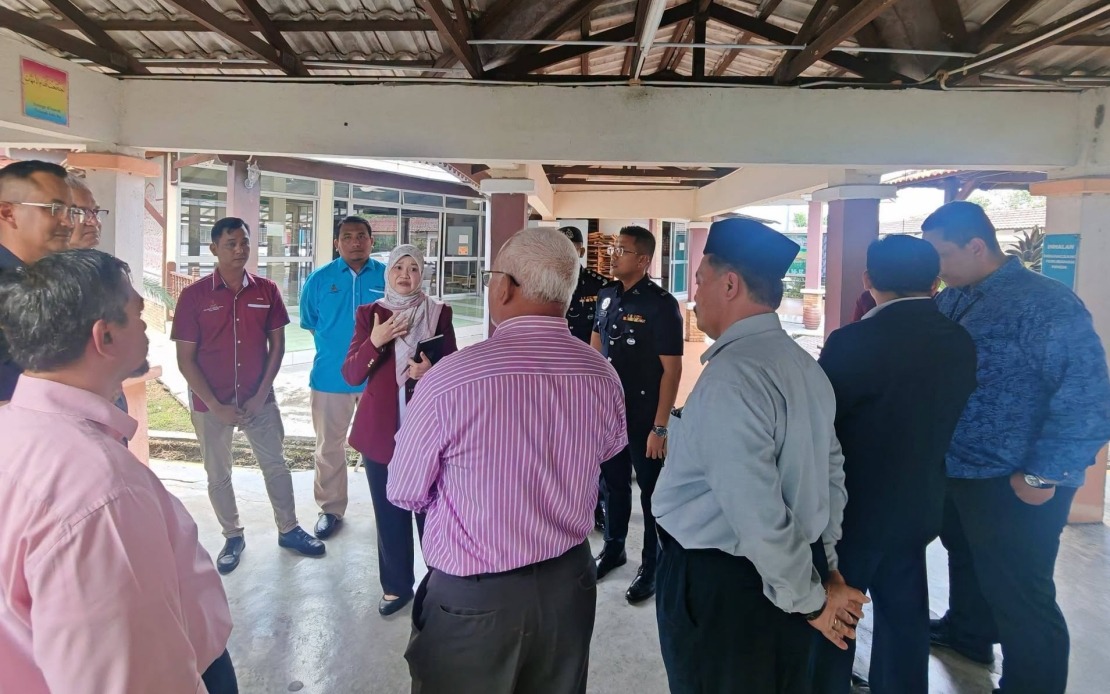
Education Minister Fadhlina Sidek arrived at a secondary school in Banting, Kuala Langat on July 6 to assess the situation following a stabbing incident involving a Form Three student that occurred earlier that morning. The minister's visit, which took place at 1.20 pm, underscored the seriousness with which the government is treating school safety concerns in Malaysia, a country where incidents of violence within educational institutions have periodically raised public alarm and prompted calls for enhanced security measures.
According to police records, authorities received notification of the stabbing at 9.50 am. Kuala Langat district police chief Supt Mohd Akmalrizal Radzi confirmed that the victim, a female secondary school student, suffered a knife wound inflicted by another girl enrolled at the same institution. The injured student was transported to Banting Hospital, where she was reported to be in stable condition and receiving medical treatment. Police moved swiftly to apprehend the alleged perpetrator, who was taken into custody for questioning and further investigation.
During her visit, Fadhlina held discussions with the school's management team to gather details about the incident and understand the circumstances that led to the altercation. Her presence at the institution served as a direct acknowledgement of the education ministry's responsibility in safeguarding students and maintaining secure learning environments across Malaysia. The minister's immediate engagement with school leadership also demonstrated the government's commitment to transparent communication with educational stakeholders during crisis situations.
In her public statement, Fadhlina articulated the government's multifaceted response strategy. She highlighted that the Royal Malaysia Police had established control over the situation and taken a suspect into custody, thereby preventing further immediate danger. However, she emphasised that beyond security containment, the priority now encompasses ensuring comprehensive medical care for the victim and providing psychological and emotional support to the broader school community, recognising that such traumatic events can have lasting impacts on students and educators alike.
The minister's appeal for restraint resonated with ongoing national conversations about responsible information dissemination during sensitive situations. She specifically urged the public to avoid spreading unverified claims or engaging in speculation, noting that premature or inaccurate narratives can complicate police investigations and amplify trauma within affected communities. This cautionary message reflects lessons learned from previous incidents where misinformation on social media platforms has exacerbated public anxiety and hindered official responses.
V. Paparaidu, the Selangor Human Resources and Poverty Eradication Committee chairman and Banting assemblyman, supplemented the minister's response by commending the State Education Department's rapid deployment of psychosocial support services. His intervention highlighted the multi-level governance approach required to address school safety, with state and federal authorities coordinating crisis response efforts. Paparaidu's acknowledgement of the victim's family and affected students underscored the human dimensions of such incidents, extending concern beyond immediate physical injury to encompass emotional and psychological wellbeing.
Pararaidu used his platform to amplify critical security recommendations, arguing that Malaysian schools must transition from reactive to proactive security postures. He advocated for consistent vigilance by security personnel, particularly during peak arrival and departure times when campuses experience high foot traffic and potential vulnerabilities. His emphasis on gate access controls and visitor screening reflects international best practices in school safety, addressing concerns that unauthorised individuals could gain entry to educational premises.
The incident raises important questions about the broader security infrastructure within Malaysian secondary schools. Unlike some international contexts where metal detectors and armed security are commonplace, Malaysian schools typically operate with lighter security frameworks. This stabbing incident, involving a student-on-student assault, complicates traditional security narratives that focus primarily on external threats. It suggests that comprehensive school safety requires attention to internal dynamics, including conflict resolution programmes, mental health awareness initiatives, and early intervention systems designed to identify and address tensions among the student population.
The response from education authorities also reflects evolving thinking about trauma-informed school management. Beyond immediate crisis containment and police investigation, there is recognition that students and staff require ongoing emotional support to process the incident and maintain confidence in their school environment. Psychosocial interventions, counselling services, and potentially modified daily routines can help affected communities navigate the aftermath of such disturbing events, preventing secondary trauma and facilitating a return to educational normalcy.
For Malaysian parents and educators, this incident serves as a sobering reminder that school safety encompasses multiple dimensions beyond physical security. While enhanced gate controls and security personnel play important roles, equally critical are school cultures that prioritise mental health, peer support, and early identification of students experiencing distress or harbouring hostile feelings toward peers. The coordination between police, education authorities, and social services demonstrated in this case represents a model approach, though questions persist about whether such responsive capacity exists uniformly across all Malaysian schools, particularly in rural or under-resourced districts.
The incident also highlights the distinction between security and safety. True school safety requires not only preventing unauthorised external access but also creating environments where students and staff feel psychologically secure and supported. The stabbing, perpetrated by a fellow student, underscores that threats can emerge from within school communities, necessitating comprehensive approaches that combine physical security measures with robust pastoral care, mental health services, and conflict prevention programming. Moving forward, Malaysian schools may benefit from reviewing and strengthening these interconnected dimensions of student protection.

