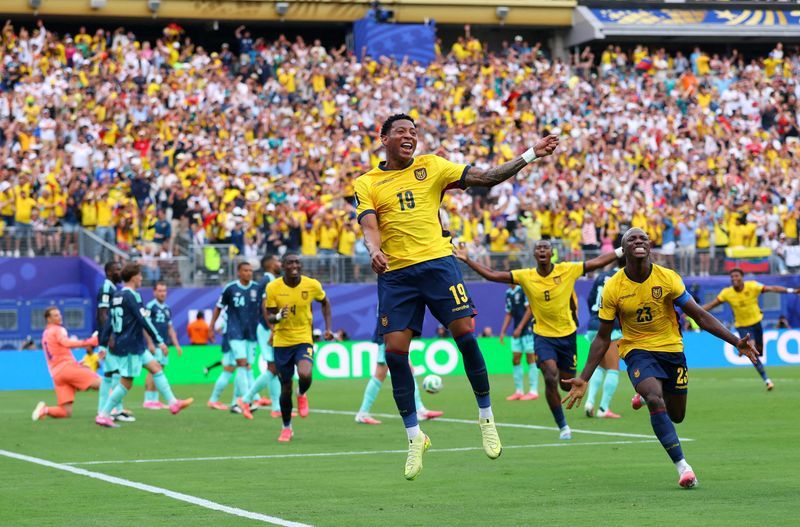
Ecuador pulled off one of the tournament's most improbable turnarounds at East Rutherford, New Jersey, on June 25, overcoming early adversity to defeat Germany 2-1 and salvage their World Cup hopes. The South American side faced elimination before kickoff but emerged with a place in the last 32, finishing as one of the best eight third-placed teams in a dramatic display of character and determination that belied their precarious position entering the match.
The path to qualification had seemed tortuously narrow for Ecuador, who came into the encounter having failed to convert any of their previous attempts on goal despite 39 shots across two matches. That barren run had left them vulnerable heading into their final Group E contest, and Germany's early aggression threatened to extinguish their tournament dreams entirely. Leroy Sane, in his 15th appearance at a major international tournament, opened the scoring just two minutes in, capitalizing on a swift move initiated by a quick throw-in and a clever pass from Florian Wirtz to finish decisively from close range.
The early setback could have demoralized Ecuador, but their response suggested they possessed the resilience required to turn their situation around. A controversial moment in the build-up to Sane's goal—when Aleksandar Pavlovic appeared to catch Pedro Vite with a raised foot—went unpunished by referee Tori Penso, but Ecuador refused to dwell on the decision. Within minutes, they had restored parity through Nilson Angulo, whose curling effort from the edge of the penalty area in the ninth minute left goalkeeper Manuel Neuer slow to react and sent the yellow-clad Ecuador supporters into rapturous celebration.
Germany, already assured of topping Group E as the tournament's only team to maintain a perfect record, continued to press but found themselves increasingly vulnerable at the back. The defending champions had conceded in all three group matches, a defensive frailty that would ultimately prove costly despite their dominance in possession. The match's second half brought fresh controversy when referee Penso initially awarded Germany a penalty after Kai Havertz appeared to be brought down by Joel Ordonez in the box, but a VAR review overturned the decision after identifying a foul in the build-up by Felix Nmecha.
Ecuador seized the momentum generated by that reprieve, and their persistence was rewarded when substitute Gonzalo Plata struck the decisive blow with 13 minutes remaining. The goal arrived from a corner-kick routine when Kevin Rodriguez flicked the ball on at the near post, allowing Plata to react quickest and fire past Neuer in a finish that sent the sold-out stadium into uproar. The scenes of jubilation among Ecuador's supporters reflected the magnitude of their accomplishment—a team that had arrived at the tournament without a single goal across their opening matches had not merely breached that dam but seized a victory that ensured their progression.
Germany's exit as group winners, while cushioned by their superior goal difference over Ivory Coast, represented a tournament punctuated by defensive vulnerabilities that will concern their coaching staff heading into the knockout rounds. The African side, having beaten Curaçao 2-0 in their final match, finished second in the group on goal difference despite collecting the same six points as Germany. For Ecuador, the victory marked a reversal of fortune that few observers had predicted when they took the field needing nothing short of victory and hoping their performance would prove sufficiently impressive to claim a spot among the strongest third-placed teams.
The significance of Ecuador's achievement extends beyond mere group-stage progression; their triumph demonstrates the unpredictability that defines World Cup football, where fortune can shift dramatically within 90 minutes. Having arrived at the tournament with questions about their attacking prowess, they demonstrated that despite statistical disadvantages in chances created, clinical finishing and mental fortitude could still deliver results against established opponents. For Malaysian and Southeast Asian observers, the Ecuador precedent offers a reminder that determination and belief can occasionally overcome technical disparity, a lesson relevant to any team navigating challenging tournament circumstances.
Ecuador's path to knockout-stage qualification was completed not through championship credentials but through a combination of their own improvement and favorable circumstances in other matches. As one of eight third-placed teams to advance, they occupy a precarious position in the tournament hierarchy, yet their ability to perform under extreme pressure suggests they possess the temperament required to compete further. Germany, meanwhile, despite finishing atop their group with maximum points, carried defensive concerns into the knockout phase that their dominance of possession and attacking prowess had temporarily obscured but ultimately could not resolve.

