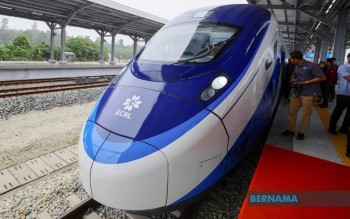
The East Coast Rail Link (ECRL) represents more than just infrastructure development—it signals a fundamental shift in how businesses across Malaysia's eastern peninsula will operate and compete. Deputy Minister of Economy Datuk Mohd Shahar Abdullah has outlined an ambitious vision for the project, emphasising that the railway will fundamentally reshape the economic landscape by creating an integrated ecosystem spanning multiple sectors and states. The undertaking, which encompasses Pahang, Terengganu, Kelantan and Selangor, reflects a strategic approach to regional development that extends well beyond simply connecting cities with rail tracks.
At its core, the ECRL initiative rests on creating what officials term a comprehensive economic ecosystem. This goes significantly beyond traditional transportation infrastructure. Datuk Mohd Shahar stressed that the project will simultaneously develop critical supply chain capabilities including construction services, ongoing operational support, and maintenance operations. This multi-layered approach ensures that businesses benefit not only from improved connectivity but also from the emergence of entire new sectors and service providers that will cluster around the railway corridor. The deliberate design of supporting industries represents a departure from conventional infrastructure projects that focus narrowly on connectivity alone.
The logistics sector stands to experience particularly transformative impacts under the ECRL framework. As the railway extends through the four coastal and near-coastal states, development patterns will prioritise cargo-focused facilities, warehouse infrastructure, and designated industrial zones strategically positioned along the route. These facilities will fundamentally alter how goods move through the region, shifting from road-dependent networks—which carry higher costs and greater environmental impact—to rail-based systems. For entrepreneurs currently constrained by geographical isolation or prohibitive transportation expenses, this shift opens commercially viable pathways to previously unreachable markets.
Reduced logistics costs represent perhaps the most immediately tangible benefit for small and medium-sized enterprises operating within the ECRL corridor. By moving from road transport to rail, businesses can substantially lower per-unit delivery expenses while simultaneously compressing delivery timeframes. This combination of factors creates a decisive competitive advantage, particularly for manufacturers and producers who currently struggle with transportation economics. The financial breathing room created by lower logistics costs translates directly into enhanced operational margins and improved pricing competitiveness in broader regional markets.
The scaling dynamics outlined by Datuk Mohd Shahar highlight a crucial economic principle often overlooked in regional development discussions. The difference between producing 10,000 units and 20,000 units represents far more than simple volume increase—it fundamentally changes unit economics and competitive positioning. When entrepreneurs gain genuine access to larger markets through improved logistics infrastructure, they can justify higher production volumes. This manufacturing expansion drives down per-unit costs through economies of scale, making local products more price-competitive against imported alternatives. The mechanism essentially empowers Malaysian entrepreneurs to compete on more equal terms with larger producers operating from areas already benefiting from superior infrastructure.
Tourism emerges as a secondary but significant beneficiary of ECRL development. The improved accessibility and connectivity created by the railway will inevitably attract increased visitor numbers to destinations throughout the four participating states. This tourism stimulus generates cascading economic benefits that reach far beyond major attractions and hotel chains. Small-scale traders, street food vendors, handicraft artisans, and heritage product manufacturers such as batik producers will experience increased demand as tourism volumes rise. For these typically marginalised segments of the regional economy, improved visitor traffic represents genuine wealth creation and employment opportunities with minimal additional investment required.
Yet Datuk Mohd Shahar, Member of Parliament for Paya Besar, has also issued a pointed warning to industry stakeholders. Merely gaining access to new markets through improved infrastructure remains insufficient for long-term competitive success. Entrepreneurs must actively adapt their business models to incorporate modern technologies and digital systems, moving decisively away from reliance on traditional operational approaches. This call for technological adoption reflects an understanding that infrastructure represents only one component of economic competitiveness. Businesses that fail to modernise their operations and embrace digital transformation, even while benefiting from superior physical infrastructure, risk squandering the opportunities the ECRL creates.
The timeline for ECRL completion underscores the immediacy of these considerations. As of last April, the overall megaproject recorded 93.66 per cent completion progress, with the Pahang-based segment advancing even further at 97.33 per cent. The December completion target now looms within realistic striking distance, meaning that entrepreneurs have only months to prepare for the competitive environment that improved connectivity will create. This condensed preparation window necessitates urgent action from business leaders, sector associations, and government agencies to ensure that local enterprises can genuinely capitalise on emerging opportunities rather than watching them accrue primarily to larger, better-positioned competitors.
The ECRL initiative reflects broader regional development strategy within Southeast Asia, where connectivity investments increasingly serve as catalysts for comprehensive economic transformation. Malaysia's approach—emphasising integrated ecosystem development rather than standalone infrastructure—offers a template that neighbouring economies increasingly study and adapt. For Malaysian entrepreneurs and policymakers, this represents both opportunity and urgency. The infrastructure investment is substantial and the window for preparing businesses to leverage it is rapidly closing. Success will ultimately depend not on the railways themselves but on how effectively entrepreneurs recognise and capitalise on the market access opportunities that improved connectivity provides.

