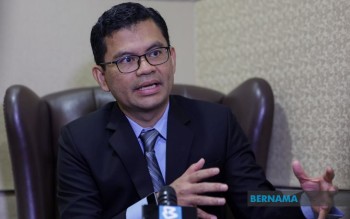
The Economy Ministry has set its preliminary target for 2027 development expenditure at approximately RM58 billion, reflecting the government's commitment to sustained infrastructure investment and economic expansion. Economy Minister Akmal Nasrullah Mohd Nasir disclosed the projection during a press conference in Putrajaya, noting that the allocation remains anchored to fundamental development priorities. The proposed budget, which has yet to be formally submitted to the Finance Ministry for review and approval, represents a strategic continuation of the administration's infrastructure-focused agenda as it approaches the final years of the current economic planning cycle.
The structural composition of the projected RM58 billion closely mirrors the government's established fiscal framework, with 70 percent of the total—approximately RM40.6 billion—designated specifically for basic development initiatives. This category encompasses foundational projects including transportation networks, water and utility infrastructure, telecommunications systems, and other essential services that form the backbone of national economic activity. The consistency of this allocation ratio underscores the government's deliberate policy to prioritise productive assets and public infrastructure over discretionary spending, a principle that has governed budget allocations across recent fiscal years.
Context from the Finance Ministry's recent budget cycles illustrates the trajectory of development spending commitments. During 2026, basic development expenditure reached RM57.6 billion, accounting for 71 percent of total development spending, while 2025 saw RM55.67 billion allocated to the same category, representing 65 percent of that year's development budget. The proposed 2027 figure of RM58 billion therefore suggests a modest increase from 2026 levels, though the proportion dedicated to basic development remains stable within the government's preferred 70 percent threshold. This pattern reflects a measured approach to expenditure growth, calibrating investment increases against prevailing macroeconomic conditions and fiscal constraints.
The Economy Ministry's articulated rationale for this substantial allocation emphasises three interconnected objectives: ensuring uninterrupted progression of ongoing development schemes, sustaining the economic growth momentum that Malaysia has generated, and expediting the country's broader physical transformation. These goals reflect recognition that infrastructure underpins private sector competitiveness, attracts foreign direct investment, and enhances productivity across the economy. Minister Akmal acknowledged that maintaining developmental continuity proves essential during a period when global economic headwinds and uncertainty persist, requiring governments to sustain confidence through consistent capital deployment.
The projection process follows established institutional procedures, with the Economy Ministry's senior leadership scheduled to refine and finalise the 2027 development blueprint before transmitting it to the Finance Ministry for comprehensive evaluation. This two-stage process ensures that sector-specific development priorities undergo internal validation before integration into the broader fiscal framework. The Finance Ministry will subsequently assess the proposal against overall budgetary parameters, including revenue forecasts, debt servicing obligations, and macroeconomic stabilisation requirements. Prime Minister Datuk Seri Anwar Ibrahim, who holds the concurrent position of Finance Minister, will ultimately table Budget 2027 in the Dewan Rakyat on October 9, 2026, completing the legislative approval process.
On the technical question of utilising a global oil price benchmark for Budget 2027 calculations, Minister Akmal clarified that such determinations fall squarely within the Finance Ministry's purview rather than the Economy Ministry's scope. While acknowledging that petroleum prices constitute a material variable influencing Malaysia's fiscal calculations, he noted that the Economy Ministry concentrates its analytical focus on development expenditure dimensions, leaving macroeconomic balancing decisions to the Finance Ministry. This delineation reflects the functional division of responsibilities within Malaysia's budgetary governance structure, wherein the Finance Ministry maintains primary responsibility for integrating all expenditure components into a coherent fiscal framework aligned with prevailing economic circumstances.
Recent economic performance provides important context for the 2027 expenditure planning process. Malaysia's economy expanded by 5.8 percent during the second quarter of 2026, bringing first-half growth to 5.6 percent and surpassing Bank Negara Malaysia's earlier forecast range of 4 to 5 percent. This stronger-than-anticipated expansion reflects resilience across multiple economic sectors and demonstrates the effectiveness of recent policy interventions. However, Minister Akmal tempered optimism by emphasising the government's need for continued vigilance, citing persistent global economic instability and the elevated baseline that strong first-half performance has established for the remainder of 2026.
Looking ahead, the minister cautioned that sustaining equivalent growth rates during the third and fourth quarters of 2026 will present heightened challenges, given the mathematical difficulty of matching high growth rates on an increasingly substantial economic base. Environmental factors, particularly the potential for El Niño weather patterns, could further constrain agricultural productivity and energy-intensive sectors, creating additional headwinds for economic activity. These considerations suggest that the 2027 budget framework must balance ambitious development objectives against realistic assessments of prevailing cyclical conditions and structural constraints affecting the Malaysian economy.
For Malaysian policymakers and the broader Southeast Asian region, the RM58 billion development allocation signals continuity in Malaysia's infrastructure investment strategy despite global uncertainties. The maintained emphasis on basic development reflects long-term confidence in the productivity returns generated by foundational infrastructure, even as immediate economic conditions warrant caution. This measured approach resonates across Southeast Asia, where governments similarly confront the tension between maintaining growth-enabling capital expenditure and managing fiscal pressures amid volatile commodity prices and geopolitical complications.
The projection's significance extends beyond budgetary mechanics to encompass questions of regional competitiveness and developmental trajectory. As Malaysia navigates transitions toward higher-value manufacturing and services, sustained infrastructure investment becomes increasingly critical for attracting knowledge-intensive industries and retaining competitive advantages against regional peers. The proposed 2027 allocation therefore represents not merely an accounting exercise but rather a strategic commitment to maintaining Malaysia's economic relevance and capacity for sustained growth through the coming decade.

