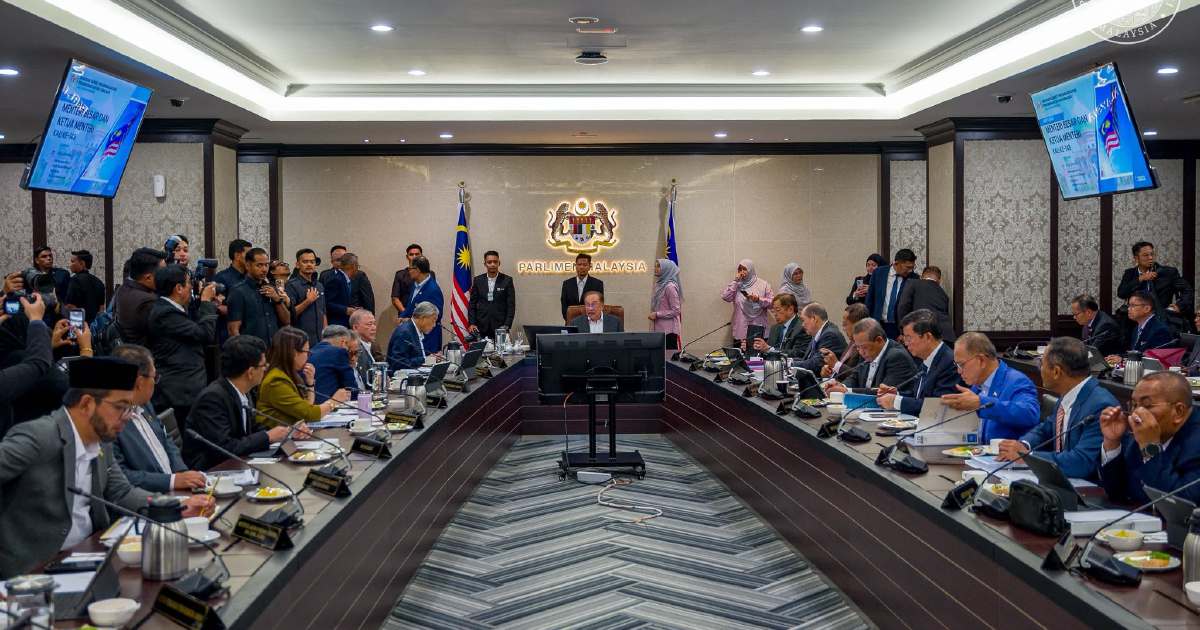
Prime Minister Datuk Seri Anwar Ibrahim convened the 149th meeting of Menteris Besar and Chief Ministers at Parliament in Kuala Lumpur, with economic resilience emerging as the central concern among Malaysia's top state leaders. The gathering reflected growing consensus that coordinated action across federal and state governments remains essential as the nation navigates an increasingly uncertain global economic landscape shaped by ongoing geopolitical tensions.
The global environment presents formidable challenges to Malaysia's economic prospects. Conflicts erupting across the Middle East have created ripple effects throughout international markets, affecting trade flows, commodity prices, and investor sentiment globally. For a trading nation like Malaysia that depends heavily on stable supply chains and consistent international demand, such instability poses tangible risks to growth projections and employment levels across multiple sectors. The meeting signalled recognition that domestic policymakers must act proactively rather than hope external conditions improve independently.
Strengthening Malaysia's economic fundamentals emerged as the primary focus, reflecting a strategic pivot toward domestic resilience. Rather than fixate solely on external factors beyond direct control, the assembled leaders sought to identify mechanisms through which federal and state governments could collaborate to buttress the economy from within. This includes leveraging regional advantages, optimising local investment opportunities, and ensuring that state-level policies align with broader national economic objectives without creating bureaucratic bottlenecks.
The involvement of all Menteris Besar and Chief Ministers underscores the interconnected nature of Malaysia's economy. State governments control significant fiscal resources and regulatory authority over land, commerce, and local development. Without their active participation and commitment to economic revival strategies, even well-crafted federal initiatives risk fragmentation and reduced effectiveness. The meeting structure itself—with the Prime Minister directly engaging state leaders—indicates the administration's assessment that economic challenges demand whole-of-government responses rather than top-down mandates alone.
Malaysia's position within the broader Southeast Asian context adds another layer of urgency to these deliberations. Regional neighbours including Thailand, Vietnam, and Indonesia face comparable external pressures. The question of whether Malaysia maintains competitive advantage amid regional economic competition informed the tone and substance of discussions. State leaders likely examined how their respective regions could attract investment, develop new industries, and retain skilled workforces even as regional talent pools become more mobile.
The timing of the 149th meeting carries significance for Malaysian political dynamics as well. Regular convocations of state leaders provide platforms for federal-state relations to be managed transparently and for grievances regarding resource allocation or policy coordination to be aired directly to the Prime Minister. In this instance, the economic agenda potentially unified diverse political interests, as leaders from states governed by different political coalitions share common concerns about their economies and constituents' livelihoods.
Commodity-dependent sectors feature prominently in several Malaysian states, particularly in Peninsular Malaysia and the East Malaysian states of Sabah and Sarawak. Palm oil, rubber, petroleum, and other natural resources remain economically significant despite diversification efforts. Global supply chain disruptions and price volatility stemming from Middle Eastern conflicts create direct consequences for communities dependent on these sectors. State leaders would have been acutely conscious of how federal economic decisions might shield or expose their constituents to global market turbulence.
The revival framework likely encompasses both immediate stabilisation measures and longer-term structural improvements. Short-term priorities might include safeguarding employment levels, ensuring adequate liquidity in local economies, and preventing cascading business failures. Longer-term considerations probably addressed competitiveness, digital transformation, skills development, and sectoral diversification. Coordinating these different timeframes across thirteen states and federal territories requires sophisticated planning and resource management.
Investor confidence remains a critical variable in Malaysia's economic trajectory. International investors monitor not only growth figures and inflation rates but also the coherence and consistency of policy signalling from Malaysian leadership. A well-orchestrated meeting of federal and state governments sends positive signals that Malaysia's political system can mobilise collectively around economic challenges. Conversely, visible discord among state leaders or between state and federal governments risks undermining confidence.
The 149th meeting reflects recognition that Malaysia faces a period requiring strategic clarity and coordinated action. While the global uncertainties arising from Middle Eastern conflicts remain beyond direct Malaysian control, the nation's response mechanisms and internal economic strength are matters where leadership choices matter substantially. By assembling the country's highest-ranking state leaders and focusing their collective attention on economic revival, Prime Minister Anwar Ibrahim demonstrated commitment to treating current challenges as deserving whole-of-nation engagement rather than isolated federal responsibility.

