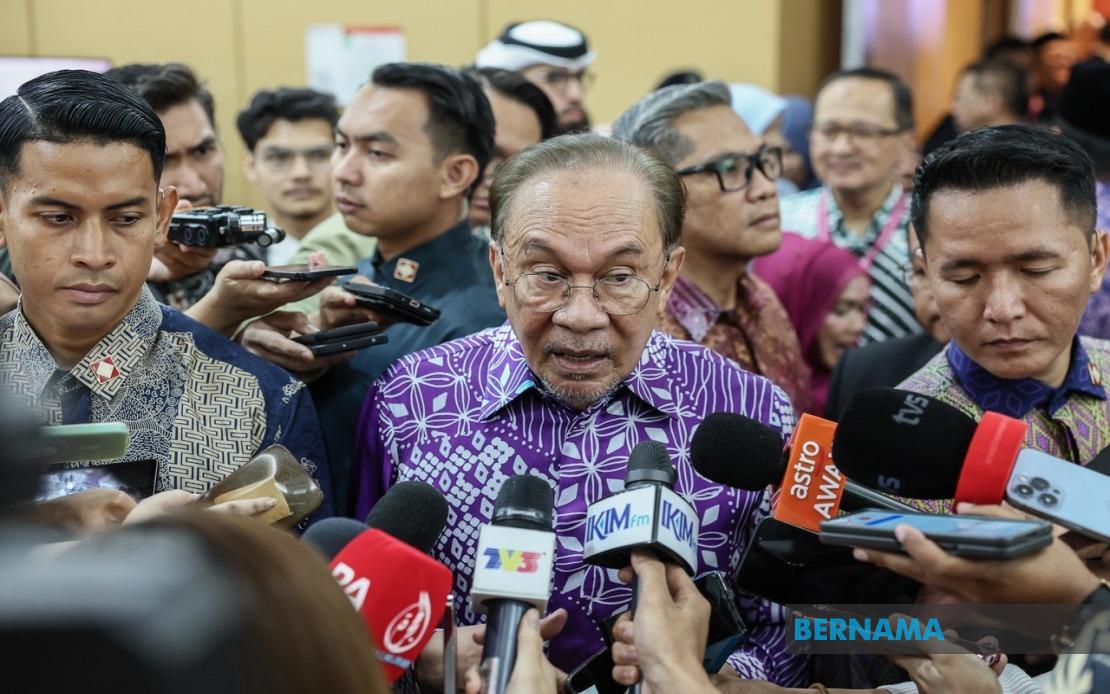
Prime Minister Datuk Seri Anwar Ibrahim has articulated a vision for Malaysian economic development fundamentally reoriented around human welfare and moral purpose, challenging the conventional growth-at-all-costs paradigm that has long dominated policymaking in the region. Speaking at the Humane Economy Global Discourse (HEGD) 2026 in Kuala Lumpur, Anwar contended that as Malaysia navigates transformative technological and economic shifts, the nation must resist the temptation to treat economic expansion as an end in itself, instead positioning prosperity as a vehicle for enhancing people's dignity and quality of life.
The Prime Minister's remarks arrive at a critical juncture as Malaysia confronts the dual imperatives of maintaining competitive economic performance while grappling with persistent challenges around income inequality, cost-of-living pressures, and social cohesion. His framing places Malaysia within a broader global discourse on humanistic economics that has gained traction in recent years, particularly as nations reckon with the social fractures and environmental degradation that unchecked growth orientation can produce. By anchoring economic policy in what he termed "moral purpose," Anwar signals an intention to align Malaysia's development trajectory with concerns about inclusive prosperity and equitable distribution of opportunity.
Anwar highlighted the convergence of transformative technological forces—particularly artificial intelligence, renewable energy systems, advanced manufacturing capabilities, and biotechnology—that are reshaping the global economic landscape. These emerging sectors present both opportunities and risks for Malaysia: while they offer pathways to high-value economic participation and job creation, they simultaneously risk exacerbating existing disparities if implementation occurs without deliberate attention to equitable access and benefit-sharing. The Prime Minister's emphasis on remaining "competitive, productive and open to investment" demonstrates awareness that Malaysia cannot retreat from global economic engagement, yet his insistence on moral grounding suggests these competitive endeavors must be pursued with intentionality about their human consequences.
The distinction Anwar drew between economy as means versus end carries particular weight in the Malaysian context, where rapid industrialization and development over preceding decades produced growth statistics that coexist with persistent wealth concentration and regional disparities. His assertion that "the economy is a means, not an end in itself" represents a philosophical reorientation that, if translated into concrete policy, could reshape how Malaysia evaluates success—moving beyond gross domestic product expansion toward metrics capturing poverty reduction, wage stagnation indicators, healthcare access, and educational opportunity. Such a framework would align with emerging thinking among international development institutions increasingly skeptical of growth-centric models.
The composition of attendees at the discourse, including Minister in the Prime Minister's Department (Religious Affairs) Dr Zulkifli Hasan and Forum Ekonomi Manusiawi (FEM) Chairman Prof Datuk Dr Saadiah Mohamad, underscores the multidisciplinary and values-based approach the government seeks to cultivate around economic policymaking. The presence of a religious affairs minister alongside economists signals an attempt to integrate moral and spiritual frameworks into technocratic economic deliberation—an integration that reflects Malaysia's particular context as a multi-religious nation where ethical considerations rooted in Islamic, Christian, Buddhist, Hindu, and secular humanist traditions all inform public discourse.
The challenge facing Malaysian policymakers in operationalizing this vision is formidable. Moving from rhetorical commitment to humanistic economic principles toward institutional change requires navigating entrenched interests, reforming regulatory frameworks, and potentially accepting lower growth rates during transition periods. The tension between remaining attractive to foreign direct investment—which typically seeks minimal regulatory interference and maximum profit extraction—and implementing stakeholder-oriented economic policies that prioritize worker welfare, environmental sustainability, and local community benefit will test the sincerity of the government's commitment to moral economics.
For Southeast Asian observers, Anwar's articulation of humanistic economic principles carries regional significance, as other nations in the bloc grapple with similar questions about balancing growth imperatives against social cohesion and environmental sustainability. Malaysia's positioning could influence regional conversations about alternative development models, particularly as climate pressures intensify and younger generations increasingly question whether traditional growth-oriented approaches serve their interests. Should Malaysia successfully translate these principles into measurable policy outcomes, it could establish a replicable template for other middle-income countries seeking to decouple prosperity from purely extractive economic practices.
The backdrop of rapid technological transformation makes Anwar's emphasis on moral purpose especially timely. Artificial intelligence and automation, if deployed without adequate safeguards and inclusive governance structures, risk displacing workers and concentrating economic gains among capital holders and technology owners. A genuinely humanistic approach would require proactive government intervention around education, retraining, wealth redistribution mechanisms, and stakeholder participation in decisions about technological implementation—interventions that sit uneasily with neoliberal orthodoxy but increasingly appear necessary to maintain social stability.
Critical observers will note that Anwar's framing, while rhetorically powerful, requires translation into concrete budgetary allocations, legislative changes, and regulatory reforms to carry meaning beyond aspirational statement-making. The degree to which his administration follows through on these principles through taxation policy, wage-setting mechanisms, environmental protection standards, and social safety net expansion will ultimately determine whether the humanistic economy constitutes genuine paradigm shift or sophisticated repackaging of familiar growth-focused development.
Looking forward, the government's challenge involves integrating this moral-economic framework into the machinery of bureaucratic implementation across multiple ministries and agencies, each with their own institutional cultures and stakeholder relationships. Successfully doing so would require unusual political will, sustained commitment despite opposition from those benefiting from existing arrangements, and genuine willingness to accept trade-offs between growth velocity and distributional outcomes—a test that few governments have consistently passed.

