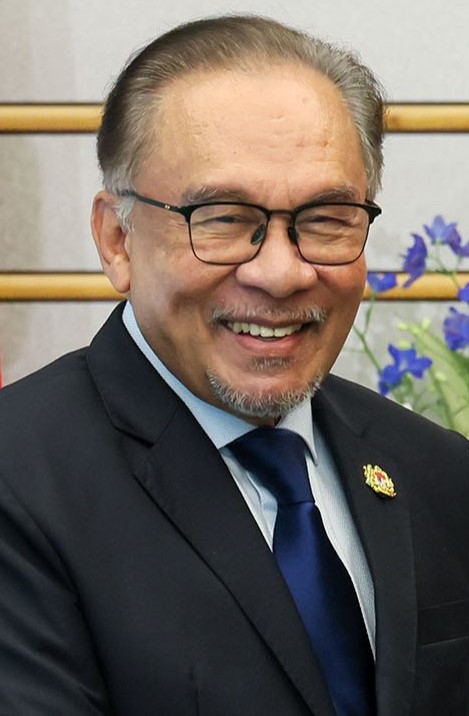
Prime Minister Datuk Seri Anwar Ibrahim has underscored the necessity for Malaysia's development agenda to translate into tangible benefits for citizens across all social strata, emphasising that rural and grassroots communities cannot be left behind in the nation's modernisation drive. Speaking at a gathering with fishing communities and farmers in Muar on June 15, he articulated a vision of inclusive prosperity in which economic gains filter down to those traditionally marginalised from Malaysia's advancement narratives.
The Prime Minister's remarks signal a deliberate pivot in governance philosophy, one that acknowledges the tension between Malaysia's ambitions for high-tech transformation and the immediate welfare concerns of its agrarian population. While acknowledging the importance of artificial intelligence and digital advancement for long-term competitiveness, Anwar stressed that the government cannot allow such aspirations to eclipse the pressing needs of rural communities dependent on agriculture and fishing for their livelihoods. This balancing act reflects wider anxieties across Southeast Asia about technology-driven development leaving behind non-urban populations.
Anwar's emphasis on leadership accountability and personal engagement with constituents suggests a frustration with bureaucratic distance from ground-level realities. His call for Cabinet ministers and political leaders to venture into communities and directly hear grievances represents an implicit critique of top-down policymaking that loses sight of implementation challenges faced by ordinary Malaysians. This approach resonates particularly in a regional context where governance challenges often stem from disconnect between federal planning and local conditions.
The MADANI Government's stated commitment to channelling social assistance effectively through relevant agencies reflects recognition that Malaysia's safety net mechanisms, while theoretically comprehensive, may not be delivering intended outcomes uniformly across the country. Rural communities in particular have historically experienced delays in accessing government support and infrastructure improvements, creating a gap between policy intent and real-world impact. By positioning welfare provision as a priority alongside technological advancement, the administration acknowledges that inclusive growth requires simultaneous investment in both digital infrastructure and traditional support systems.
For Malaysia's farming and fishing sectors—industries that employ hundreds of thousands and anchor entire regional economies—this messaging carries significant implications. Agricultural communities have weathered volatile commodity prices, climate pressures, and generational decline as younger Malaysians migrate to urban areas for employment. A government that visibly prioritises their concerns could reverse perceptions that farming and fishing are declining sectors abandoned to their fate. Conversely, if rhetoric about rural welfare does not translate into concrete price supports, market access improvements, or productivity enhancement programmes, credibility will erode quickly.
The Prime Minister's language around marginalisation and representation also touches on Malaysia's persistent regional disparities. While Kuala Lumpur and major metropolitan zones have benefited enormously from infrastructure investment and economic clustering, many rural districts lag considerably in income levels, education quality, and service provision. Ensuring that modernisation projects—whether digital initiatives or industrial zones—genuinely create opportunities for rural Malaysians rather than merely widening wealth gaps presents a substantial governance challenge requiring coordinated policy across multiple agencies.
The emphasis on personal leadership accountability carries weight in Malaysian political culture, where public perception of leaders' commitment to ordinary citizens significantly influences electoral outcomes and social cohesion. By insisting that political representatives regularly engage with constituents and champion their interests, Anwar positions receptiveness to grassroots concerns as a non-negotiable feature of responsible governance. This framing implicitly rebukes leaders perceived as disconnected from community realities—a potent message in a nation where economic dissatisfaction has historically fuelled political volatility.
Implementation mechanisms will ultimately determine whether this vision translates beyond rhetoric. The government's ability to deliver meaningful improvements in rural incomes, agricultural productivity, and fisher welfare depends on sustained budget allocation, institutional effectiveness, and coordination between federal, state, and local authorities. Malaysia's experience with rural development initiatives suggests that well-intentioned programmes often falter due to implementation gaps, inadequate resourcing, or bureaucratic inefficiency. Success requires not merely policy reorientation but institutional reform to ensure that benefits reach intended recipients without excessive leakage.
For Malaysian businesses and investors, this messaging suggests the government views inclusive growth as strategically important rather than merely compassionate. Markets in rural areas represent significant untapped potential if purchasing power increases through higher agricultural incomes. Similarly, improving rural infrastructure and digital connectivity aligns with private sector interests in expanding market reach. This potential convergence between government objectives and business incentives could unlock rural development momentum if harnessed effectively through public-private collaboration.
The regional dimension also warrants attention. Southeast Asian economies increasingly compete on inclusive growth metrics as development indicators beyond GDP gain prominence. Countries demonstrating genuine commitment to equitable development enjoy stronger social stability and broader political legitimacy. Malaysia's positioning itself as an economy where growth serves all Malaysians—not merely urban elites or investors—carries implications for regional soft power and foreign perceptions of governance quality.
Moving forward, Prime Minister Anwar's challenge involves maintaining focus on rural development amidst competing fiscal pressures and macroeconomic headwinds. Economic slowdowns often prompt governments to deprioritise welfare spending in favour of stabilising growth. Sustaining commitment to grassroots communities through inevitable economic cycles will require political will and careful communication about trade-offs. The litmus test for the MADANI Government's inclusive growth agenda will ultimately be whether farmers, fishermen, and smallholders experience measurable income improvements and access to government services within the next electoral cycle.