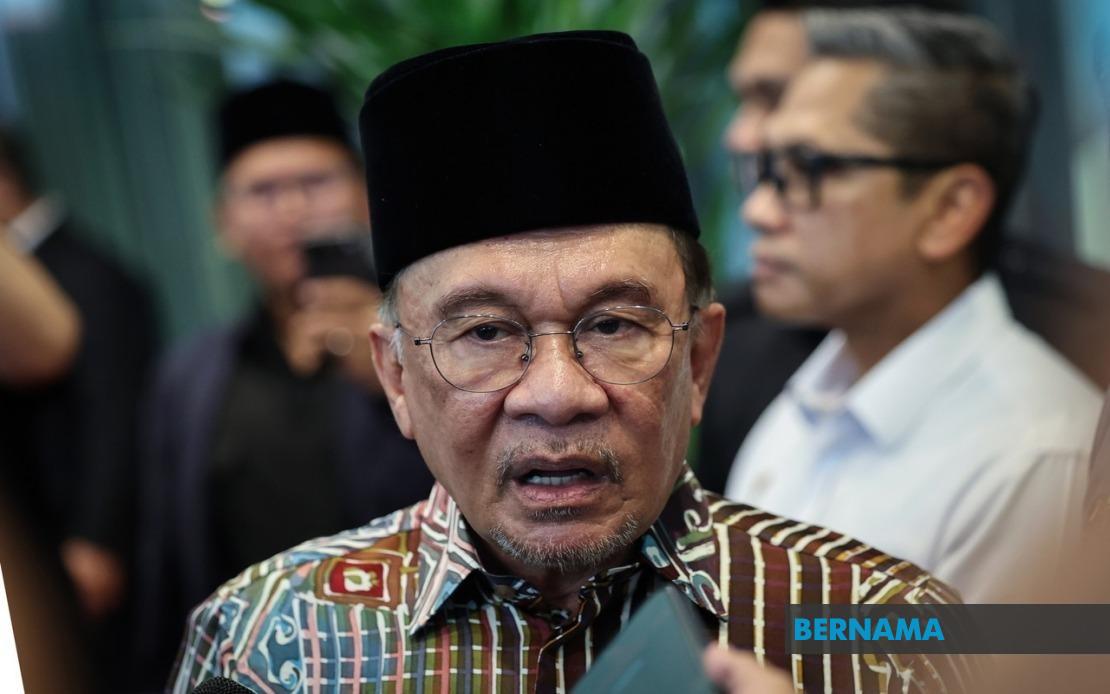
Prime Minister Datuk Seri Anwar Ibrahim has issued a forceful rebuke of Israel's decision to proceed with construction tenders for the E1 settlement area situated east of Jerusalem, characterising the move as a calculated step toward fragmenting Palestinian territorial integrity. In remarks posted to social media, the Malaysian leader expressed grave concern that the development would sever the viability of a contiguous Palestinian homeland, a prerequisite consistently cited by international bodies and peace advocates as essential for any viable two-state arrangement.
The E1 territory occupies strategic significance in Palestinian territorial configuration. Located in the occupied West Bank, this tract of land has long featured prominently in discussions surrounding Palestinian self-determination, as control over this area fundamentally determines whether the northern and southern sections of the West Bank can maintain functional territorial continuity. Without this geographical link, Palestinian governance structures would face severe practical limitations, rendering the notion of an independent state considerably more problematic.
Anwar's intervention reflects Malaysia's consistent diplomatic positioning on the Israeli-Palestinian conflict, a stance that has positioned the country among vocal international critics of Israeli settlement expansion. His statement underscores Kuala Lumpur's view that settlements constructed in occupied territories violate established international legal frameworks, yet Israel has demonstrated a pattern of proceeding with such initiatives despite sustained international censure and the absence of legitimate legal basis under international law.
The Prime Minister framed the E1 construction decision within a broader context of deteriorating conditions for Palestinians. He pointed to what he characterised as unprecedented levels of settler violence against Palestinian communities throughout the occupied West Bank, combined with the ongoing military operations in Gaza, to argue that Israel has effectively abandoned any pretence of pursuing peaceful resolution or acknowledging international consensus. This rhetorical positioning connects the E1 settlement initiative to what Malaysian officials describe as a systematic campaign undermining Palestinian rights and territorial security.
Malaysia's response extends beyond symbolic condemnation. Anwar indicated that the government would scrutinise the participation of international companies in the E1 construction tenders, threatening unspecified consequences for firms that engage in the project. This approach signals Malaysia's willingness to leverage its market access and diplomatic relationships as enforcement mechanisms against what it views as complicity in illegal settlement activities. Such measures, while perhaps limited in immediate practical impact, reflect the political importance domestic constituencies in Malaysia attach to Palestinian solidarity.
The Malaysian position aligns with recent statements from United Nations Secretary-General António Guterres, whose office has similarly condemned the E1 initiative. UN Spokesperson Stephane Dujarric warned that the settlement would effectively bisect the West Bank, severing northern territories from southern areas and fundamentally compromising the territorial cohesion necessary for Palestinian statehood. The spokesperson emphasised that such fragmentation would pose what international officials describe as an existential threat to the two-state solution framework that has underpinned peace negotiations for decades.
For Malaysian audiences and Southeast Asian observers, the E1 development carries implications extending beyond the immediate Israeli-Palestinian context. The settlement expansion demonstrates the challenges facing international law enforcement when powerful states act in apparent defiance of global legal norms. Malaysia's own position as a middle power navigating complex regional relationships informs its rhetorical stance on Palestinian rights, particularly given the country's substantial Muslim population and its historical commitment to anti-colonial principles.
The broader geopolitical dimension reflects how Israeli policy shapes regional dynamics across multiple fronts. For ASEAN nations maintaining diverse relationships with both Western powers and Middle Eastern actors, the continued settlement expansion complicates diplomatic balancing acts. Malaysia's vocal opposition signals to its domestic constituents and Arab partners that it will not remain silent on Palestinian issues, even as economic and security considerations require maintaining pragmatic international relationships.
Anwar's statement represents part of a sustained Malaysian diplomatic effort to maintain visibility on Palestinian issues within international forums. Since assuming the premiership, Anwar has positioned Malaysia as an outspoken advocate for Palestinian self-determination, frequently invoking Malaysia's own historical experience with colonial rule and anti-imperial struggles. This framing resonates with Malaysia's historical identity while serving contemporary political purposes in maintaining coalition support among constituencies prioritising Muslim solidarity and anti-Western positioning.
The E1 decision occurs amid heightened tensions throughout the region, following the October 2023 escalation between Israeli forces and Palestinian armed groups. The cumulative effect of settlement expansions, settler violence, and military operations has progressively narrowed the territory available for Palestinian governance, rendering the mathematical impossibility of the two-state framework increasingly apparent to international observers. Malaysia's warning that E1 construction would prove definitively destructive to Palestinian statehood prospects reflects this growing recognition of trajectory.
Looking forward, the question of whether international pressure, including Malaysia's signalled potential sanctions against participating companies, will meaningfully constrain Israeli settlement policy remains uncertain. Historically, such multilateral expressions of concern have proved insufficient to alter Israeli strategic planning, particularly given strong diplomatic support from the United States and other Western powers. Malaysia's independent stance, however symbolically constrained, maintains the principle that international law and Palestinian rights warrant sustained advocacy regardless of great power opposition.
For Malaysian policymakers and regional observers, the E1 episode underscores the persistence of the Palestinian question as a defining issue in international relations, capable of mobilising responses from countries across the globe despite other pressing regional concerns. The settlement's advancement despite international opposition illustrates the limits of consensus-based international diplomacy when confronting determined state actors operating from positions of military superiority. Malaysia's response, while declarative rather than coercive, affirms the country's commitment to principles of self-determination and territorial sovereignty that resonate throughout the developing world.

