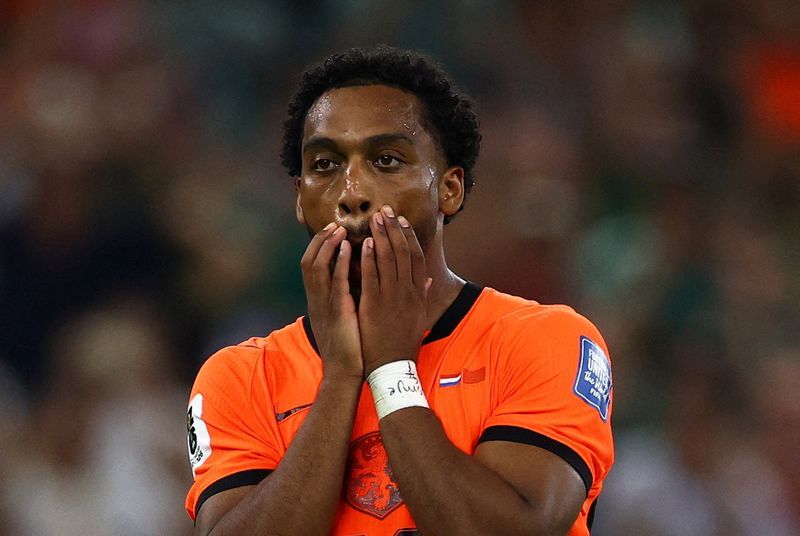
The Netherlands football association announced Tuesday that three of its players had fallen victim to racist harassment across social media platforms following Monday's World Cup penalty shootout elimination by Morocco in Monterrey. The defeat came after the teams played to a 1-1 draw through extra time in their last-32 encounter, with Morocco prevailing 3-2 from the spot. Justin Kluivert, Quinten Timber and Crysencio Summerville, the three penalty takers who failed to convert, became the focus of what the Dutch federation described as discriminatory and hateful comments from online users.
The Dutch football association's response reflected a zero-tolerance stance towards such behaviour. The KNVB stated it found the abuse appalling and committed to taking formal action by submitting complaints to Meld Online Discriminatie, a Dutch platform specifically designed to receive and process reports of online discrimination. This step initiates a structured investigative process where the organisation's legal team evaluates whether the reported statements constitute criminal offences under Dutch law.
When complaints are substantiated through this mechanism, they can be escalated to the Public Prosecution Service, potentially triggering criminal investigations into the perpetrators. This formal pathway reflects the seriousness with which Dutch authorities treat online hate speech, particularly when directed at public figures and athletes. The procedure demonstrates that social media harassment is not treated as a private matter but rather as a potential criminal issue warranting state intervention.
The incident reflects a troubling pattern that has emerged in international football over recent years, where players from minority backgrounds face coordinated online abuse following high-pressure match outcomes. The phenomenon gained particular prominence following the Euro 2020 final, when England's defeat to Italy in a penalty shootout sparked a wave of racist messages targeting black players in the squad. Marcus Rashford, Bukayo Saka and Jadon Sancho bore the brunt of particularly virulent online attacks, with racist comments and imagery flooding their social media accounts within hours of the loss.
The English experience provided a template for how such incidents could be prosecuted. Following the Euro 2020 final abuse, British police conducted extensive investigations that resulted in multiple arrests and convictions. Two individuals received prison sentences for their role in the racist campaign, while another perpetrator received a suspended sentence. These prosecutions sent a significant message that online racist abuse would be treated with the same gravity as offline hate crimes, though enforcement remains challenging given the scale of social media platforms and the difficulty of tracking anonymous accounts.
The Dutch association's invocation of the Meld Online Discriminatie system suggests a similar commitment to pursuing perpetrators through the criminal justice system. The existence and active use of such reporting mechanisms across European football jurisdictions indicates growing recognition that online abuse requires structured institutional responses rather than reliance on platform moderation alone. However, the effectiveness of these efforts depends heavily on the resources allocated to investigations and the willingness of prosecutors to pursue cases that may be technically challenging to prove.
Beyond the immediate circumstances of this particular World Cup match, the targeting of Dutch players reflects broader patterns within global football fandom. Research on online abuse in sports has shown that players who miss penalties in crucial matches become lightning rods for abuse, and that players of colour face disproportionately higher levels of racist and discriminatory comments compared to their white teammates. This disparity suggests that online abuse is not simply an emotional response to sporting disappointment but rather intersects with underlying prejudices within sections of supporter communities.
The KNVB's statement emphasised football's foundational role as an inclusive institution capable of bringing together millions of people across different backgrounds and identities. The association framed discrimination as fundamentally antithetical to football's values and inclusive mission. This rhetorical positioning is significant because it situates the fight against racism not merely as a compliance issue but as central to protecting the sport's integrity and universal appeal. The statement implicitly argues that racism within football communities threatens the sport itself.
For Malaysian and Southeast Asian readers, this incident carries particular resonance given the region's own struggles with online abuse and hate speech targeting athletes and public figures. The formal mechanisms being deployed by Dutch authorities provide a potential model for how regional football associations and governments might approach similar incidents. The effectiveness of criminal prosecution in deterring online abuse remains debated, but the willingness to pursue perpetrators through legal channels sends a clear message about societal standards and values.
The World Cup tournament has historically been a flashpoint for discussions about racism in football, with previous editions witnessing racist incidents both online and in stadiums. Morocco's surprising run through the tournament—ultimately reaching the semi-finals—occurred against a backdrop of broader conversations about representation and diversity in football. The timing and targeting of abuse against Dutch players following their loss to Morocco adds another layer to these ongoing debates about football's relationship with racism and prejudice.
Moving forward, the Dutch case may set precedent for how similar incidents are handled across European football jurisdictions. If prosecutions proceed and result in convictions, they could establish that online racist abuse directed at athletes following major matches represents actionable criminal conduct rather than merely offensive speech. Such outcomes would likely encourage other national football associations to pursue similar formal complaints rather than relying on apologies and awareness campaigns alone.

