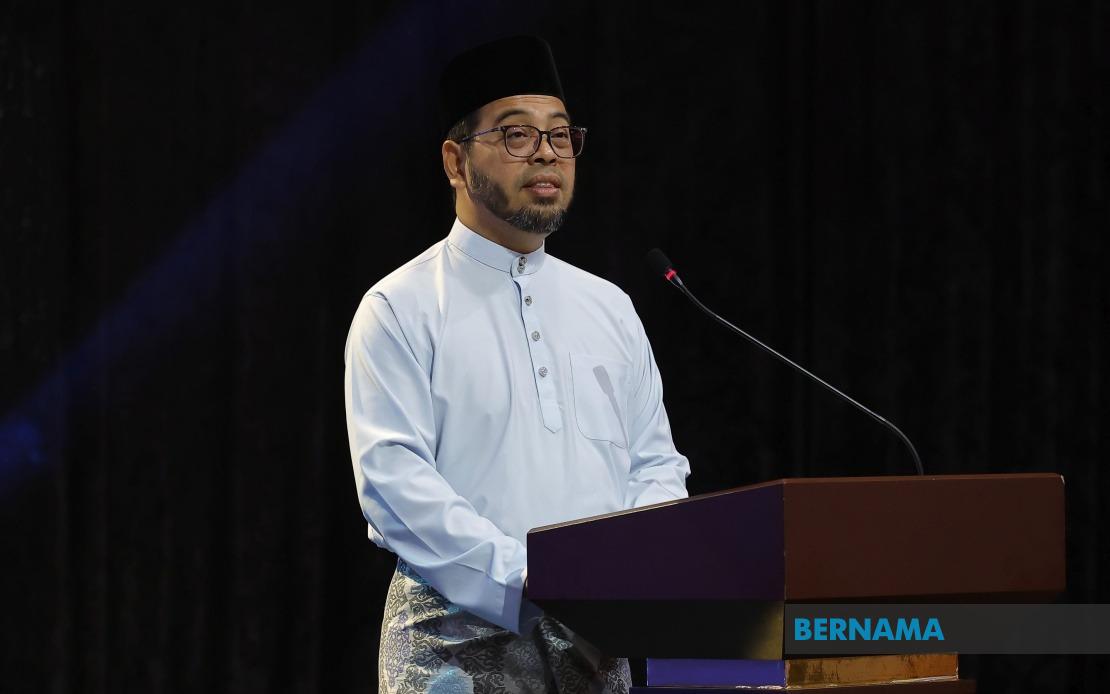
Malaysia's Muslim population must transcend lingering disagreements and set aside mutual animosity to forge a more robust and unified ummah capable of confronting the mounting complexities of the modern world, according to a senior government official. Speaking at the national Maal Hijrah 1448H/2026M celebration held at Putra Mosque in Putrajaya on June 17, Dr Zulkifli Hasan, Minister in the Prime Minister's Department (Religious Affairs), emphasised that lasting social progress hinges upon fundamental personal transformation across intellectual, spiritual and moral dimensions. His remarks underscored a growing government focus on cohesion and collective resilience as Malaysia grapples with multifaceted external pressures.
Dr Zulkifli articulated a vision wherein communities bound by genuine solidarity and shared purpose accumulate blessings and prosperity for all constituents, whereas fragmentation inevitably precipitates difficulties and national weakness. The ceremony, which carried the theme "MADANI Dihayati, Ummah Diberkati", drew distinguished attendance including Sultan of Perak Sultan Nazrin Shah and Deputy Prime Minister Datuk Seri Fadillah Yusof, lending considerable symbolic weight to the occasion. The high-level gathering reflected the government's intention to position religious and communal harmony as central pillars of the nation's development framework.
The timing of these appeals carries particular significance given Malaysia's exposure to broader regional and global instabilities. Supply chain disruptions, persistent economic uncertainty, and shifting geopolitical dynamics across Asia and beyond have created conditions whereby societies lacking internal cohesion face compounded vulnerability. Dr Zulkifli's insistence that citizens maintain confidence in and actively support government initiatives targeting Muslim dignity and Islamic values proliferation suggests official recognition that external pressures require coordinated domestic response. For Southeast Asian observers, this framing reflects how economic and security challenges increasingly blur into cultural and religious dimensions.
Central to Dr Zulkifli's address was a reconceptualisation of hijrah—traditionally understood as physical migration—as an ongoing spiritual and moral journey of abandoning destructive conduct and nurturing character traits that bind Muslim communities together. This contemporary interpretation transforms a historical Islamic concept into a framework for addressing modern social fragmentation and polarisation. By positioning hijrah as continuous personal and collective evolution toward stronger collective bonds, the minister provided theological grounding for secular nation-building objectives. This approach appeals to both traditionally-minded and reform-oriented segments within Malaysia's Muslim demographics.
The minister explicitly linked community unity to the practical implementation of Islamic values across Malaysian society. His argument—that strengthened communal bonds create enabling conditions for advancing Islamic principles institutionally and culturally—reflects pragmatic governance philosophy wherein social cohesion becomes instrumental to specific policy outcomes. This reasoning resonates particularly in a pluralistic nation where Muslim majority status coexists with significant non-Muslim populations requiring inclusive governance frameworks. The emphasis on Muslims working together within their own community arguably serves to stabilise the broader multiethnic and multireligious balance.
Dr Zulkifli's broader message extended beyond intra-Muslim concerns to encompass the shared civic responsibility all Malaysians bear regardless of religious or cultural background. This inclusive rhetorical gesture, whilst acknowledging diversity of belief systems, invoked common commitment to preserving national peace, stability and material wellbeing. Such language navigates delicately between appeals to Muslim solidarity and affirmation of Malaysia's constitutional pluralism, a balance that remains perpetually challenging in Malaysian political discourse. The acknowledgment that citizens of varying backgrounds share overlapping national interests suggests recognition that effective governance requires cross-communal participation and acceptance.
The ceremony's award presentations further underscored the government's framework for recognising contributions to Islamic scholarship and community building. International Islamic University Malaysia Rector Prof Emeritus Datuk Dr Osman Bakar received the National Tokoh Maal Hijrah award, whilst Moroccan scholar Dr Ahmad Al-Raysuni accepted the International variant. These selections highlighted both domestic expertise and transnational Islamic intellectual networks, positioning Malaysia within broader Muslim world conversations whilst celebrating local institutional achievements. The dual national and international recognition structure suggests government desire to project Malaysia as simultaneously rooted in local Muslim communities and engaged with global Islamic discourse.
For Malaysian policymakers, the Maal Hijrah occasion provided a platform to articulate how religious and communal values align with developmental imperatives. The "MADANI Dihayati, Ummah Diberkati" theme, invoking the government's broader MADANI framework, integrated spiritual renewal with material prosperity narratives. This linkage between faith, character development and national progress reflects how contemporary Malaysian governance increasingly embeds religious concepts within ostensibly secular development discourse. Such integration carries implications for how policies targeting economic growth, institutional reform and social stability are conceived and implemented.
The minister's emphasis on internal change preceding external transformation carries psychological and sociological implications beyond immediate political messaging. By locating responsibility for national advancement partially within individual spiritual and moral development, Dr Zulkifli articulated a vision wherein citizens become active agents in nation-building rather than passive beneficiaries of government action. This frame potentially encourages personal accountability whilst simultaneously deflecting expectations for rapid institutional or distributive changes. For observers analysing Malaysian political communications, such rhetorical moves reveal how government messaging negotiates between aspirational calls for transformation and incremental policy approaches.
The gathering's attention to global challenges affecting supply chains and economic stability reflected concrete Malaysian concerns regarding commodity price volatility, manufacturing disruptions and labour market uncertainties. Dr Zulkifli's connection between these material pressures and the need for enhanced communal unity suggested that government perceives cohesion itself as economic resilience factor. This viewpoint—that solidarity reduces transaction costs, increases social trust and improves collective problem-solving capacity—aligns with academic and development literature emphasising social capital's role in economic adaptation. For Southeast Asian readers, such framings resonate with regional development debates prioritising inclusive growth and community participation.
Looking forward, the minister's pronouncements likely signal continued government emphasis on mobilising Muslim constituencies around national development narratives and stability imperatives. The careful balance between appeals to Islamic values and inclusive pluralistic governance suggests strategic calculation about managing Malaysia's complex religious and ethnic composition. As the nation navigates economic transitions and regional geopolitical shifts, official messaging positioning religious and communal unity as foundational national assets may intensify. The success of such appeals depends substantially on whether material conditions improve and whether citizens perceive government initiatives as genuinely advancing shared interests across communal boundaries.