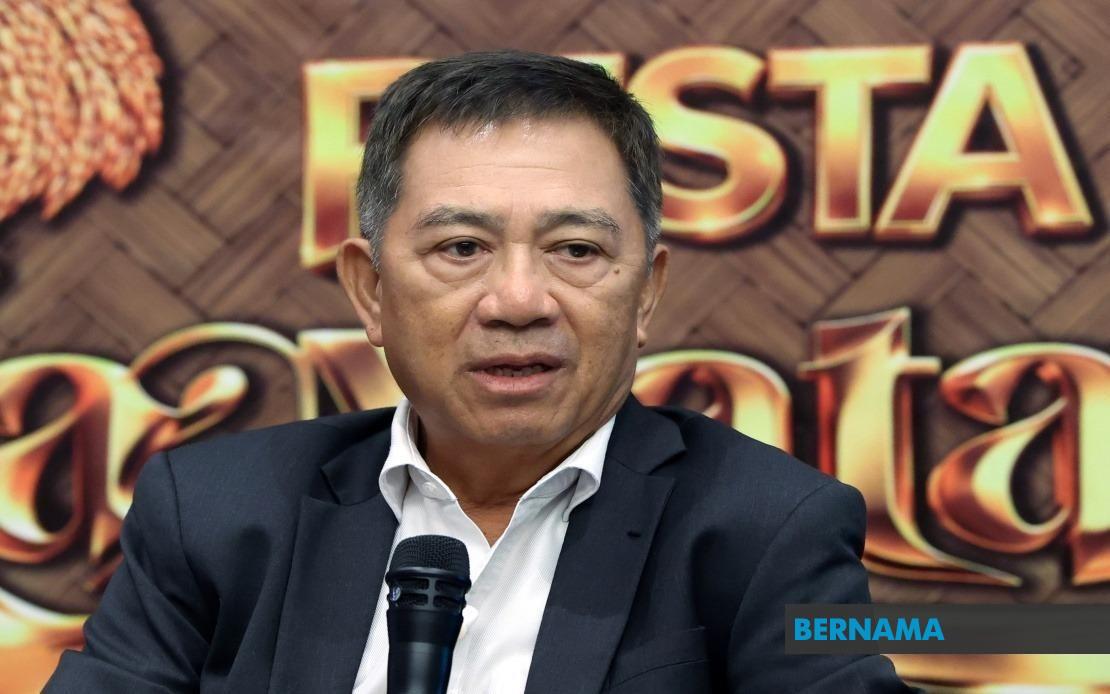
Sabah's Parti Bersatu Sabah has consolidated its leadership structure with the unopposed election of Deputy Chief Minister I Datuk Seri Dr Joachim Gunsalam as party president for the 2026-2029 term, marking a smooth transition at the top of the state's influential political organisation. The outcome reflects considerable backing within PBS ranks, where Dr Joachim emerged as the sole nominee meeting the party's stringent requirements after the nomination window closed on July 31. His elevation signals continuity in the party's strategic direction while consolidating power among the state's Bumiputera political establishment.
Under PBS constitutional rules, prospective presidential candidates must accumulate at least three formal nominations to proceed to a contested election. The requirement effectively raised the bar for challengers and ensured that only figures commanding substantial party support could advance to the ballot. PBS secretary-general Datuk Julita Mojungki confirmed in a formal statement that Dr Joachim's status as sole nominee meant the membership would forgo a contested vote for the top position, instead moving directly to his confirmation. The mechanism, while ensuring broad consensus, also underscores the degree to which Dr Joachim has secured backing across the party's factions and demographic constituencies.
The leadership structure below the presidency reveals a carefully calibrated distribution of positions reflecting PBS's commitment to representing its three main demographic pillars. Assistant Chief Minister Datuk Joniston Bangkuai secured the deputy president role allocated to the non-Muslim Bumiputera quota without opposition, while Assistant Minister of Agriculture, Fisheries and Food Industry Datuk Ruslan Muharram won the corresponding Muslim Bumiputera quota deputy presidency unopposed. This dual arrangement acknowledges the party's historical role as a vehicle for both indigenous Christian and Muslim communities in Sabah, a distinction that remains central to PBS identity even as Malaysian politics has undergone significant transformation since the party's founding.
Competition intensified for positions below the presidency, indicating vigorous internal democratic processes and generational interest in party leadership. The deputy president slot designated for the Chinese community attracted two contestants: Deputy Minister in the Prime Minister's Department Datuk Lo Su Fui and PBS Supreme Council member Goon Thien Shang. This contest demonstrates the party's continued efforts to represent the state's diverse Chinese population, a demographic historically important to PBS's coalition-building strategy in Sabah's fractious political landscape. The race signals that even within the party's senior ranks, multiple aspirants perceive genuine opportunity for advancement.
The vice-presidential contests reveal substantially broader participation and competitive energy across the party's membership. Three candidates are competing for the two non-Muslim Bumiputera quota vice-president seats, while the Muslim Bumiputera quota has drawn six competitors for two positions, and the Chinese quota seat is attracting five hopefuls. This escalating level of competition at the vice-presidential tier suggests a party experiencing genuine engagement and interest in its internal governance, contrasting with political organisations that struggle to generate candidate interest or membership enthusiasm. For Malaysian observers, the breadth of participation indicates PBS remains institutionally healthy despite the pressures facing state-based parties in an era of increasingly national political competition.
Contention reaches its peak at the Supreme Council level, where the party is fielding a record cohort of candidates vying for sixteen seats across three communal quotas. The 66 total nominees represent an unprecedented level of interest in the party's governing body, with 28 candidates pursuing the non-Muslim Bumiputera quota seats, 23 competing for Muslim Bumiputera positions, and 15 seeking the Chinese quota slots. This expansion of the candidate pool suggests institutional vitality and demonstrates that PBS continues attracting ambitious politicians willing to invest effort in internal party advancement. The sheer numerical participation indicates the party structure remains relevant to those seeking to influence Sabah's political trajectory.
Perhaps most significantly, PBS secretary-general Julita Mojungki noted that the party received a remarkable 79 nominations across all contested positions, with a majority of candidates representing new entrants to party contests. This infusion of fresh faces signals generational renewal and suggests the party is not merely recycling established names but rather creating pathways for emerging figures to access the leadership pipeline. For a state-based party navigating the complexities of modern Malaysian federalism, demographic refreshment carries strategic importance in maintaining voter appeal and demonstrating institutional capacity to develop future leaders. The preponderance of newcomers also potentially indicates that established office-holders are secure in their positions, allowing lower-profile members opportunities to contest higher-profile seats.
The timing of these elections reflects PBS's cyclical pattern of internal renewal, with the 2026-2029 leadership cohort positioned to guide the party through a period encompassing state budget cycles, potential policy shifts under new federal governments, and the evolving dynamics of Sabah's coalition politics. Dr Joachim's unopposed victory provides him with a fresh mandate to shape party strategy without the weakening effects that contested elections sometimes generate, allowing him to focus immediately on substantive party business rather than managing factional tensions that typically follow close votes. This advantage may prove particularly valuable given the increasingly complex environmental facing state-level political organisations competing with national party machinery.
The PBS Congress, scheduled for September, will formally ratify the election outcomes and provide the party membership with an opportunity to review results in full assembly. This interval between voting and formal ratification represents standard practice within Malaysian political party structures, creating space for procedural verification and allowing the membership a final opportunity to formally acknowledge new leadership. The September timing also positions the newly constituted leadership to address the party's strategic priorities as it heads toward the middle years of the current state government term, when critical decisions about coalition positioning and electoral strategy typically crystallise. For Malaysian political observers, the PBS process illustrates how state-based parties maintain internal democratic mechanisms even while operating within increasingly centralised national party frameworks that characterise contemporary Malaysian politics.

