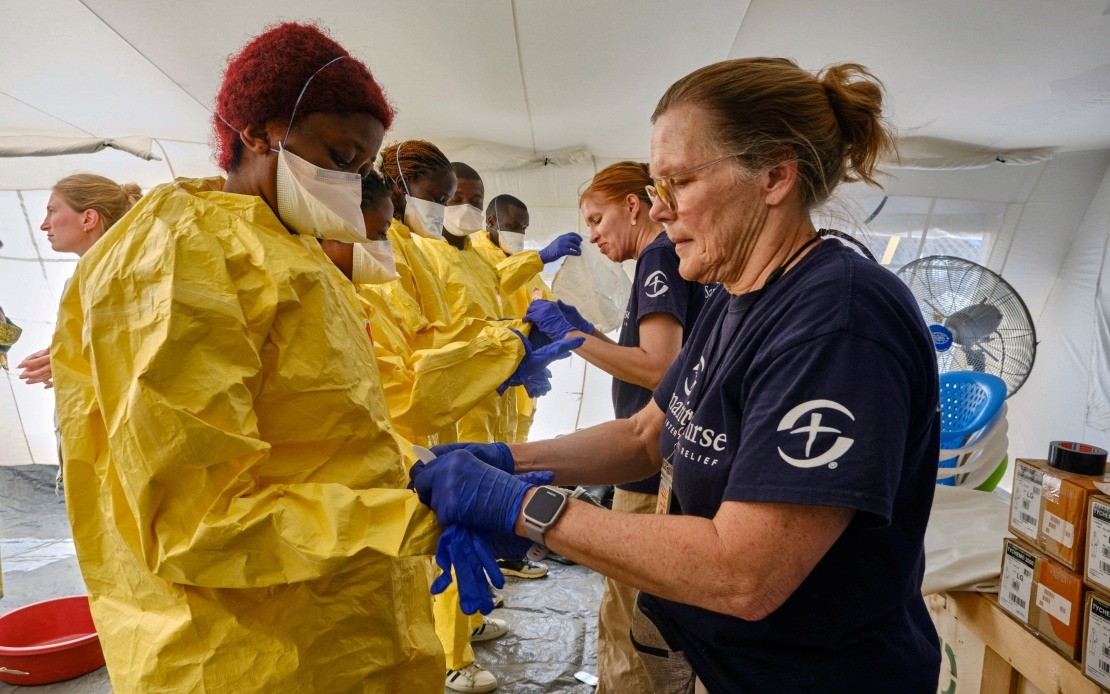
The Democratic Republic of the Congo faces a mounting public health crisis as official figures reveal 2,905 confirmed cases of Ebola with 1,269 fatalities. The sharp escalation in reported numbers reflects not only recent infections but also the integration of previously fragmented disease surveillance systems from the eastern regions of Ituri and North Kivu into the national health database this week. This administrative consolidation represents a significant step towards comprehensive outbreak tracking, yet it also underscores the logistical challenges facing authorities in managing disease surveillance across one of Africa's largest and most geographically complex countries.
Prime Minister Judith Suminwa Tuluka travelled to Kisangani, the capital of Tshopo province—a recently affected area—to assess the situation firsthand. Her visit highlighted a critical bottleneck in disease containment: patients are presenting to health facilities only after their conditions have deteriorated significantly. This delayed intervention substantially complicates clinical management and reduces treatment efficacy, creating a vicious cycle where severe cases consume disproportionate medical resources. The prime minister's observations underscore a fundamental challenge that extends beyond mere case counts—the socioeconomic and cultural barriers preventing early medical seeking behaviour in rural and semi-rural populations.
Recognising this gap, the government has committed to expanding community-level education and awareness initiatives aimed at encouraging suspected cases to seek professional medical evaluation during the disease's earlier and more treatable stages. Such grassroots engagement is essential in regions where health literacy remains limited and where traditional beliefs may compete with conventional medicine. These campaigns must navigate complex social dynamics while building trust in government health institutions, a task requiring sustained effort and cultural sensitivity.
Financial commitment has accompanied these strategic efforts. The DRC government has allocated USD 50 million towards the comprehensive Ebola response, with funds strategically directed towards diagnostic laboratories, medical equipment, community-based disease surveillance networks, and direct patient care infrastructure. This investment reflects an understanding that outbreak control demands infrastructure development alongside immediate clinical interventions. The allocation signals governmental determination to address systemic weaknesses exposed by this epidemic.
The current situation shows mixed epidemiological indicators. In a single reporting period on Wednesday, health authorities documented 97 new confirmed cases and 62 deaths, representing substantial daily case loads. However, 519 patients have recovered and been discharged, demonstrating that with appropriate medical care, survival remains achievable. A further 722 individuals currently remain isolated or under active treatment, representing the present clinical burden on health systems already stretched by concurrent disease threats and infrastructural limitations.
A significant development emerged on the international stage when the University of Oxford announced that the first human volunteer had received an experimental vaccine candidate designed specifically against the Bundibugyo ebolavirus strain responsible for the current outbreak. This milestone represents a compressed vaccine development timeline that would have been unthinkable a decade ago. The candidate vaccine, designated ChAdOx1 BDBV, was developed through collaboration between Oxford's Oxford Vaccine Group and its Pandemic Sciences Institute, bringing together expertise in viral vaccinology and outbreak response.
The manufacturing partnership with India's Serum Institute demonstrates the increasingly globalised nature of vaccine production and supply chain management for emerging infectious diseases. The institute has already manufactured and strategically stockpiled approximately 620,000 doses of the vaccine, with 4,000 designated as investigational doses for the initial clinical trial phase. This advance manufacturing strategy—producing supply before efficacy is fully confirmed—represents a calculated risk that acknowledges the urgency of the outbreak while maintaining regulatory standards.
The inaugural clinical trial phase will recruit approximately 50 healthy adult volunteers from populations without prior exposure to either Ebola strain. This initial stage focuses primarily on establishing the vaccine's safety profile and measuring the immune response it generates. Such Phase One studies are essential gateways to further development, providing the foundational evidence required to proceed towards larger, more geographically diverse trials. The deliberate modesty of the first cohort reflects scientific caution even amid outbreak pressure.
Subsequent trial phases are already under preparation through collaborative partnerships with research institutions in Uganda and other regional partners. This planned geographic expansion of trials is strategically significant for several reasons. Conducting trials in affected regions and neighbouring countries allows researchers to assess vaccine performance in genetically diverse populations and to evaluate real-world effectiveness in the epidemiological context where the disease actively circulates. Additionally, regional trial sites build local research capacity and ensure that communities most affected by Ebola contribute to generating the evidence base for interventions they require.
For Southeast Asian and Malaysian observers, the DRC outbreak and vaccine development response carry important implications. The region's vulnerability to emerging infectious diseases—demonstrated repeatedly by dengue, zika, and other arboviral outbreaks—means that advances in rapid vaccine development technology directly enhance preparedness. The accelerated timeline from viral characterisation to human trials showcases capabilities that could be mobilised for other novel pathogens. Furthermore, the reliance on global manufacturing partnerships highlights the interdependence of regional health security and the necessity of maintaining robust international collaboration frameworks even amid geopolitical tensions.
The integration of fragmented disease surveillance databases visible in the DRC case illustrates challenges familiar to Southeast Asia, where cross-border disease tracking and information sharing remain works in progress. Enhanced surveillance capacity ultimately benefits all neighbouring regions by enabling earlier detection of outbreaks and faster containment responses. The investments in community awareness programmes likewise reflect lessons applicable across the region, where rural health literacy gaps similarly impede early disease detection and prompt treatment seeking.
The Ebola situation in the Democratic Republic of the Congo remains serious, yet the initiation of human vaccine trials represents a tangible step towards improved outbreak control. Success will require sustained commitment across multiple fronts: strengthening surveillance systems, building community trust in health services, equipping treatment facilities, and completing vaccine development through rigorous clinical testing. The coming months will determine whether these coordinated efforts can bend the curve of this outbreak while simultaneously advancing the global capacity to respond more rapidly to future emergencies.

