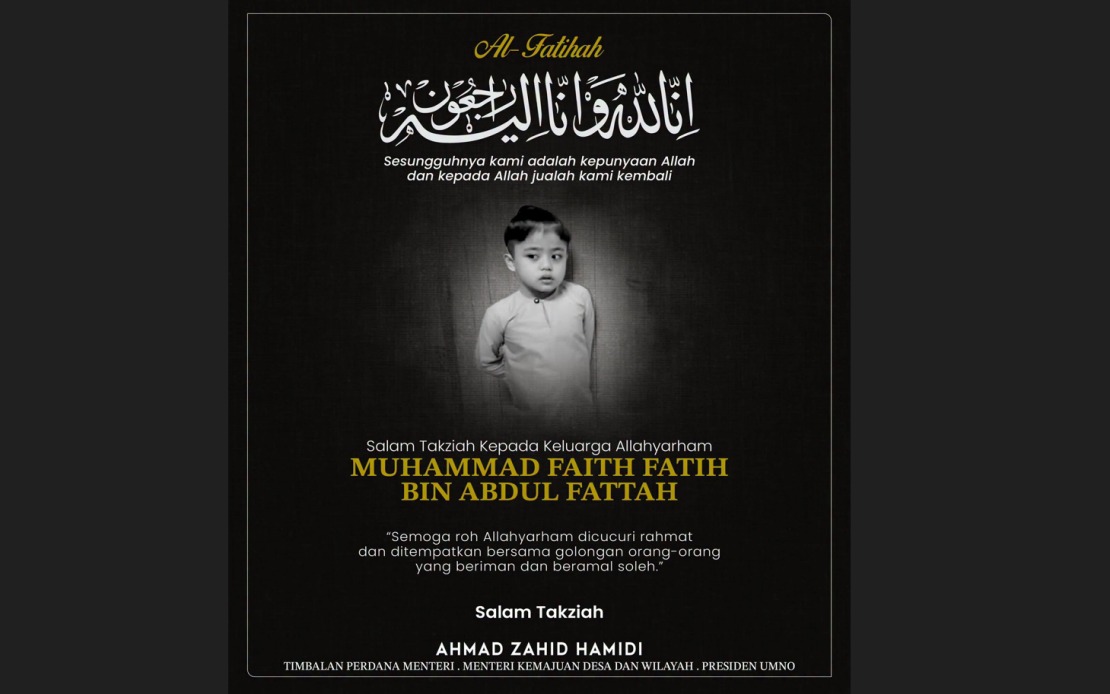
Deputy Prime Minister Datuk Seri Dr Ahmad Zahid Hamidi has expressed his condolences to the bereaved family of Muhammad Faith Fatih Abdullah Fattah, a six-year-old child with autism whose body was found in an oil palm plantation in Kampung Baru near Sungai Sumun, Hutan Melintang, last night. The tragic discovery marked the conclusion of a frantic search for the young boy after he was reported missing from his home during the afternoon hours.
In a statement released through social media on July 1, the Bagan Datuk Member of Parliament described the incident as deeply distressing, particularly given the vulnerability of a child with special needs. Ahmad Zahid acknowledged the profound nature of such a loss, noting that no family should have to endure the heartbreak of losing a young child. His message aimed to offer spiritual solace to the grieving parents and extended family members during this period of intense sorrow.
The Deputy Prime Minister reflected on the gravity of parental loss, articulating that no trial in life compares to the anguish experienced by a mother and father when a cherished child is taken from them. He extended his sympathies specifically to the parents, recognising their unique pain and the enormity of their grief. His words carried an implicit acknowledgment of the added complexity that caring for a child with special needs brings to a family, suggesting that the loss may be compounded by the considerable investment of time, energy, and emotional resources parents dedicate to such children.
In addition to his expressions of condolence, Ahmad Zahid offered spiritual comfort through Islamic tradition by calling for recitation of Al-Fatihah, the opening chapter of the Quran, on behalf of the deceased child. This invocation reflects common Muslim practices in Malaysia when mourning a loss, seeking divine mercy and blessings for the departed soul. The request for prayers underscores the religious dimension through which many Malaysians process and respond to tragedy.
According to Bagan Datuk police chief Supt Mohammad Ali Mohd Jali, officers first received notification of the missing child at approximately 4.54 pm on June 30. The boy had last been observed in his home's living room, making his sudden disappearance alarming to his family members. This relatively short timeframe between when the child was last seen and when authorities were notified suggests that the family immediately recognised something was amiss.
The search and rescue operation proceeded urgently through the evening, with emergency responders systematically combing the surrounding plantation areas. At 10.08 pm, search teams located the child's body in a drain within the oil palm plantation zone. The discovery in such a location raises questions about how a six-year-old managed to venture into this area and what circumstances led to the tragedy. For a child with autism, whose communication and environmental awareness may differ from peers, such incidents underscore the constant vigilance required to ensure their safety.
The incident reflects broader concerns within Malaysian society regarding child safety and the specific vulnerabilities faced by children with developmental and neurological conditions. Parents and caregivers of autistic children often navigate additional challenges in protecting their wards, as autism spectrum disorder can affect communication abilities, understanding of danger, and responses to their immediate environment. The tragedy serves as a sobering reminder of these heightened risks.
This incident also highlights the role of government officials in providing public acknowledgment and spiritual guidance during communal tragedies. When high-ranking political leaders like the Deputy Prime Minister address such losses publicly, they validate the community's grief and signal that the tragedy is recognised at the highest levels of governance. For families experiencing such profound loss, such gestures can provide some measure of solace, even as they cannot mitigate the fundamental pain of bereavement.
The response from Ahmad Zahid is consistent with established protocols whereby Malaysian political leaders respond to notable incidents affecting citizens. Such interventions, whether through social media or formal statements, serve multiple purposes: they demonstrate governmental concern, provide spiritual comfort through culturally appropriate language, and create a public record acknowledging the incident. In Malaysia's context, where Islam plays a significant role in public and private life, the incorporation of Islamic prayer traditions into such statements reflects the values and beliefs of the majority population.
As investigations into the circumstances surrounding the child's death continue, the broader conversation will likely extend to questions of community child protection, the adequacy of safety measures in plantation areas, and how families with autistic children can better navigate the dual imperatives of fostering independence while ensuring safety. The tragic nature of this incident resonates beyond the immediate family, touching parents nationwide who bear similar responsibilities and anxieties.

