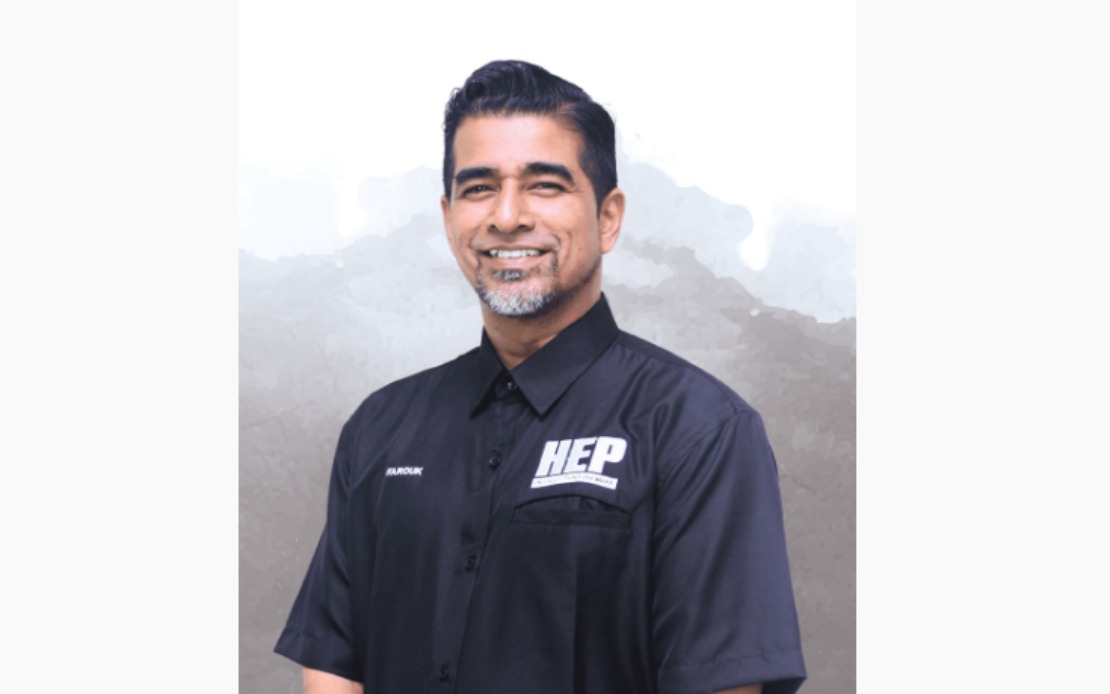
Universiti Teknologi MARA's Kelantan branch is actively discouraging prospective students from underprivileged backgrounds from rejecting admission offers, emphasising that substantial financial and welfare support mechanisms exist to help them navigate university life. Speaking during the UiTM Kelantan Branch Rector's Cakna Programme in Kota Bharu, Deputy Rector for Student Affairs Meer Zhar Farouk Amir Razli stressed that financial constraints should not be a reason to forfeit educational opportunities, particularly given the intensifying competition for places in Malaysia's public higher education sector.
Beyond the conventional National Higher Education Fund Corporation (PTPTN) loans that many students traditionally rely on, UiTM Kelantan operates a broader ecosystem of financial assistance tailored to student circumstances. The institution channels Islamic charitable contributions through zakat assistance programmes, maintains dedicated welfare funds, and operates support facilities that extend beyond merely academic provision. These layered support systems reflect a growing institutional awareness that financial need often translates into educational abandonment, a phenomenon particularly acute in rural and semi-urban areas where transportation, accommodation, and living costs compound the burden on lower-income households.
Central to the university's support infrastructure is the Dapur MADANI initiative, a residential college programme designed specifically to help students manage daily living expenses throughout their academic tenure. The scheme recognises that tuition fees represent only part of the financial equation; accommodation, meals, transportation, and incidentals often consume resources that disadvantaged families struggle to provide. By embedding support directly into the residential college system, the initiative creates a more holistic safety net than traditional loan mechanisms alone can offer. This approach aligns with Malaysia's broader push toward equitable access in higher education, acknowledging that structural barriers often prevent talented students from lower-income backgrounds from progressing.
Meer Zhar emphasised the importance of students and parents proactively researching available assistance before making rejection decisions, suggesting that insufficient information about support options may inadvertently drive away qualified applicants. The advisory reflects a practical reality in Malaysia's education landscape: many families from underprivileged backgrounds lack institutional knowledge about navigating financial assistance systems, potentially missing opportunities due to perceived rather than actual financial barriers. This information gap represents a systemic challenge that universities increasingly recognise and attempt to bridge through targeted outreach programmes and community engagement.
The Rector's Cakna Programme itself exemplifies this institutional commitment, operating through partnerships with local non-governmental organisations to identify and support newly enrolled students requiring assistance. By collaborating with established community networks, UiTM Kelantan extends its reach beyond campus boundaries and integrates with existing social support structures in Kelantan. This collaborative model distributes the responsibility for student welfare beyond the institution alone, recognising that sustainable support for disadvantaged learners requires ecosystem-level intervention involving universities, civil society, and local communities working in concert.
A concrete illustration of the programme's impact emerged through nineteen-year-old Norzarra Dhania Amir Abdullah, a student from a low-income family who received a laptop from the university to facilitate her preparation for the September semester. Norzarra Dhania's trajectory encapsulates the obstacles and resilience characterising many Malaysian students from economically marginal households. Previously offered admission to UiTM Sarawak, she had reluctantly declined despite harbouring genuine educational aspirations, unable to reconcile the financial demands of studying in another state with her family's precarious economic circumstances.
As the eldest of seven siblings, Norzarra Dhania carries implicit family responsibilities that complicate her educational path. Her mother works as a restaurant assistant—a low-wage service sector position offering limited income stability—while her father's diabetes diagnosis four years ago removed another income source and likely introduced additional household medical expenses. This confluence of factors—household size, parental underemployment, health-related income loss, and birth order positioning—creates accumulative disadvantage that statistics on poverty rates alone inadequately capture. Such family configurations are not uncommon across rural Malaysia, where agricultural restructuring and limited industrial diversification have constrained employment opportunities, particularly for workers lacking tertiary qualifications.
The geographic dimension of her situation proved significant to her eventual educational pathway. When offered admission to UiTM Kelantan, proximity to home dramatically altered the financial calculation. Remaining in Kota Bharu rather than relocating to Sarawak reduced accommodation expenses, enabled continued family connection and potential part-time contribution to household economies, and eliminated the substantial costs associated with inter-state relocation and travel. This insight illuminates how institutional geography intersects with access: for students from economically vulnerable backgrounds, the location of higher education opportunities profoundly influences their capacity to participate, regardless of admission quality or institutional prestige.
Norzarra Dhania's decision to pursue a Diploma in Management at UiTM Kelantan reflects a pragmatic reconciliation between ambition and constraint. The diploma pathway, shorter than degree programmes and offering more immediate employment pathways, suits students requiring earlier workforce entry or those whose family situations require income contribution within bounded timeframes. Her experience validates UiTM Kelantan's advocacy: rather than disappearing from educational systems entirely, students increasingly channel genuine academic aspiration toward programmes and institutions that accommodate their material realities. The laptop provision transcends symbolic gesture, directly addressing the digital divide that increasingly excludes economically marginal students from contemporary university participation.
The underlying policy messaging from UiTM Kelantan challenges a persistent assumption within Malaysian higher education discourse: that financial constraints represent immovable barriers rather than navigable challenges. By demonstrating that institutional support systems, while imperfect, genuinely exist and remain accessible through proper information and engagement, the university potentially shifts decision-making calculus among underprivileged families. However, this message carries implicit limitations; support systems operate within finite budgets and capacity constraints, and expanding accessibility meaningfully requires sustained resource commitment and institutional prioritisation, not merely awareness campaigns.
For prospective students across Southeast Asia more broadly, UiTM Kelantan's approach resonates with wider regional patterns of educational access struggles. Where economic inequality intersects with geographic dispersion and limited family educational capital, targeted institutional support combined with strategic locational choice becomes critical to participation. The case study also highlights how comprehensive support extends beyond emergency loans to encompass welfare funds, zakat assistance, and innovative initiatives like Dapur MADANI that embed support within university infrastructure.
Looking forward, the effectiveness of such outreach efforts will determine whether genuine equality of educational opportunity emerges or whether initiatives remain palliative responses to structural inequality. Norzarra Dhania's trajectory—from declined offer to accepted admission with institutional support—represents a success outcome that UiTM Kelantan aims to replicate systematically. Whether such success scales across Malaysia's underprivileged populations remains contingent on sustained institutional commitment, adequate resource allocation, and sustained engagement with communities where educational aspiration frequently encounters financial impossibility.