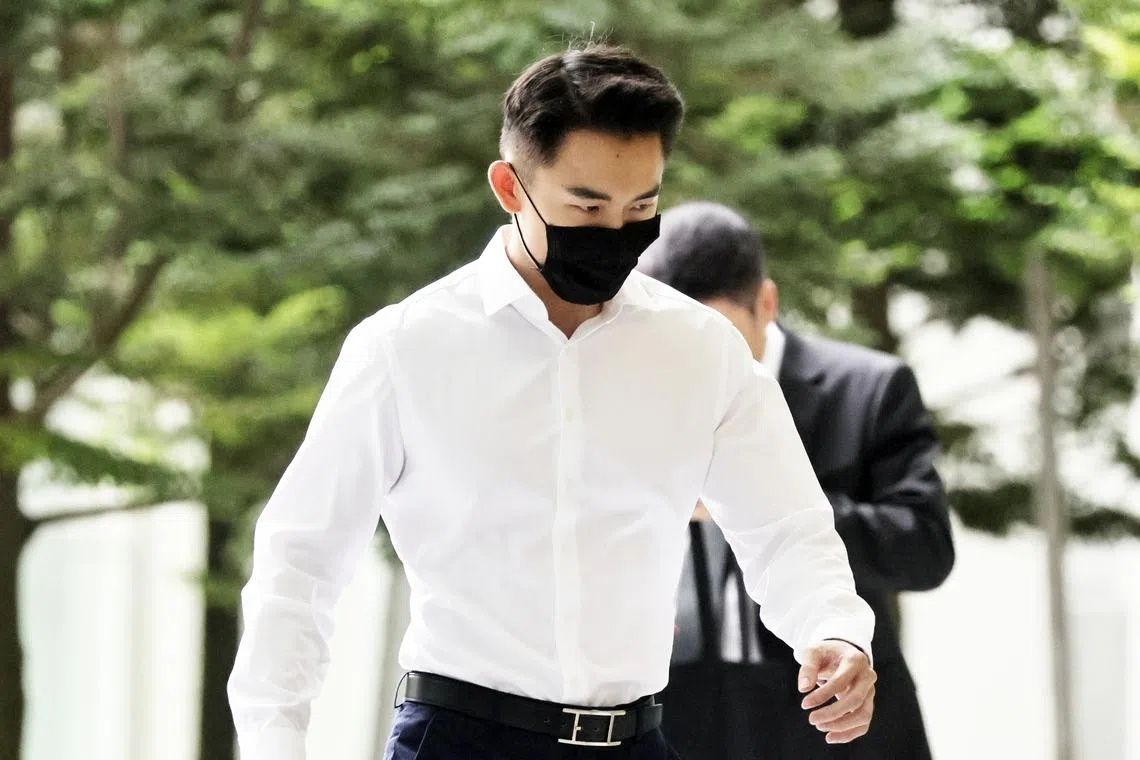
A medical practitioner in Singapore has been found guilty of consuming MDMA after attending a private gathering at a luxury hotel in Sentosa that resulted in the arrest of nearly 50 men. Rayson Lee Rui Sheng, 36, was one of two individuals convicted on Tuesday of drug consumption offences stemming from an early-morning police operation in August 2023 that uncovered what authorities described as an organised drug-taking incident at the Sofitel Singapore Sentosa.
Lee and his co-accused, 29-year-old Tan Li Ming, both maintained throughout their trial that they had consumed drugs unknowingly after strangers had contaminated their alcoholic beverages. However, District Judge A Sangeetha rejected this narrative entirely, finding that their testimonies lacked credibility and contradicted the scientific evidence gathered by the Health Sciences Authority. The judge noted a critical inconsistency in their accounts: despite claiming their drinks had been tampered with, both men continued to consume additional beverages throughout the evening, behaviour inconsistent with victims of suspected drug spiking.
The incident unfolded on the morning of 9 August 2023, when police received intelligence about suspicious activity occurring at a villa within the hotel premises. Officers conducting checks shortly after 5:30 am discovered what they believed to be controlled substances, prompting the immediate involvement of the Central Narcotics Bureau. The subsequent operation revealed a cache of drugs and paraphernalia, with authorities identifying ecstasy and ketamine as primary substances at the scene. The scale of the operation proved significant, with 49 male guests, ranging in age from 21 to 46, arrested that morning.
Biochemical testing proved decisive in the prosecutions. Hair and urine samples collected from both Lee and Tan tested positive for MDMA, establishing consumption beyond reasonable doubt. The hair analysis provided additional incriminating evidence, revealing prior exposure to both ecstasy and ketamine, suggesting patterns of substance use extending beyond the single occasion in question. While neither man disputed the laboratory findings themselves, they instead pivoted to alleging that unknown individuals at the gathering had deliberately spiked their drinks without their knowledge or consent.
Lee's account to the court painted a picture of social naïveté. He had arrived at the villa around 8 am on 9 August after initially attending a birthday celebration the previous evening, subsequently departing to visit a nightclub at Clarke Quay where he encountered Tan for the first time. Upon returning to the villa in the early hours, Lee claimed he discovered the premises considerably more crowded than before, populated by numerous individuals he did not recognise. His version of events depicted him consuming three drinks supplied by strangers whilst observing neither any drugs nor paraphernalia, nor witnessing anyone engaged in drug consumption.
Tan's narrative proved more elaborate and, prosecutors argued, equally unconvincing. He claimed to have observed a group of approximately four or five unidentified men at a pantry area drawing liquid from a bottle using a syringe, subsequently injecting the mixture into plastic cups. According to his testimony, after drinking from one such cup, he observed white residue at its base. Tan alleged that when he questioned an unknown person about the contents being injected into the beverages, he received an explanation about something called "G-water" that would produce intoxication, yet claimed ignorance about what this substance actually was.
Deputy public prosecutors Jocelyn Teo and Dhiraj G Chainani systematically dismantled both defence narratives during closing arguments. They highlighted a fundamental logical flaw: if either man genuinely had been unwitting victims of drink spiking, they should have been capable of identifying at least some concrete details about their alleged perpetrators. Instead, both defendants offered only vague references to unidentified foreign nationals, presenting what prosecutors characterised as "hypothetical scenarios and unexplained possibilities" designed to obfuscate rather than clarify. The prosecutors noted that Lee's own trial testimony actually contradicted his spiking narrative, as he admitted to deliberately consuming a pill given by a stranger during a visit to Thailand in June 2023, demonstrating a willingness to ingest unknown substances.
The defence team, led by lawyer Tania Chin, had attempted to introduce procedural irregularities as grounds for reasonable doubt, specifically arguing that police had failed to seize certain plastic cups that might have contained drug residue. However, prosecutors countered this submission with devastating logic: even if the cups had tested positive for drugs, this would merely confirm that the men had consumed drug-laced beverages, not that such consumption occurred without their knowledge. The argument essentially collapsed under its own weight, as it could not explain how individuals could inadvertently consume drugs without any awareness of doing so.
Judge Sangeetha's findings struck at the credibility of both defendants, emphasising that neither man was unfamiliar with drug use. The hair analysis provided objective evidence of prior consumption patterns, rendering their claims of naïveté particularly implausible. The court's scepticism regarding their accounts reflected a judicial assessment that their stories, when examined against the totality of evidence, represented calculated attempts to evade responsibility rather than genuine accounts of victimisation.
The Sentosa hotel incident represents a significant case within Singapore's stringent drug control framework. The operation itself demonstrated the island state's capacity for rapid response and large-scale enforcement action when intelligence suggests organised drug consumption. The involvement of a medical professional adds a further dimension to public interest, raising questions about screening and oversight within professional regulatory bodies. For observers across Southeast Asia, the case underscores how modern forensic science, particularly hair analysis revealing historical usage patterns, has substantially complicated defences based on claims of unknowing consumption.
The conviction carries implications beyond the individual defendants. It reflects Singapore's continued prioritisation of drug-related offences under its Misuse of Drugs Act, where consumption convictions can result in mandatory minimum sentences. The prosecution's evident frustration with defence arguments centring on unidentified perpetrators and speculative scenarios appears to have influenced the court's approach, resulting in findings of credibility that will likely prove difficult for appellate courts to overturn. For Southeast Asian legal observers, the case demonstrates how courts increasingly view circumstantial defences when pitted against biological evidence, DNA analysis, and demonstrated patterns of prior substance use.

