The U.S. Open promises to offer Novak Djokovic his most realistic opportunity in years to capture a standalone record 25th Grand Slam title, as the convergence of injuries and extended absences among rival contenders has reshaped the competitive landscape heading into the year's final major championship. The Serb arrives at Flushing Meadows seeking a fifth U.S. Open crown, a feat that would place him alone atop the all-time list and move him past Margaret Court's previously untouchable tally of 24 major titles. Unlike previous seasons when the dominance of Jannik Sinner and Carlos Alcaraz derailed his ambitions, both players now arrive with significant complications that could fundamentally alter the tournament's trajectory.
Djokovic's pursuit of Grand Slam history has been repeatedly interrupted by the relentless excellence of Sinner and Alcaraz, who together have captured ten of the last eleven major championships between them. The Serb, now 39 years old, has absorbed five losses to this formidable pairing across the previous six Grand Slams, most recently falling to Alcaraz in January's Australian Open final when his quest for the record seemed most tangible. Over the past 18 months, each attempt to surpass Court's legacy has been systematically dismantled by younger players operating at the peak of their powers, creating a narrative of inevitable succession and fading greatness that permeates professional tennis discourse.
However, circumstances have shifted materially in ways that favour Djokovic's championship aspirations. Sinner's withdrawal from the U.S. Open due to a knee injury removes the player who has emerged as the season's dominant force, having captured both the Australian Open and the majority of hard-court titles. Alcaraz, the defending champion, returns to competition following a four-month absence necessitated by a wrist injury that has generated considerable uncertainty about whether he will possess sufficient sharpness to sustain deep tournament runs. The combination of these developments fundamentally disrupts the competitive hierarchy that has defined men's tennis throughout 2024, effectively opening a window that has remained sealed throughout recent seasons.
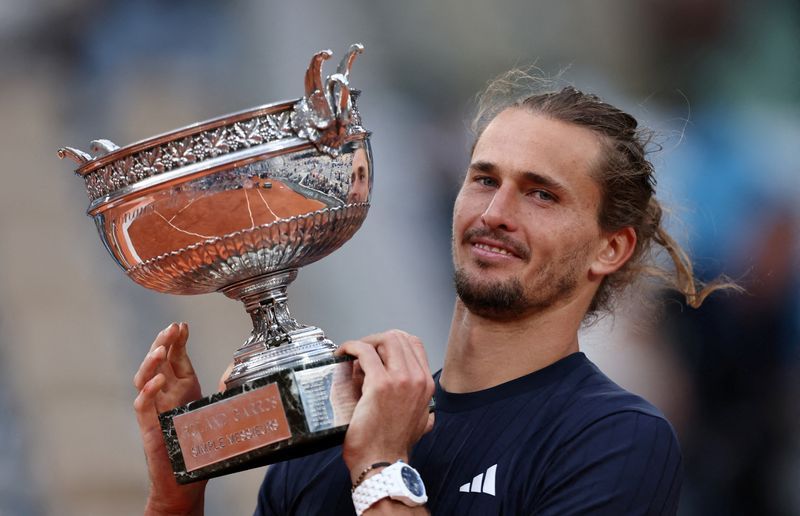
Despite these favourable circumstances, Alexander Zverev represents a formidable and immediate obstacle to Djokovic's ambitions. The German finally achieved his Grand Slam breakthrough at Roland Garros and subsequently advanced to the Wimbledon final, demonstrating a level of consistency on the sport's grandest stages that positions him as a credible championship threat in New York. Zverev's emergence as a major contender, combined with his proven ability to perform on hard courts, means Djokovic cannot rely solely on his rivals' misfortunes but must sustain the level required to overcome genuinely world-class opposition throughout a two-week tournament cycle.
Djokovic's psychology heading into New York reflects a defiant certainty rooted in Serbian cultural identity. In his recently released documentary preceding the championship, he articulated the concept of "inat"—a distinctly Serbian expression embodying stubborn resistance and the determination to overcome adversity when confronted by universal doubt. This philosophical framework has sustained him through numerous career inflection points and continues to motivate his present championship pursuits despite questions about his physical preparation and the injuries that have compromised his training regimen. The Serb's explicit invocation of this cultural resilience suggests an athlete fundamentally resistant to accepting diminishment, however logical such acceptance might appear to external observers.
Roger Federer, the Swiss icon whose own record Djokovic surpassed, reinforced the Serbian's championship plausibility during recent commentary from New York. Federer argued that dismissing Djokovic's prospects would constitute a profound misunderstanding of his competitive capabilities, noting the player's demonstrated excellence across every surface and against all opposition throughout his three-decade career. The former world number one suggested that Djokovic's continued tournament participation stems from genuine conviction rather than mere nostalgia, implying that his presence in any draw, regardless of age or recent results, merits serious consideration as a potential champion.
Beyond Djokovic's quest, the tournament features a compelling American contingent seeking to end a 23-year drought since Andy Roddick captured the 2003 championship. Ben Shelton, who recently won the Canadian Open in Montreal, has positioned himself as a potential major contender after recovering from a disappointing Wimbledon exit. Shelton's erratic form, however, remains concerning; his first-round loss at the grasscourt major followed by immediate resurgence in Canada demonstrates the inconsistency that has characterized his major championship record. Roddick, himself acknowledging Shelton's immense talent across multiple surfaces, emphasised that the young American must navigate the early rounds successfully to maintain momentum through the later stages when fatigue and accumulated pressure intensify.
Taylor Fritz, the defending U.S. Open finalist, carries the hopes of American tennis alongside Shelton and Cincinnati runner-up Frances Tiafoe. Fritz's appearance in last year's final underscored his capacity to perform on this surface, though his intermittent form throughout the season raises questions about whether he can sustain the elevated consistency required across seven matches. The prospect of an American champion—which would represent the nation's first since Roddick's victory—captures mainstream sporting attention in ways that international dominance by Djokovic or European competitors cannot replicate, creating additional narrative tension surrounding American challengers' potential ascendency.
Emerging talents including Arthur Fils and a collection of rising players hover throughout the draw, collectively representing the generational transition that has begun reshaping professional tennis hierarchy. Felix Auger-Aliassime, who reached the semi-finals of the U.S. Open last year, carries momentum from that breakthrough performance as he seeks to establish himself among the tournament's elite contenders. The presence of multiple challengers across different experience levels and playing styles creates an unusually open championship picture, distinguishing this U.S. Open from recent editions dominated by the Sinner-Alcaraz duopoly.
For Malaysian and Southeast Asian observers, Djokovic's quest carries particular resonance given his transcendent career spanning multiple generations of tennis fandom. His potential achievement of the record represents a capstone to the modern era's most dominant individual career trajectory, even as younger players signal the beginning of a competitive phase defined by different personalities and international backgrounds. The tournament's outcome carries implications for understanding how excellence evolves in professional sports, whether individual greatness can persist across decades despite generational challenges, and the degree to which experience and psychological fortitude compensate for age-related physical decline in elite competition.
The U.S. Open thus emerges as more than a tournament determining a single champion; it represents a potential inflection point in professional tennis history, an opportunity for Djokovic to validate his enduring relevance while simultaneously showcasing a younger generation's emerging capabilities. Whether the Serbian can overcome both the formidable obstacle of Zverev and the broader challenges posed by a deep and talented field will significantly influence the sport's narrative trajectory throughout the remainder of 2024 and beyond.

