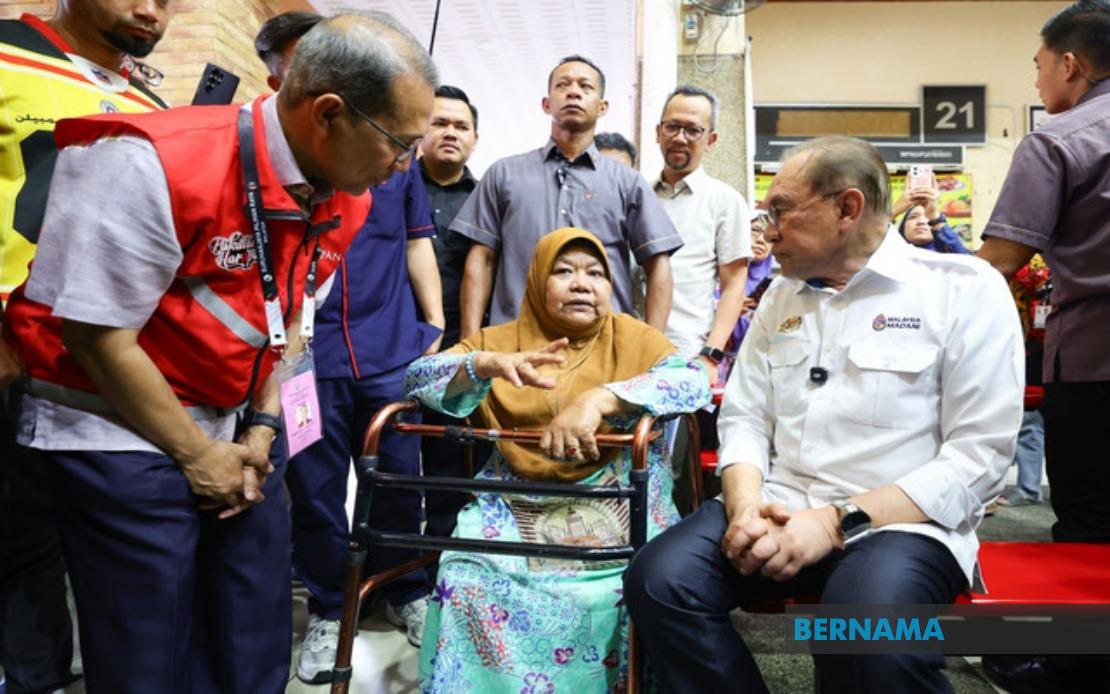
Determination transcended physical hardship in Negeri Sembilan last week when Jumaah Mohd Alif, a 68-year-old person with disabilities, navigated her three-wheeled motorcycle from Kampung Gedung Lalang to Benteng Ampangan in the drizzle to seize an unexpected opportunity. Her singular purpose was to meet Prime Minister Datuk Seri Anwar Ibrahim in person—a moment she describes as profoundly meaningful and one she will treasure throughout her remaining years. Word that the country's leader would be campaigning in Ampangan reached her through villagers, compelling her to venture out despite inclement weather and the physical challenges that characterise her daily existence.
Jumaah's life has been marked by considerable adversity. Thirty-five years before this encounter, an accident claimed her left leg, fundamentally altering the trajectory of her existence. Yet this amputation did not diminish her spirit or ambition. Instead, she adapted, learning to navigate the world differently—eventually managing a three-wheeled motorcycle that became her pathway to independence and mobility. The fact that she would brave rainfall to pursue this meeting speaks to depths of resilience that transcend typical political engagement, suggesting something more profound about the human desire for connection with national leadership and the validation such an encounter represents for marginalised communities.
For Jumaah, prior exposure to the Prime Minister had been limited to glimpses from television screens or distant viewing from crowds. The prospect of direct, face-to-face conversation existed only in imagination. When the possibility materialised unexpectedly, she prioritised it above comfort, demonstrating how meaningful such interactions become for citizens who inhabit the periphery of public life. Her determination reflects a broader truth about democratic participation: those with the fewest resources and the most substantial obstacles often exhibit the strongest commitment to engaging with their elected representatives, viewing such moments as validation of their citizenship and place within the national community.
Anwar's visit to Benteng Ampangan formed part of a broader campaign initiative spanning Negeri Sembilan, where he appeared in his capacity as both Prime Minister and chairman of Pakatan Harapan. The coalition's efforts to energise supporters ahead of the state election represented strategic political activity, yet the encounter with Jumaah transformed a routine campaign stop into something transcending conventional political theatre. Her presence and determination created an unscripted moment that illustrates the profound impact leaders' visibility can have on ordinary citizens, particularly those navigating systems not always designed with their accessibility or needs foremost in consideration.
Jumaah's aspiration extended beyond mere proximity to power. She explicitly articulated hopes that the government would strengthen its commitment to welfare provision for senior citizens and persons with disabilities, positioning her meeting with the Prime Minister as an opportunity to voice concerns affecting her demographic. This reflects a sophisticated understanding of how individual encounters with leadership can serve as channels for advocating group interests. Rather than viewing the meeting purely as a celebrity moment, Jumaah invested it with political purpose, leveraging her visibility to highlight systemic vulnerabilities within social support structures.
The backdrop of Negeri Sembilan's state election campaign adds political dimension to her narrative. The 16th state election, with early voting scheduled for July 28 and polling day on August 1, represents a crucial test of Pakatan Harapan's electoral machinery in a traditionally significant state. Campaign activities intensify during this period as coalition leadership attempts to consolidate support and mobilise voter turnout. Anwar's presence in the state, therefore, formed part of calculated political strategy aimed at reinforcing the coalition's momentum during a critical campaigning phase.
Malaysia's persons with disabilities constitute a demographic numbering in the millions, yet political discourse often marginalises their concerns and priorities. Jumaah's determination to meet her Prime Minister illuminates how inadequately visible disability issues remain within mainstream political engagement. While the government has implemented various support programmes, the enthusiasm with which a senior citizen with disabilities would brave inclement weather to meet the nation's leader suggests either exceptional personal motivation or a perception that direct advocacy remains necessary to secure adequate attention to their community's needs. Her actions implicitly critique systems where citizens must go to such lengths to communicate priorities to elected representatives.
The three-wheeled motorcycle itself carries symbolic significance within this narrative. Rather than representing dependency or limitation, Jumaah's vehicle emerges as an instrument of agency and autonomy. It enabled her journey despite physical constraints, embodying adaptation and determination. The fact that she chose to ride it through drizzle, when alternative transport might have been available, demonstrates her determination to maintain independence while pursuing her objective. This detail enriches the story beyond straightforward feel-good narrative, instead presenting a woman actively authoring her own experiences rather than passively receiving assistance.
Jumaah's words, carefully recounted to journalists, convey gratitude mixed with purposefulness. Her statement—that villagers informed her of the Prime Minister's visit and that this intelligence motivated her immediate action—suggests a community alert system where information about political presence travels rapidly. Her declaration that her wish had finally materialised carries emotional weight, acknowledging years of distance between herself and national leadership. Yet embedded within this gratitude lies an implicit plea: that the government remember citizens like her, prioritise their welfare, and ensure that accessibility and support structures evolve to meet their needs.
The broader implications of this encounter extend into contemporary conversations about inclusive governance and democratic accessibility. While Jumaah's story might appear exceptional—a dramatic individual achievement against odds—it simultaneously raises uncomfortable questions about why such determination remains necessary. In a mature democracy with substantial state resources, persons with disabilities should encounter minimal barriers to civic participation and to accessing their elected representatives. That a 68-year-old amputee must ride a motorcycle through rain to meet the Prime Minister suggests systemic gaps in how government reaches and engages with vulnerable populations. Perhaps inadvertently, Jumaah's initiative highlights the distance between Malaysia's aspirations toward inclusive governance and the lived experiences of its most marginalised citizens.

