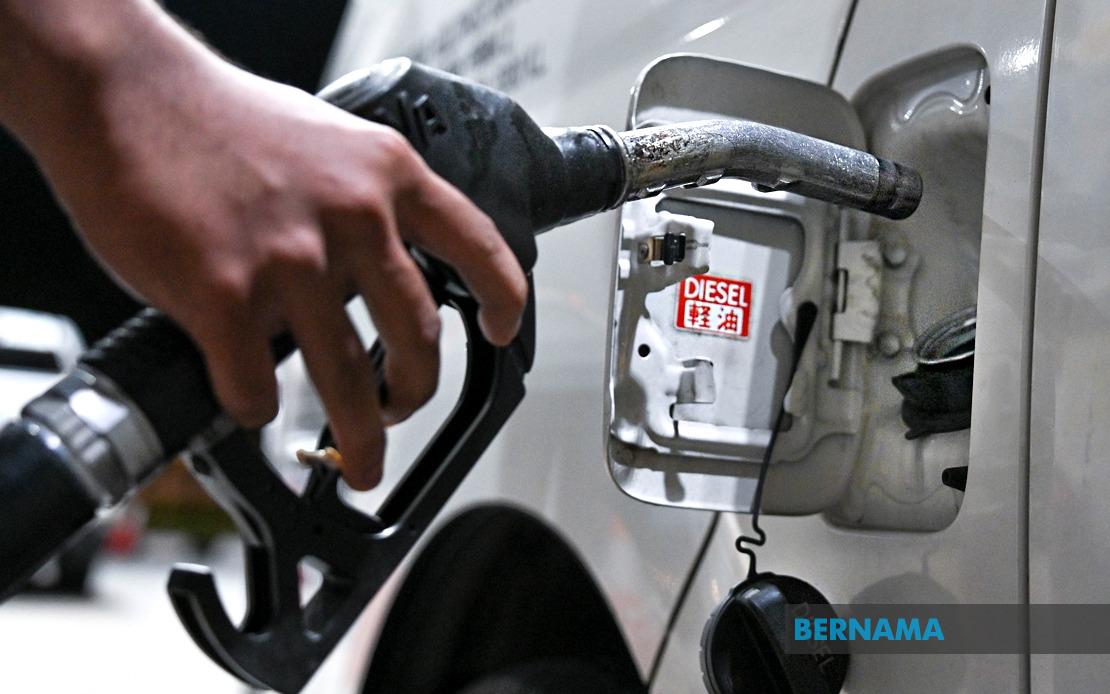
Malaysia's announcement of a reduction in subsidised diesel pricing to RM2.10 per litre effective July represents a pivotal moment for the country's broader economic reform agenda. Minister in the Prime Minister's Department (Sabah and Sarawak) Datuk Mustapha Sakmud framed the price adjustment as concrete evidence that the MADANI Government's strategy of combining economic restructuring with carefully targeted welfare measures is beginning to yield measurable results for the general population, particularly those most vulnerable to fluctuations in energy costs.
The new pricing structure marks a departure from the patchwork approach that previously characterised Malaysia's fuel subsidy system. Under the previous arrangement, diesel carried divergent price tags across the country: Sabah and Sarawak residents benefited from a subsidised rate of RM2.15 per litre, while consumers in Peninsular Malaysia faced the unsubsidised market price of RM4.37 per litre. This geographic disparity reflected constitutional provisions granting the East Malaysian states special fiscal arrangements, but it created inefficiencies and inequities that the government has sought to address through modernised mechanisms.
Central to this reformed approach is the deployment of MyKad verification technology within the BUDI MADANI RON95 (BUDI95) programme framework. By linking fuel subsidies directly to verified Malaysian citizens through identification card data, the government aims to accomplish multiple objectives simultaneously. The system channels welfare support exclusively to eligible recipients, preventing windfall benefits to ineligible groups and substantially reducing the dead-weight loss that characterises universal subsidy schemes. Equally important, the digital verification architecture targets the perennial problem of subsidy leakage through cross-border smuggling, an issue that has drained the national treasury for decades, particularly in border regions where fuel price differentials create powerful arbitrage incentives.
Mustapha contextualised the timing of the price reduction within a volatile geopolitical environment. The minister specifically cited the ongoing conflict in West Asia as evidence of persistent energy market turbulence and the necessity for strategic energy management. This framing reflects Malaysia's positioning within an unpredictable global energy landscape, where conventional supply routes face disruption and long-term energy security cannot be assumed. The government's emphasis on this external constraint serves to underscore the significance of achieving domestic fiscal discipline, enabling subsidies to be maintained despite unfavourable international conditions.
In response to regional energy vulnerabilities, the MADANI Government has pursued diplomatic initiatives aimed at securing long-term energy cooperation with key suppliers. Malaysia has engaged with Russia and Turkmenistan on energy arrangements, diversifying supply sources beyond traditional partners and creating alternative pipelines that reduce exposure to geopolitical shocks concentrated in specific regions. These strategic relationships, combined with assurances from major energy-producing nations regarding supply reliability, form the bedrock upon which the government believes it can sustain targeted subsidies without jeopardising fiscal sustainability. The approach essentially treats energy resilience as a national security matter requiring state-level coordination across multiple dimensions.
Prime Minister Datuk Seri Anwar Ibrahim's role in orchestrating the price reduction has been positioned as emblematic of the administrative competence the government claims to bring to economic management. The ability to lower subsidised diesel prices whilst simultaneously reducing budget outlays signals that efficiency gains from subsidy targeting and smuggling reduction are materialising. Rather than achieving price reductions through simple fiscal transfers that merely shift burden across the budget, the government presents the outcome as the organic result of structural reforms that improve allocative efficiency throughout the system. This distinction matters for perceptions of fiscal sustainability and the government's credibility on longer-term economic management.
For Malaysian consumers, particularly those in lower-income brackets and essential service sectors heavily dependent on diesel, the price adjustment offers immediate relief. Transport operators, construction firms, agricultural enterprises, and small-business owners whose margins depend on fuel costs will experience reduced input costs, with the potential to translate into lower prices for goods and services. The agricultural sector, which remains significant despite Malaysia's shift toward services and manufacturing, stands to benefit substantially, as does the fishing industry, both of which face internationally-determined output prices whilst bearing domestically-determined input costs.
The regional implications deserve consideration as well. Malaysia's neighbouring countries monitor subsidy policies carefully, as divergent pricing structures create smuggling pressures and affect cross-border trade dynamics. Thailand, Indonesia, and the Philippines all face similar subsidy sustainability challenges, and Malaysia's approach using digital verification and targeting mechanisms represents an exportable model that other Southeast Asian governments may study. Should Malaysia demonstrate that such a system can simultaneously maintain political legitimacy whilst achieving fiscal gains, it could influence subsidy design across the region.
However, the success of the targeted subsidy mechanism depends critically on digital infrastructure robustness and public acceptance. MyKad verification systems must function reliably across diverse geographic areas, including remote regions where digital connectivity remains patchy. Additionally, the political economy of means-testing requires that eligibility criteria be perceived as legitimate and fairly applied. Any perception of favouritism, discrimination, or technical failures in the verification system could undermine public support for the broader reform agenda.
Looking ahead, the government faces the challenge of maintaining momentum on subsidy rationalisation whilst managing political sensitivities around cost-of-living pressures. The July diesel reduction may be followed by adjustments to other subsidised items, potentially including cooking oil, electricity, or water. Each step in subsidy restructuring involves complex distributional trade-offs and requires careful public communication to sustain political consensus. The effectiveness with which the government handles this broader agenda will significantly influence its prospects for implementing the full spectrum of structural reforms necessary for long-term fiscal and economic health.

