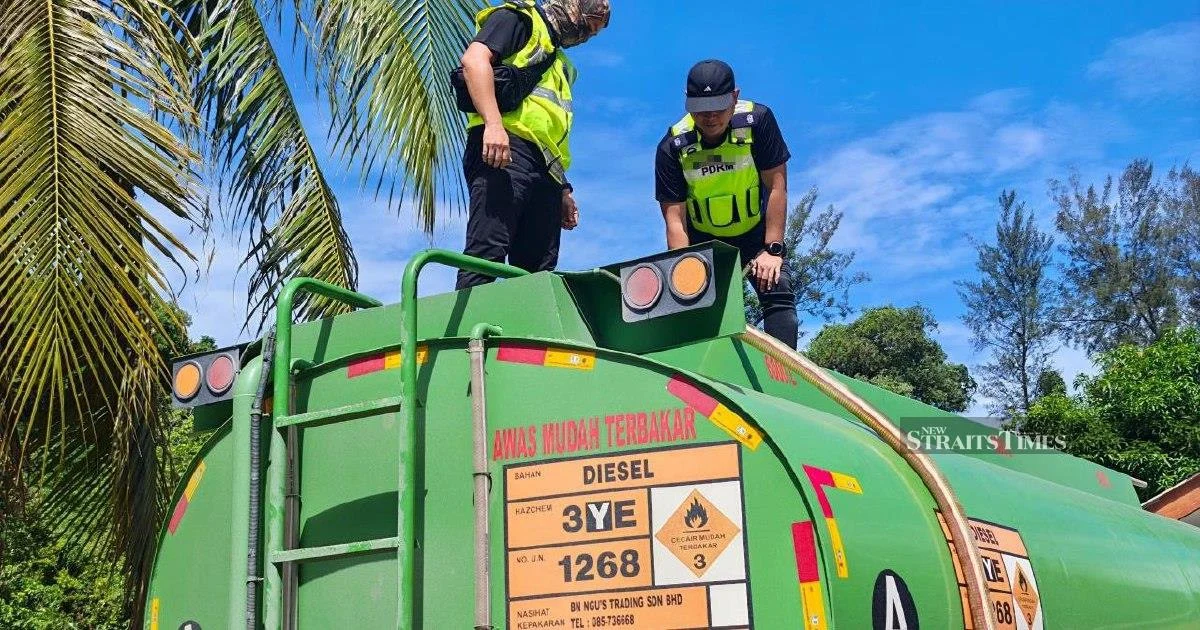
Authorities in Miri have successfully taken down a sophisticated diesel diversion syndicate operating from a concealed bungalow in Tanjung Lobang, recovering a substantial quantity of subsidised fuel valued at thousands of ringgit and detaining four suspects for investigation. The operation represents a significant blow against fuel subsidy fraud, a persistent challenge facing Malaysian enforcement agencies tasked with preventing the illegal trafficking of price-controlled commodities that drain government coffers and distort market dynamics across Sarawak and beyond.
The discovery of an illicit depot hidden within residential premises highlights the evolving tactics employed by organised smuggling networks seeking to evade detection. Rather than operating from obviously suspicious industrial locations, perpetrators have increasingly exploited ordinary domestic structures to mask their activities. This approach complicates enforcement efforts, as authorities must balance intrusive surveillance with community privacy concerns while attempting to identify suspicious patterns of fuel storage and movement in populated neighbourhoods.
The 15,000 litres seized during the raid underscores the operational scale of this particular syndicate. Such volumes suggest a professional distribution network rather than small-scale opportunistic diversion, implying coordinated supply chains, customer relationships, and logistical arrangements that extend well beyond the Tanjung Lobang location. The recovery of fuel in this quantity indicates the operation had been running long enough to accumulate substantial stocks, raising questions about how long the activities went undetected and how many shipments may have already reached downstream buyers.
Subsidised diesel remains a valuable commodity throughout Malaysia and Southeast Asia, with price differentials between controlled domestic rates and international market prices creating powerful financial incentives for diversion schemes. Neighbouring countries and regions frequently experience fuel price fluctuations that make Malaysian diesel particularly attractive for smugglers, who exploit gaps between regulated prices and black-market rates to generate significant profits. This cross-border dimension transforms what appears to be a domestic enforcement issue into a broader regional concern affecting supply stability and government revenue across multiple jurisdictions.
The involvement of four individuals in this operation suggests a cell-based structure typical of fuel diversion networks. Such syndicates typically divide responsibilities among specialists handling procurement, storage, distribution, customer liaison, and logistics coordination. Understanding these roles and identifying potential upstream suppliers becomes crucial for investigators seeking to dismantle the broader network rather than merely addressing one operational node. The arrest of these four represents a starting point for deeper investigation into the supply chain's higher levels.
Enforcement agencies in Sarawak have intensified scrutiny of fuel distribution networks following numerous previous seizures highlighting the scale of diversion activities. The Tanjung Lobang bust reflects ongoing efforts to identify and neutralise clandestine operations, though the persistent success of new syndicates suggests that supply-side demand remains strong and profit margins continue attracting criminal involvement. Without addressing underlying economic incentives that drive diversion, enforcement alone may prove insufficient to eliminate the problem entirely.
The bungalow setting for this depot reveals how residential areas have become battlegrounds in the subsidy enforcement war. Neighbours may have observed unusual vehicle traffic, heard suspicious activity, or noticed warning signs that could have prompted earlier reporting. Community vigilance remains an underutilised resource in combating fuel diversion, as many residents remain unaware of reporting mechanisms or hesitant to approach authorities with suspicions about apparently ordinary residential locations.
For Malaysian consumers and businesses, fuel diversion schemes create invisible costs beyond direct government spending. Reduced diesel availability in legitimate supply chains can trigger price volatility and supply disruptions, while the enforcement resources deployed against smuggling represent opportunity costs in addressing other criminal priorities. These economic ripples, though difficult to quantify, nevertheless affect businesses relying on stable fuel supplies and pricing for planning and operational purposes throughout Sarawak's commercial and industrial sectors.
Investigators will now examine the suspects' connections, communication records, financial transactions, and customer networks to map the full extent of the operation. Such analysis typically reveals whether the Tanjung Lobang location represented a distribution hub supplying multiple downstream retailers, or one point within a larger state or regional network. The intelligence gathered during interrogation may facilitate subsequent operations against other suspected diversion sites and upstream suppliers previously unknown to authorities.
The case demonstrates that fuel subsidy abuse remains a persistent vulnerability in Malaysia's commodity price control framework. While enforcement successes generate important headlines and remove immediate threats, they represent tactical victories within a broader strategic challenge. Policymakers and law enforcement leaders must grapple with fundamental questions about subsidy sustainability, targeting mechanisms, and enforcement resource allocation as diversion networks continue adapting their methods to circumvent conventional detection approaches and exploit regulatory gaps.