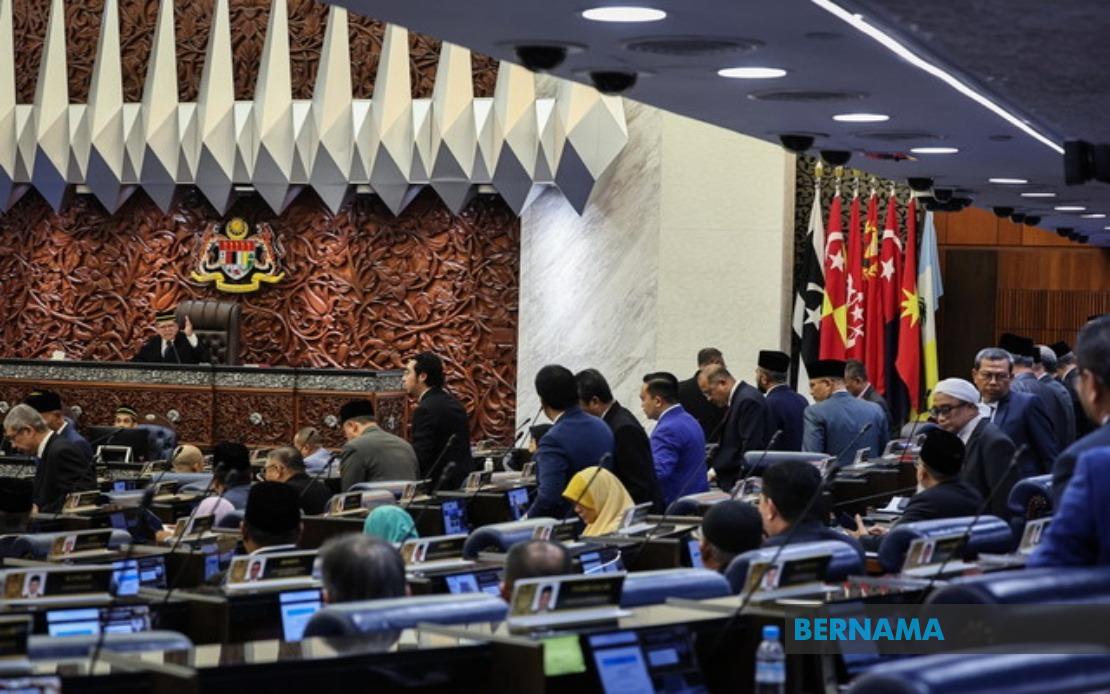
Perikatan Nasional members staged a walkout from the Dewan Rakyat on August 11, abandoning deliberations on the Royal Commission of Inquiry report into Lembaga Tabung Haji (TH), a decision that has sparked debate over whether the Opposition prioritised political grandstanding above the tangible concerns of millions of Muslim depositors. The parliamentary boycott, led by Opposition Leader Datuk Seri Hamzah Zainudin and involving PN Chief Whip Datuk Seri Takiyuddin Hassan and party chairman Datuk Seri Dr Samsuri Mokhtar, was triggered by the absence of Prime Minister Datuk Seri Anwar Ibrahim and Deputy Prime Minister Datuk Seri Fadillah Yusof, both undergoing medical treatment.
According to Prof Datuk Dr Sivamurugan Pandian of Universiti Sains Malaysia's School of Social Sciences, the decision fundamentally reflects a political calculus rather than a substantive commitment to addressing the institutional failures that the TH RCI investigation has uncovered. In an assessment that cuts to the heart of parliamentary accountability, Sivamurugan argued that abandoning the chamber creates an unfortunate impression—one that the Opposition cares more about symbolic resistance than using the legislature's most powerful tool: the permanent record. The walkout, he suggested, sends a muddled message to the 4.2 million Malaysians with money tied up in Tabung Haji, many of whom depend on these savings for their retirement and hajj aspirations.
The academic's critique highlights a tactical paradox facing modern oppositions worldwide. While remaining present to challenge government positions and debate policy responses to the RCI findings would allow Opposition MPs to articulate detailed arguments, lodge formal critiques, and build a documentary foundation for future accountability efforts, the visible act of walking out generates immediate media attention and projects public anger. Yet in a system designed with parliamentary checks and balances at its core, publicity without substantive intervention on the legislative record represents a Pyrrhic victory. An Opposition that performs dissent but fails to engage may inadvertently concede the debate to government responses, leaving their position absent from Hansard and thus vulnerable to reinterpretation.
Significantly, Sivamurugan notes that the Opposition's own ranks betrayed divisions on this strategy. Some PN members chose to remain in the chamber despite the walkout call, indicating genuine disagreement within the bloc about whether departure served their constituents' interests or merely demonstrated theatrical opposition. This fracture suggests that even within PN's leadership, questions linger about whether the protest mechanism—however symbolically potent—represented the most effective deployment of parliamentary power when dealing with an issue as consequential as the mismanagement of hajj funds.
The Prime Minister's physical absence from such a sensitive debate does carry legitimate symbolic weight, and Sivamurugan acknowledges this reality with intellectual honesty. For an institution to function with public confidence, optics and ceremonial presence matter alongside substance. The Opposition's grievance that the nation's chief executive should have personally appeared to defend his government's stewardship of TH—or face questioning about its failures—reflects reasonable expectations about leadership accountability. However, he contends that translating this valid concern into a walkout transforms a principled stand into something less effective than staying and fighting.
When Parliament gathered to examine the TH RCI report, released publicly on July 29 following government disclosure of its findings, the chamber had become the arena where competing narratives about institutional failure, ministerial responsibility, and remedial action would crystallise. Takiyuddin's formal proposal to adjourn the sitting in response to leadership absences framed the issue as one of respect and protocol, yet abandoning the subsequent debate effectively surrendered the opportunity to shape how the nation processes the inquiry's revelations. For depositors seeking assurance that their political representatives would demand accountability and detailed reform plans, the sight of opposition benches emptying must have felt like abandonment.
The professor's analysis suggests a fundamental tension in contemporary parliamentary practice, particularly in developing democracies where institutional legitimacy remains contested. Walkouts and boycotts carry a certain rhetorical force—they communicate anger and refusal—but they operate primarily in the currency of gesture. In contrast, remaining present to deliver detailed critiques, present alternative solutions, and force government ministers to respond to specific evidence creates a different kind of political capital. The latter approach constructs a record that voters can examine, that future courts might reference, and that historians can analyse to understand who warned about what and when. A walkout leaves only silence.
Moreover, Sivamurugan's framework illuminates why the Opposition's decision carries particular weight in Malaysian political culture. In a system where trust in institutions has eroded significantly over recent decades, parliamentary debate serves as one of the few remaining mechanisms through which citizens witness their representatives actively scrutinising power. When opposition politicians exit the chamber, they inadvertently validate an impression that Parliament itself is theatre rather than substance. Conversely, those who remain and argue forcefully—who marshal facts, pose tough questions, and create an incontrovertible record of their positions—strengthen Parliament's democratic legitimacy regardless of whether they win the immediate political skirmish.
The TH situation exemplifies why this distinction matters beyond abstract theory. Tabung Haji is not merely a financial institution but a sacred trust in Islamic finance, intertwined with the religious and cultural aspirations of millions. When its governance fails, the damage extends far beyond balance sheets; it corrodes confidence in systems designed to protect vulnerable citizens' most cherished savings. In such circumstances, opposition to government negligence should take every available form, including the most enduring: meticulous parliamentary record-making that creates accountability over decades, not merely weeks.
Looking forward, Sivamurugan's intervention suggests that future opposition responses to parliamentary crises might benefit from a more calibrated approach. Rather than binary choices between total participation and total exit, opposition leaders might consider remaining engaged while visibly and vocally registering their protest against executive absences. Such a hybrid strategy would preserve the documentary power of debate while signalling principled objection to leadership behaviour. For Tabung Haji depositors, the practical implication is clear: a government repeatedly questioned in Parliament faces sustained pressure, whereas a government permitted to present its TH narrative without substantive rebuttal operates with comparative freedom.
The walkout controversy ultimately reflects a deeper question about how opposition politics should function in democracies facing institutional stress. Does opposition exist primarily to perform resistance for electoral advantage, or does it bear responsibility for wielding every tool available to constrain executive power and protect citizen interests? For those whose hajj savings depend on robust parliamentary oversight, the answer matters enormously. A protest that feels satisfying in the moment but leaves the legislative record bare may prove far less valuable than an Opposition that stays, fights, documents, and creates an enduring foundation for future accountability.

