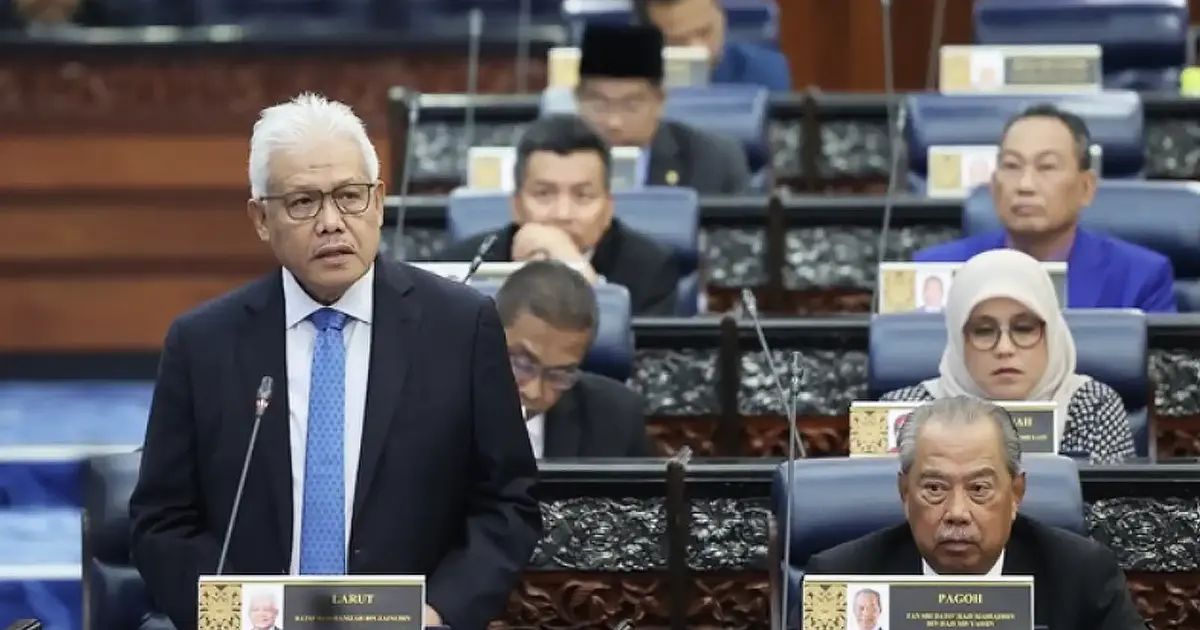
Dewan Rakyat Speaker Johari Abdul has revealed that former Prime Minister Muhyiddin Yassin submitted a request to change his seating arrangement in parliament, adding a new dimension to ongoing political developments within the chamber. The disclosure underscores growing shifts in parliamentary alignments as Malaysia's political landscape continues to evolve following recent coalition adjustments and leadership transitions among opposition-aligned lawmakers.
Concurrently, the Speaker confirmed receipt of formal documentation appointing Larut MP Hamzah Zainudin as the opposition leader, marking an official recognition of his elevated role within the parliamentary opposition structure. This confirmation establishes clear institutional acknowledgement of leadership hierarchies within the chamber and provides formal legitimacy to Hamzah's representation of opposition interests in parliamentary proceedings and negotiations.
Seat repositioning within the Dewan Rakyat carries symbolic and strategic significance beyond mere physical arrangement. Parliamentary seating typically reflects factional alignments, coalition membership, and political relationships, with opposition members occupying designated sections opposite the government frontbench. Requests for relocation thus often signal shifting political affiliations or attempts to reposition oneself within existing power structures, making Muhyiddin's application noteworthy within the current political climate.
Muhyiddin's political trajectory has been marked by considerable volatility in recent years. His role as Premier during the COVID-19 pandemic and subsequent removal from office following the withdrawal of Bersatu support for his government created lasting complications within Malaysian politics. The seat change request potentially indicates either strategic repositioning within parliamentary factions or dissatisfaction with his current seating situation—factors that merit careful observation given his influence within Bersatu and broader opposition circles.
Hamzah Zainudin's formal recognition as opposition leader represents a consolidation of authority within parliamentary opposition structures. The Larut representative's appointment reflects broader reorganisation within opposition ranks as various factions navigate coalition dynamics and seek to present unified parliamentary challenge to the government. His designation as opposition leader entitles him to specific parliamentary privileges, influence over opposition business scheduling, and primary responsibility for articulating opposition positions on government policies.
The timing of these developments merits consideration within Malaysia's broader political context. Parliamentary dynamics have grown increasingly fluid as traditional two-coalition competition has given way to more complex, multi-factional engagement. The government's own coalition composition—comprising UMNO, PAS, Bersatu, and other partners—creates intricate management challenges, whilst opposition fragmentation between DAP-aligned and Anwar-sceptical factions complicates unified opposition strategy. Within this environment, seating arrangements and leadership appointments carry enhanced significance as visible indicators of political positioning.
For Malaysian observers, these shifts demonstrate the ongoing fluidity within parliament as different actors seek advantage and legitimacy. The Speaker's role in confirming both the seat relocation and opposition leadership appointment emphasises parliament's fundamental function as an institutional arena where formalised political relationships receive official recognition. Such confirmations provide transparency regarding parliamentary structures and help citizens understand who holds formal responsibilities within legislative proceedings.
The formality of these procedures—requiring letters and official confirmation—reflects institutional maturity within Malaysian parliamentary tradition, even as underlying political relationships remain contested and unstable. The Speaker's willingness to publicly disclose these developments suggests commitment to transparent administration of parliamentary affairs, allowing external stakeholders to comprehend evolving institutional arrangements and factional realignments.
Looking forward, Hamzah Zainudin's leadership of the opposition will likely shape parliamentary questioning during ministerial accountability sessions, influence scheduling of opposition-initiated debates, and determine media narrative around government policies. His effectiveness in these roles will depend partly on whether he can maintain consensus among disparate opposition members whilst articulating coherent policy critiques. The Larut MP's background and relationships within his constituency and broader Kedah politics will also influence his authority and reach within opposition structures.
Muhyiddin's seat relocation, meanwhile, may presage further repositioning within parliament as various Bersatu members navigate relationships with the government, opposition factions, and internal party dynamics. His continued political salience—despite previous setbacks—means movements by this senior figure warrant monitoring as potential harbingers of broader realignment within either government or opposition coalitions.
These institutional developments ultimately reflect deeper currents within Malaysian politics: ongoing competition for legislative influence, shifting factional boundaries, and continued reconfiguration of parliamentary relationships. As parliament convenes for regular sittings, the physical and institutional positions of key figures like Muhyiddin and Hamzah will serve as concrete manifestations of Malaysia's evolving political landscape.

