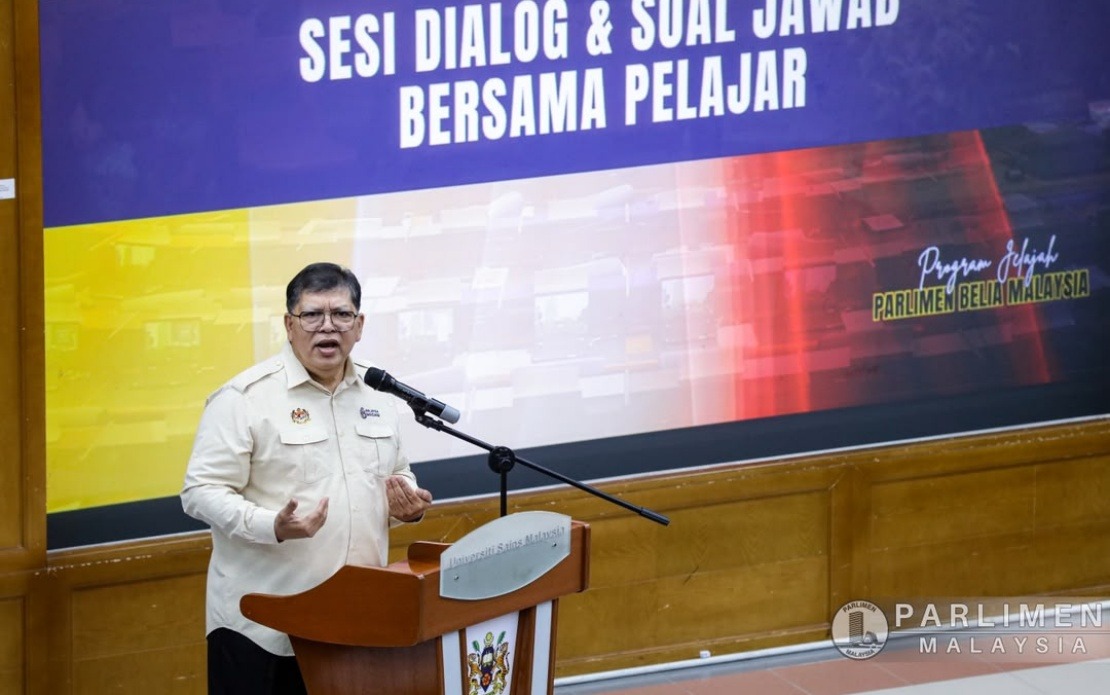
The Dewan Rakyat must embody the principles it seeks to instil in the nation's rising generation, according to Speaker Tan Sri Johari Abdul, who has called on all Members of Parliament to demonstrate the highest standards of conduct as the Malaysian Youth Parliament prepares to convene on September 11. Speaking recently, Johari framed Parliament not merely as a debating forum but as the nation's premier democratic institution and a vital educational space for young Malaysians entering civic life for the first time.
The Speaker's comments underscore a broader institutional challenge facing Malaysia's legislature: the gap between parliamentary ideals and public perception. With every utterance and gesture in the chamber now visible through social media and live broadcasts, the conduct of 222 elected representatives carries consequences that extend far beyond legislative business. Young observers participating in the Youth Parliament will form their foundational understanding of democratic practice based on what they witness in the Dewan Rakyat, making the tone and tenor of parliamentary proceedings consequential for civic culture across the country.
Johari emphasised that the Malaysian Youth Parliament participants require authentic role models rather than rhetorical instruction. This distinction matters significantly. Young Malaysians aged 18 to 30 are more likely to be inspired by genuine examples of dignified, fact-based debate than by exhortations to respect democratic norms that they see frequently violated by sitting MPs. The Speaker's call for factual, courteous, and solution-oriented discourse represents an implicit acknowledgement that current parliamentary culture may not consistently reflect these qualities.
The Malaysian Youth Parliament operates as a sophisticated replica of the actual legislature, comprising 222 seats distributed across all parliamentary constituencies nationwide. Significantly, the parties formed within this framework are explicitly non-partisan and divorced from Malaysia's electoral system, eliminating concerns that the initiative could become a recruitment ground for political organisations. More than ten such parties have already been established, each drawing membership from youth organisations officially registered with Parliament Malaysia. This structural design allows young people to experience parliamentary procedure without the ideological baggage of real party politics.
Parliament Malaysia is mounting an ambitious recruitment drive targeting 300,000 young Malaysians to register before the Youth Parliament Election scheduled for August. The electoral calendar is compressed and precise: nomination day falls on July 8, with official candidate announcements on July 11. The campaign period extends 27 days from July 12 to August 7 across the entire country, followed by online voting through the e-PBMy system. Voting will occur across a 24-hour window beginning at 10 am on August 8 and closing at 10 am on August 9.
The September 11 commencement will mark the formal opening ceremony and swearing-in of Youth Assembly Members, initiating a new parliamentary term. The Malaysian Youth Parliament will operate with structured regularity, convening three times annually with sittings lasting two days each. Youth Parliament members will serve two-year terms, providing sufficient continuity for meaningful legislative participation whilst remaining consistent with the developmental purpose of the initiative.
This enhanced institutional structure represents a significant evolution since the Malaysian Youth Parliament's inception in 2015 under the Ministry of Youth and Sports. After eight years of operation within that portfolio, the government agreed in October 2023 to transfer complete management and implementation responsibilities to Parliament Malaysia itself. This shift elevates the Youth Parliament from a ministry programme to a parliamentary institution, signalling greater institutional weight and commitment to youth political development. The transition also aligns youth participation mechanisms more directly with the actual centre of legislative authority.
For Malaysian policymakers and educators, the Youth Parliament initiative addresses a persistent challenge in developing civic engagement among young adults. Many democracies struggle with declining youth participation in formal political institutions, and Malaysia is no exception. By creating a functioning replica parliament accessible to those aged 18 to 30, the initiative removes structural barriers whilst maintaining educational rigour. Young people gain practical experience with parliamentary procedure, committee work, and legislative debate in a controlled environment that mirrors reality without the stakes of actual electoral politics.
The Southeast Asian context adds particular relevance to this initiative. Across the region, questions about democratic health and youth engagement remain contested. Malaysia's investment in educating young people about parliamentary democracy through direct participation rather than passive observation distinguishes it from several neighbouring approaches. The initiative implicitly argues that exposure to functioning democratic institutions, even in educational form, cultivates habits of democratic citizenship more effectively than civics curricula alone.
For Members of Parliament, Johari's message carries implicit challenge. The Speaker is essentially asking MPs to recognise that their conduct in the chamber serves an educational function beyond legislative output. This broader accountability may prompt behavioural adjustment amongst those MPs inclined to dismiss parliamentary conduct as mere theatre or strategic posturing. The knowledge that young Malaysians are observing and learning from parliamentary proceedings introduces an additional dimension of responsibility that transcends party affiliation or legislative priorities.
The registration portal at https://pbmy.parlimen.gov.my/my/ remains open for interested young Malaysians, with the deadline approaching as July nears. The detailed timeline and online voting mechanism suggest a professionally managed electoral exercise, lending credibility to the initiative and modelling transparent democratic procedures. Young voters will experience electronic ballot systems, campaign dynamics, and candidate selection in conditions that approximate actual parliamentary elections without the complexity of genuine party competition.
Looking forward, the success of the Malaysian Youth Parliament will depend partly on whether the Dewan Rakyat genuinely upholds the standards Johari has articulated. Young participants entering parliamentary forums in September will quickly discern any disconnect between the Speaker's vision and actual parliamentary practice. Sustained credibility will require consistent demonstration of the dignified, integrity-driven, and fact-based deliberation that the initiative seeks to model. Should Members of Parliament take this challenge seriously, the Youth Parliament could meaningfully reshape Malaysian civic culture across the next generation.

