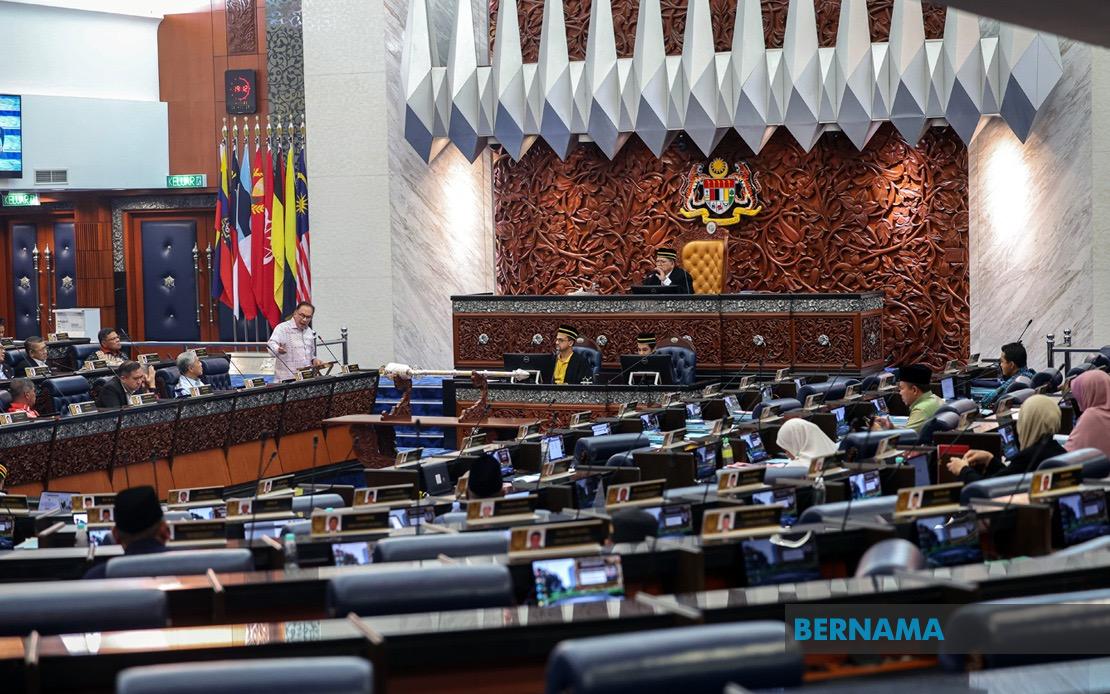
Lawmakers across Malaysia's political divide converged on a rare area of consensus during parliament's debate on the Sexual Offences Against Children (Amendment) Bill 2026, calling for a comprehensive overhaul of how the nation tackles one of its most troubling crimes. The afternoon session in the Dewan Rakyat revealed deep concern about vulnerabilities in existing safeguards, particularly the ease with which predators operating internationally can evade accountability. Members presented detailed proposals addressing enforcement gaps, victim care, and the alarming reality that Malaysia could inadvertently become a haven for offshore abusers if legal frameworks remain uneven.
A central theme threading through multiple speeches involved strengthening Malaysia's capacity to pursue perpetrators beyond its borders. Abd Ghani Ahmad, representing Jerlun under Perikatan Nasional, emphasized that the nation must leverage Mutual Legal Assistance agreements and extradition mechanisms to prevent predators from simply relocating to jurisdictions with weaker enforcement. His argument highlighted a practical vulnerability: criminals with resources can operate across Southeast Asia, exploiting regulatory fragmentation. By contrast, those without such international reach face concentrated prosecution, creating an inequitable system. Ahmad further stressed that investigations and digital evidence preservation suffer from siloed operations, with police, immigration, the Attorney-General's Chambers, social welfare departments, hospitals, and schools rarely sharing real-time intelligence effectively.
The fragmentation Ahmad described resonates keenly across Southeast Asia, where porous borders and varied legal standards create investigation nightmares for national authorities. Datuk Seri Doris Sophia Brodi, the GPS representative from Sri Aman, built upon this foundation by proposing a dedicated task force specifically addressing digital sexual crimes involving children. Such a body would consolidate expertise and speed up cross-border responses, she argued, while also recognizing that prevention education remains woefully underfunded. Brodi advocated for schools to teach digital literacy and for parents to recognize grooming behaviors—a shift toward understanding that prosecution alone cannot solve a problem rooted in digital access and psychological manipulation.
What emerged from her contribution was a systemic critique: enforcement-only approaches miss the reality that victims rarely recover fully without sustained psychological support, financial assistance for lost schooling or medical needs, and protection of their identities to prevent social stigma. Brodi's framing acknowledged that perpetrator punishment, while necessary, addresses only the criminal justice dimension of a problem that extends into trauma recovery and family stability. This perspective carries significant weight in Malaysian and regional contexts, where victim shame and family ostracization often compound the original harm.
Datuk Mas Ermieyati Samsudin, representing Masjid Tanah under Perikatan Nasional, translated these concerns into concrete institutional proposals. She recommended establishing a dedicated prosecution unit staffed with lawyers experienced in child sexual abuse cases, expanding access to child psychology experts within public health facilities, and creating a dedicated fund to cover victim counseling, legal representation, and rehabilitation. Her emphasis on a specialized prosecution unit addresses a critical bottleneck: criminal courts typically handle dozens of offense categories, and judges and prosecutors may lack expertise in the unique investigative and evidentiary challenges child abuse cases present. By concentrating these cases under specialized prosecutors, case outcomes improve and victims face fewer retraumatizing courtroom procedures.
The fund Samsudin advocated for addresses Malaysia's stark reality: most families cannot afford private psychological support for traumatized children, and public waiting lists stretch for months. Without financial assistance, children's recovery stalls, and families may reject prosecution to avoid costs associated with legal proceedings. This budgetary dimension often goes unmentioned in international crime discussions, yet it fundamentally shapes whether laws become meaningful protections or merely symbolic gestures. Her warning that Malaysia could become a destination for crimes under weaker enforcement resonated because it framed child protection as a national reputation issue—a consideration that may persuade fiscal conservatives to support funding increases.
Opposition lawmakers added their own emphases. RSN Rayer from Jelutong highlighted that expanding Malaysia's legal jurisdiction to cover crimes committed abroad requires simultaneous domestic strengthening, particularly expanding investigative teams. He implicitly challenged any notion that legislative amendments alone would suffice. Young Syefura Othman, representing Bentong under Pakatan Harapan, introduced perhaps the session's most concrete administrative proposal: a controlled-access National Child Sexual Offender Registry mirroring models used in other nations. Such a database would allow schools, daycare centers, welfare homes, and sports clubs to screen volunteers and employees, preventing convicted abusers from infiltrating institutions serving children.
Othman's proposal carries particular force because it addresses organizational vulnerability. Child sexual abuse often occurs not through random predation but through deliberate infiltration of trusted environments—an offender applies as a kindergarten teacher, youth coach, or religious instructor, gaining access to isolated victims. Background checking systems exist in developed nations precisely to prevent this vector. Malaysia's gap here reflects not malice but resource constraints and legal infrastructure immaturity. Her call for mandatory screening across welfare homes, nurseries, tahfiz centres, religious institutions, and sports clubs acknowledged that abuse transcends institutional boundaries, suggesting comprehensive rather than piecemeal reform.
The amendment to the Sexual Offences Against Children Act 2017 that prompted this debate addresses a critical legal lacuna: jurisdictional limitations that permit Malaysia-based perpetrators to commit crimes abroad with reduced risk of prosecution upon return. By expanding jurisdiction, the amendment prevents Malaysia from becoming a refuge for those committing abuse internationally. Yet as the 26-MP debate demonstrated, jurisdictional reform alone remains incomplete without enforcement infrastructure, victim rehabilitation systems, and prevention frameworks. The collective proposals suggested recognition that child protection requires simultaneous action across prosecution, investigation, support, prevention, and institutional accountability—a holistic view that elevates the conversation beyond punitive law into comprehensive systems change.
The debate's bipartisan support signals political consensus on a fundamentally important issue, a rarity in Malaysia's fractious parliament. Whether this consensus translates into sustained funding, institutional restructuring, and cross-agency coordination remains the critical question. Parliamentary backing for principles differs markedly from budget allocations and personnel deployment. The coming months will reveal whether the enthusiasm expressed in debate produces the specialized units, dedicated funding, and coordinated enforcement mechanisms that MPs collectively endorsed as essential to genuinely protecting Malaysia's children from sexual exploitation.

