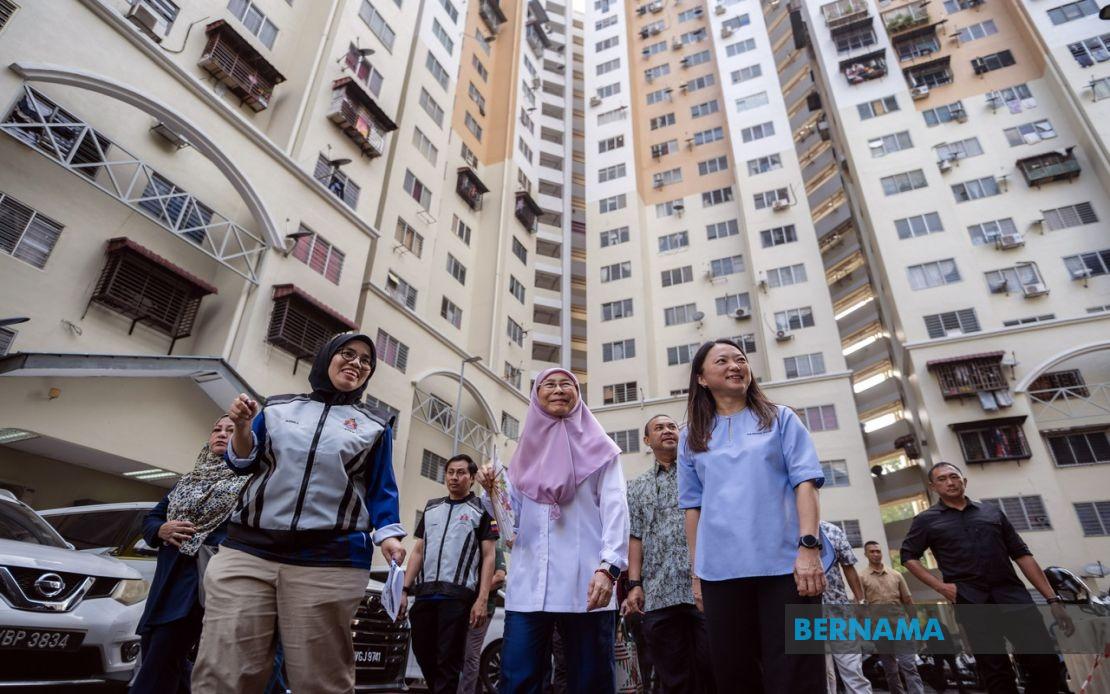
The RM9.6 million upgrade of Desa Tun Razak People's Housing Project (PPR) is now complete, marking a significant milestone in the federal government's systematic drive to rehabilitate public housing across Kuala Lumpur. The project joins 21 others that have been finished from an original portfolio of 61 PPR upgrade initiatives across the capital, reflecting the authorities' commitment to improving living standards in low-cost residential schemes that house tens of thousands of urban residents.
The completion of this particular project came about through an additional RM300 million approved by the government during the current financial year, with all Kuala Lumpur Members of Parliament formally endorsing the initiative. This cross-party backing underscores the recognition across the political spectrum that public housing infrastructure requires sustained and comprehensive maintenance funding rather than piecemeal interventions. The coordinated approach signals a departure from reactive maintenance toward a preventative strategy that anticipates deterioration and addresses it systematically before safety and habitability become compromised.
Minister in the Prime Minister's Department (Federal Territories) Hannah Yeoh emphasised the philosophical underpinning of this approach when she inspected the renovated facilities. She articulated the distinction between ad hoc maintenance conducted on an emergency basis and the structural commitment to establish dedicated maintenance funds that recognise the long-term cost of stewardship. This perspective is particularly salient in Malaysia's context, where public housing projects have historically suffered from neglect during periods of budget constraint, creating a backlog of urgent repairs that eventually demand emergency intervention at higher cost.
The Desa Tun Razak PPR, which has been operational since 1998, provides accommodation for more than 8,000 residents, making it a significant residential hub within the federal territory. The upgrade initiative directly responds to the physical deterioration that naturally accumulates over decades of continuous occupation in an urban environment where climate, usage intensity, and infrastructure age all contribute to rapid wear. The specific focus on electrical systems, fire safety, and structural integrity reflects lessons learned from operational experience and incident reports.
Kuala Lumpur Mayor Datuk Fadhlun Mak Ujud provided a detailed breakdown of how the RM9.6 million expenditure was distributed across different renovation categories. The largest single component, RM7 million, was dedicated to repainting works that address aesthetic deterioration and provide a superficial layer of protection against weather exposure. However, the more substantive investments targeted critical infrastructure: RM1.68 million went toward fire prevention systems and upgrades to electrical wiring, reflecting heightened concern following fire incidents that occurred at PPR facilities during the previous year. These events presumably highlighted vulnerabilities in fire detection, suppression, and electrical safety that posed genuine risks to resident welfare. An additional RM1 million was committed to road resurfacing, essential for maintaining safe vehicular circulation and preventing accidents within the residential compound.
Beyond these itemised categories, the mayor indicated that complementary upgrades to fire riser systems and drainage infrastructure had also been completed. These systems, often invisible to residents, form the critical backbone of residential safety and environmental health. Fire risers ensure that firefighting equipment can access water supplies at various elevations, while properly functioning drainage prevents water accumulation that could damage structures and create health hazards. The integrated approach demonstrates that comprehensive upgrading goes beyond cosmetic improvements to address functional capacity and disaster preparedness.
The trajectory outlined by the mayor suggests that the entire portfolio of 61 PPR projects should reach completion by the end of the current year, provided execution remains on schedule. Achieving this outcome would represent substantial progress in addressing the deferred maintenance that has accumulated across Kuala Lumpur's public housing stock. The RM300 million investment, when distributed across this large number of projects, reflects significant but necessarily constrained resources, meaning that each PPR receives allocation proportionate to its size and identified needs rather than unlimited funding for comprehensive modernisation.
A persistent challenge at Desa Tun Razak and similar facilities remains parking insufficiency, a problem that intensifies with vehicle ownership growth and inadequate original design provision. The mayor announced that Kuala Lumpur City Hall (DBKL) is surveying suitable vacant land within or adjacent to the development to identify opportunities for temporary parking zones. This represents a pragmatic interim solution while longer-term infrastructure planning considers whether permanent expansion is feasible. The parking shortage, though seemingly minor compared to structural upgrades, significantly impacts resident satisfaction and quality of life, particularly affecting those working outside the immediate neighbourhood.
Bandar Tun Razak Member of Parliament Datuk Seri Dr Wan Azizah Wan Ismail, representing the constituency containing the PPR, struck an important note about resident responsibility. She encouraged occupants to maintain the upgraded facilities conscientiously, recognising that government investment becomes worthless if vandalism, negligence, or deliberate damage occurs. Her emphasis on cultivating a culture of public and private property stewardship addresses a genuine challenge in public housing management: ensuring that collective infrastructure improvements translate into sustained benefits rather than degenerating into disrepair within months or years. This cultural dimension requires ongoing engagement with residents and community leadership.
The Desa Tun Razak upgrade exemplifies a broader regional concern across Southeast Asia regarding the maintenance and sustainability of public housing programmes. Countries throughout the region have pursued mass public housing development to address urban housing shortages, but many struggles with funding mechanisms that ensure long-term asset preservation. Malaysia's current approach, with dedicated annual allocations and coordinated planning, offers a potential model for other nations confronting similar challenges. The success of this initiative will likely inform future policy decisions regarding public housing sustainability across the region and potentially attract attention from international development practitioners studying inclusive housing solutions.
The completion milestone also carries implications for tenant confidence and property values within the scheme. Visible investment and measurable improvements can reverse perception of neighbourhood decline and encourage residents to view their housing as a stable long-term residence rather than a temporary arrangement. This psychological and economic effect can strengthen community stability, support children's educational outcomes through residential consistency, and reduce social fragmentation. For a nation prioritising affordable housing as integral to inclusive development, such outcomes justify the substantial financial commitment represented by the RM300 million allocation.

