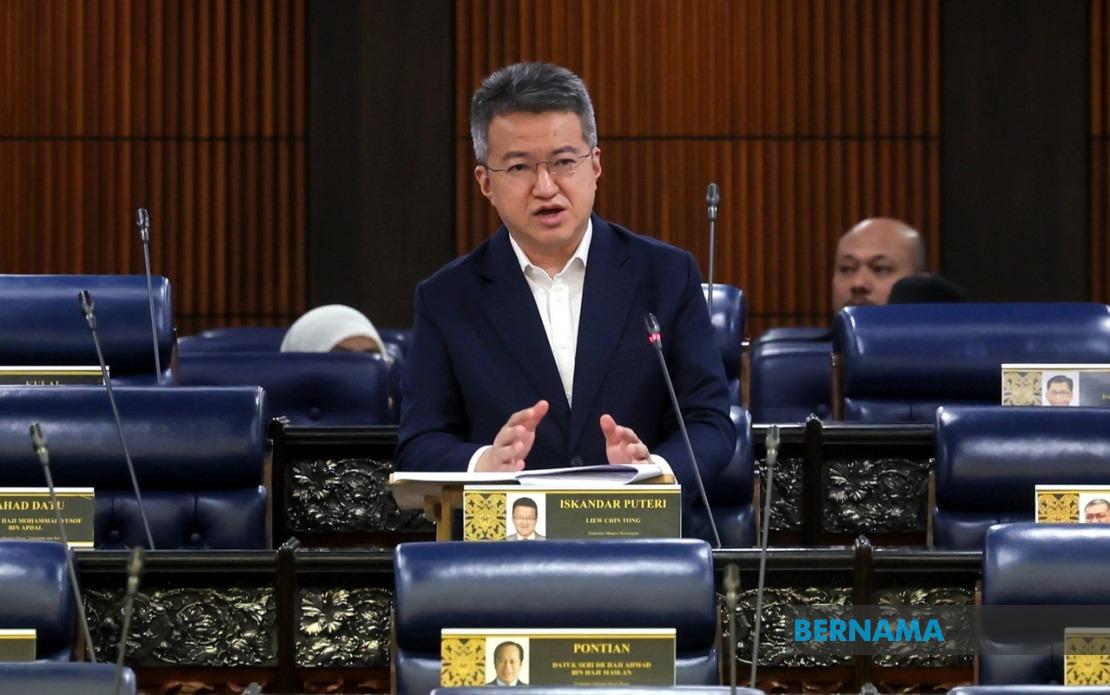
Deputy Finance Minister Liew Chin Tong has firmly rejected suggestions that Low Taek Jho, the fugitive businessman commonly referred to as Jho Low, entered Malaysia last year as part of a Chinese delegation to discuss potential settlement arrangements concerning the 1Malaysia Development Berhad scandal. His brief but categorical denial came during parliamentary Question Time on July 9, when pressed by MUDA MP Syed Saddiq Syed Abdul Rahman to address media allegations of a clandestine meeting held in the country during late 2024.
The question highlighted persistent speculation within Malaysian media circles that Jho Low had travelled to Malaysia to participate in secret negotiations with government officials regarding a structured repayment package for the massive 1MDB losses. The involvement of what reports characterised as a Chinese delegation added an international dimension to these allegations, suggesting that any such negotiations might have involved third-party mediation or financial arrangements with overseas counterparts. Syed Saddiq specifically noted that these claims centred on discussions with the Ministry of Finance, lending credence to suggestions that any such meeting would have occurred at the highest levels of Malaysia's financial administration.
Liew's response addressed a broader parliamentary inquiry from PH MP Chong Chieng Jen regarding the government's ongoing efforts to recover the vast sums misappropriated through the 1MDB scheme. The Deputy Finance Minister emphasised that the administration remains committed to intensifying asset recovery through multiple legal channels, deploying both criminal prosecutions and civil suits to pursue those implicated in the scandal. This multi-pronged approach reflects Malaysia's determination to pursue accountability across the entire spectrum of alleged wrongdoing connected to the development fund.
The government's progress in criminal proceedings has been substantial. Most significantly, the High Court imposed a 15-year prison sentence on former Prime Minister Datuk Seri Najib Tun Razak on December 26, 2025, following his conviction on 25 charges encompassing money laundering and abuse of power to secure bribes linked to 1MDB. Accompanying the custodial sentence came an RM11.38 billion financial penalty, representing one of the most severe punishments handed down in relation to the scandal. This verdict, delivered after extensive legal proceedings, demonstrates the judiciary's willingness to impose stringent consequences for the highest-level involvement in the scheme.
Simultaneously, the government has pursued civil recovery actions targeting other individuals identified as beneficiaries of the misappropriated funds. A particularly noteworthy civil suit targets Datin Seri Rosmah Mansor, seeking recovery of approximately US$380 million, or roughly RM1.56 billion, alleged to have been diverted toward the acquisition of luxury goods including high-value handbags and jewellery. This civil action underscores how 1MDB funds permeated networks of connected individuals who benefited from the scheme through lifestyle enhancements funded by the development fund's resources.
Liew specifically highlighted the civil and criminal cases mounted against Jho Low himself, the individual widely regarded as the principal architect of the 1MDB misappropriation scheme. The government has lodged a civil claim valuing approximately US$3.78 billion, equivalent to around RM15.4 billion, against the fugitive businessman. This enormous quantum reflects the scale of Low's alleged involvement and the value of assets and funds authorities are pursuing to recover for Malaysia. Despite Low's fugitive status, Malaysian authorities have maintained active legal proceedings to hold him accountable and recover associated assets.
The Deputy Finance Minister articulated a comprehensive analysis of the losses inflicted upon Malaysia through the 1MDB scandal, categorising them into four distinct categories. Direct financial losses represent the most immediately quantifiable harm, encompassing funds stolen and misappropriated from the development fund's accounts. Beyond these direct withdrawals, the scheme created substantial opportunity costs, reflecting capital that could have been deployed productively in genuine development projects but instead disappeared through fraudulent mechanisms. A third category encompasses irrecoverable losses that have proven impossible to trace or retrieve despite extensive investigation and legal action. Perhaps equally damaging are the intangible but substantial costs to Malaysia's international reputation, which suffered considerable erosion following exposure of the scandal.
The 1MDB case has indeed cast a long shadow over Malaysia's standing in the global financial community and among international development partners. The scale of the scheme—ultimately involving billions of dollars—and its operation within a sovereign wealth fund established for national development created substantial reputational damage. International media coverage extensively documented the scandal, associating Malaysia with poor financial governance and corruption at the highest governmental levels. This reputational cost continues affecting Malaysia's ability to attract foreign investment and maintain optimal diplomatic relationships, particularly with countries prioritising strong governance standards and transparency commitments.
The denial regarding Jho Low's alleged entry occurs within a context of intense international focus on locating and apprehending the fugitive businessman. Low has maintained a low public profile since fleeing Malaysia, with periodic unconfirmed sightings in various jurisdictions adding to the mystique surrounding his movements. The suggestion that he might have returned to Malaysia, even temporarily and under discrete circumstances, would have represented a significant development in the case. Malaysia maintains active Interpol Red Notice requests and has engaged in international cooperation to locate Low, though his continued evasion remains a persistent frustration for authorities.
Liew's categorical dismissal suggests the government views such allegations with considerable scepticism, perhaps reflecting awareness of how misinformation regarding the 1MDB scandal has circulated. Alternatively, the swift and emphatic denial might indicate that the government has confidence in its internal security and intelligence apparatus, believing it would have detected and prevented such an entry. The Deputy Finance Minister's brief response, while not elaborating on the reasoning behind the denial, nevertheless sends a clear message that Malaysian authorities maintain control over the situation and are pursuing recovery through established legal mechanisms rather than through any potential back-channel negotiations. The government's commitment to formal proceedings appears unwavering, suggesting that any resolution of 1MDB claims will occur through the courts rather than through secret diplomatic arrangements.

